








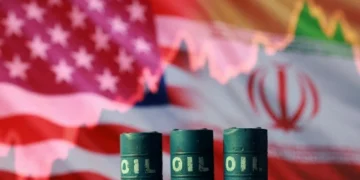











































The United States is preparing a new wave of economic sanctions against Iran, with officials in Washington signaling that the upcoming measures will be unprecedented in scope. Treasury Secretary Scott Bessent announced last Thursday that the administration intends to inflict further economic damage on Tehran as early as this week. According to Bessent, the planned actions involve measures that have “never been seen in the history of economic isolation on a country.”
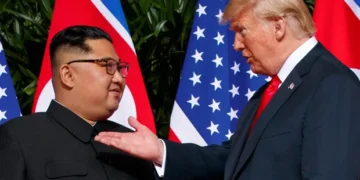
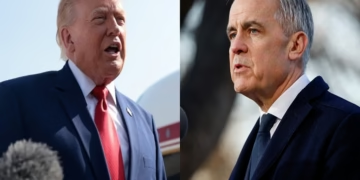
President Donald Trump reinforced this stance on Friday, stating that Iran would face severe economic consequences. Following the expiration of a memorandum of understanding (MoU) on Monday, the president challenged Tehran to raise the “white flag of surrender,” though he maintained that he is not in a hurry to conclude the ongoing conflict. Since the start of his second term in February 2025, the Treasury’s Office of Foreign Assets Control (OFAC) has already sanctioned more than 1,000 individuals, vessels, and aircraft linked to Iran.
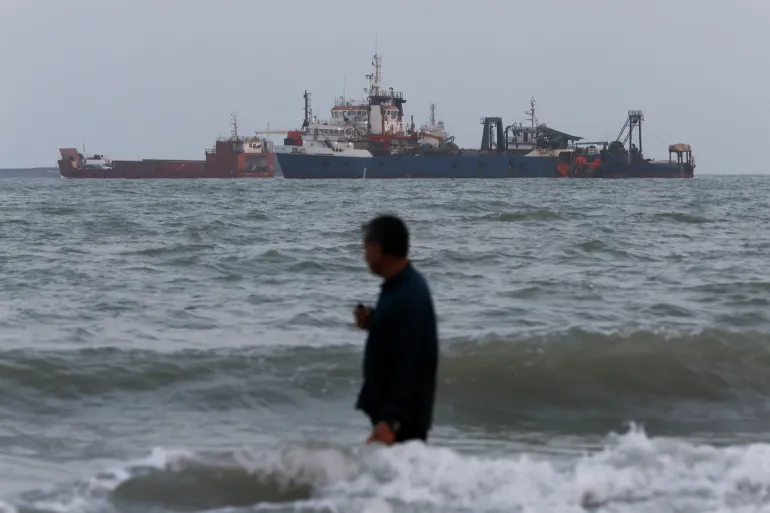
In response to the mounting pressure, Iranian authorities remain defiant, indicating a potential shift toward offensive operations and maintaining readiness to counter any ground invasion. Mohammad Reza Farzanegan, a professor of Middle East economics at Philipps-Universitat Marburg, noted that the current naval blockade represents a new phase where traditional sanctions are paired with military force to create physical shortages. He suggested that Tehran is currently leaning toward continuing armed conflict rather than accepting terms dictated by the Trump administration.
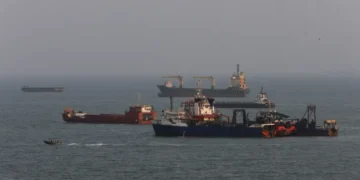
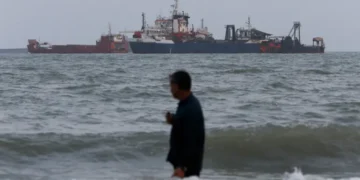
The economic strain is compounded by the closure of the Strait of Hormuz, a critical artery that previously handled one-fifth of global oil and gas flows. Mohammad Bagher Ghalibaf, Iran’s parliament speaker and lead negotiator, confirmed on Tuesday that the strait will remain closed until the United States fulfills the commitments outlined in the expired MoU. These conditions include lifting the blockade, unfreezing assets, ending oil sanctions, and ceasing military operations.
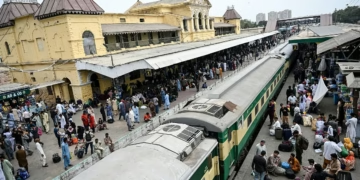
To mitigate the impact of the blockade, the Iranian government has empowered border provinces to facilitate the import of essential goods. The country has increasingly relied on land routes through Pakistan, Turkiye, Russia, and Central Asia to sustain its supply chains. While a brief ceasefire under the MoU in late June and early July allowed for a temporary resumption of oil exports, those flows have halted again as tensions escalate.
The broader economic crisis in Iran, characterized by high inflation and declining purchasing power, is rooted in long-standing issues of corruption and mismanagement. President Masoud Pezeshkian’s administration has identified market stabilization and the protection of livelihoods as primary goals for the next two years. However, analysts remain skeptical about the feasibility of these objectives under current conditions.
Mahdi Ghodsi, a senior economist at the Vienna Institute for International Economic Studies, argued that Iran’s long-term stagnation suggests a disconnect between government policy and economic reality. He emphasized that durable stability requires both a reduction in external confrontation and significant domestic political reforms. Without these changes, he warned, the government might only succeed in slowing the rate of decline rather than fostering genuine resilience.
Looking ahead, US authorities are reportedly considering sanctions against Chinese independent refineries, known as “teapots,” that process Iranian crude. While OFAC has previously targeted smaller entities in China and Hong Kong, designating larger Chinese banks would mark a significant escalation. Such a move risks triggering a direct response from Beijing, particularly as Washington remains concerned about the global supply of critical minerals.
Ghodsi noted that energy remains the primary lever of US influence over Iran, especially following damage to the country’s infrastructure from US and Israeli strikes. Further constraints on energy trade, including maritime services and payment routes, could lead to deeper rationing and industrial shutdowns. As the conflict persists, the global economy faces ongoing risks from disruptions in the Strait of Hormuz and broader regional instability.
While diplomatic channels remain largely stalled, Iran continues to engage in discussions with Oman and other mediators regarding a potential temporary arrangement for the strait. Despite these efforts, the lack of a broader diplomatic exit strategy remains a significant hurdle. Farzanegan warned that if the armed conflict continues to intensify, the economic costs will extend well beyond Iran, impacting the global market.
The current situation leaves the Iranian population of approximately 90 million people facing persistent uncertainty. With the government prioritizing national resilience, the effectiveness of these measures will likely depend on whether Tehran can navigate the dual pressures of international isolation and internal structural weaknesses. As Washington prepares its next move, the prospect of a de-escalation appears increasingly distant.
Ultimately, the standoff reflects a deep-seated geopolitical struggle where economic policy is used as a primary weapon of war. Whether through the enforcement of secondary sanctions or the maintenance of the naval blockade, the US strategy aims to force a change in Iranian behavior. Conversely, Tehran’s reliance on alternative trade routes and its refusal to concede demonstrate the high stakes involved for both nations in this ongoing economic confrontation. The report also notes that the consequences include persistent inflation, insecure and poorly paid work, declining purchasing power and growing uncertainty about the future, for the country’s roughly 90 million people. The report also notes that however, Mahdi Ghodsi, a senior economist at the Vienna Institute for International Economic Studies, said Iran’s prolonged stagnation over most of the past 15 years suggested that government policy had not been aligned. The report also notes that the Islamic Republic would have to reduce confrontation with the US, the West and Israel while pursuing meaningful domestic reforms that would involve mov, he told Al Jazeera that to guarantee sustainable economic growth. The report also notes that asset freezes and attacks on ships as part of a naval blockade, Washington has announced a plan to enact a new wave of restrictions on Iran, targeting its economy, amid trade embargoes. The report also notes that “This is an additional burden that raises new questions for policymakers in Tehran: Should they choose a deal whose terms are dictated by the Trump administration, or should they continue the armed conflict to break the blockade of the ports. The report also notes that namely changing the behaviour of the Iranian government, it should also “open a diplomatic exit and offer it as an option”, farzanegan said that for the US to achieve its goals. The report also notes that he said “the costs will not be confined to the target of sanctions; the global economy will also pay a price” through continued disruptions in the Strait of Hormuz and attacks across the region, if armed conflict does fully resume. The report also notes that the blockade was lifted for several weeks in late June and early July, enabling the rapid export of oil stored on board supertankers and giving the military time to regroup, during the brief ceasefire period established under the MoU.
Source: Aljazeera