




































































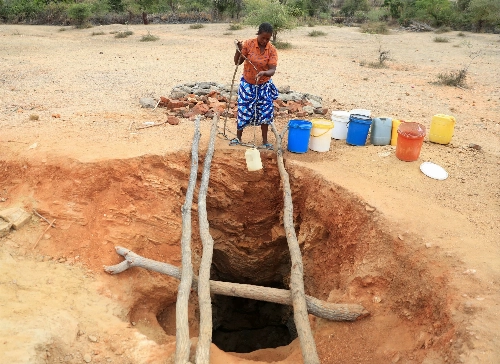
A powerful El Nino weather event could push an additional nearly 49 million people into acute food insecurity across some of the world’s most vulnerable regions by the end of next year, the World Food Programme (WFP) said on Wednesday.
The UN agency stated in a report that there is an 81% chance of a very strong El Nino event. Sea surface temperatures are currently at their warmest levels since at least 1982, potentially making this the strongest such event since 1950.
Meanwhile, the chief economist of the United Nations Food and Agriculture Organisation (FAO), Maximo Torero, warned that the world is on the verge of another bout of food inflation. He noted that wars in Iran and Ukraine, coupled with the El Nino phenomenon, are creating a perfect storm of higher costs and lower production.
Food prices were a key driver of the 2022 global inflation surge but have been relatively benign so far this year, even tempering in some places the surge caused by high energy costs. However, the current outlook remains precarious due to geopolitical and climate-related pressures.
El Nino, a periodic warming of ocean surface temperatures in the Pacific, alters global weather patterns. It is often associated with drought in Southern Africa, delayed monsoons in parts of Asia, and extreme weather in the Americas. Jean-Martin Bauer, director of WFP’s Food Security and Nutrition Analysis Service, told reporters, “These are events that in the past have triggered large-scale hunger.”
Based on an analysis of 45 countries deemed vulnerable to the adverse effects of El Nino, WFP estimates that the number of people facing acute food insecurity could rise by almost 49 million to a total of 274 million people. This represents an increase of 22% relative to current baseline projections.
Central America and Southern Africa are expected to be among the hardest-hit regions. The number of food-insecure people is set to increase by 83% in Central America and nearly 75% in Southern Africa. Southern Africa, South America, and the Caribbean could each see more than 12 million additional people fall into acute food insecurity.
Bauer noted that global food markets entered the El Nino period in a relatively strong position following good harvests in 2025. However, he warned that conflict in the Middle East and potential weather-related crop losses could put further upward pressure on prices. He specifically highlighted the Strait of Hormuz as a critical chokepoint, stating, “The Strait of Hormuz is a problem that affects all the inputs of agricultural commodities, agricultural systems, and natural gas because it’s used for fertilisers.”
While past El Nino events have not typically triggered major global food price spikes, regional shortages and higher prices could worsen food access for vulnerable households. Torero added, “You’re hearing this in Europe, in the US, Brazil and in Asia. Tight margins are putting stress in planting decisions.”
In the United States, which is largely self-sufficient for most key inputs, the American Farm Bureau Federation projects that farmers growing nine principal crops may lose $32 billion in 2027 without federal assistance. On a per-acre basis, every crop analyzed is projected to remain below breakeven in 2027.
Australia, one of the world’s top crop exporters, recently reported that winter crop production is seen down by 21%. This decline is attributed in part to a significant increase in both fuel and fertiliser prices and uncertainty over the availability of key inputs.
Funding cuts from US and European donors in 2025 are hampering efforts to monitor the developing crisis. Bauer described a growing drought of food-security data used to assess the impact of El Nino. The WFP conducted about 1.1 million household surveys in 2024, compared with about 800,000 in 2025, with data collection falling further this year.
“At a time when you have a risk like an El Nino, it is important to have high-frequency data collection,” Maximo Torero told Reuters in an interview. As the situation evolves, the international community faces the dual challenge of stabilizing supply chains while addressing the immediate humanitarian needs of those most at risk. Reporting by Olivia Le Poidevin; Editing by Lisa.
Richard Choularton, director of WFP’s Climate and Resilience Service, said the agency had scaled up anticipatory action programmes in 18 countries, reaching more than 1.3 million people so far this year with cash and ot
“The transmission from the commodity to the final food price is around three to six months,” he said.
“Brent oil, because it’s used for pumping, packaging, processing, and transportation.
said current forecasts point to rainfall deficits in parts of East Africa, the Sahel, Central America and the Caribbean, while flood risks could rise in Somalia and neighbouring areas.
The agency stressed that the forecasts remain uncertain and that impacts will vary across regions, but warned that governments and aid agencies needed to prepare.
Richard Choularton, director of WFP’s Climate and Resilience Service, said the agency had scaled up anticipatory action programmes in 18 countries, reaching more than 1.3 million people so far this year with cash and other assistance to help in the event of extreme weather.
“I expect that commodity prices will start to increase more now…
Although some commodity prices, such as wheat, maize and rice have increased in recent months, most still reflect relatively good harvests, rather than likely difficulties in the coming year.
Meanwhile the damage inflicted by Ukraine on Russia’s oil and gas infrastructure curtails the export market for diesel and natural gas, both of them key inputs in food production.
Global wheat and corn planting was already cut in the first three months of the Iran war and some US producers have shifted to soybeans, because they require lower fertiliser inputs.
Source: Gulf Today