


























































Haiti’s government has formally requested that the United Nations Security Council extend the mandate of the international Gang Suppression Force (GSF). The current mission, which was established in October 2025 to combat armed groups, is set to expire on September 30 unless the council takes action to renew it.
Foreign Minister Raina Forbin emphasized the urgency of the situation during a meeting of the Organisation of American States (OAS). She stated that the country requires robust technical, financial, logistical, and safety support to meet the ongoing security challenges, adding, “We must now move from solidarity to action.”
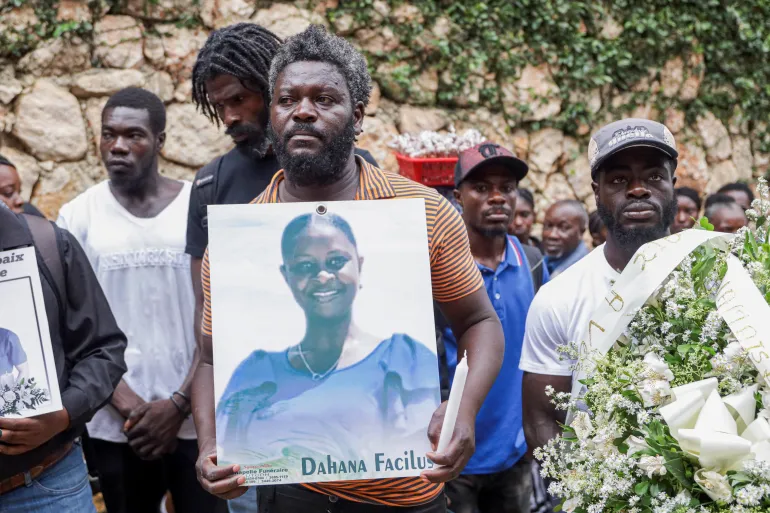
The call for an extension comes as Haiti struggles with severe instability. Between April and June of this year alone, an estimated 1,408 people were killed and 656 others were injured, with much of the violence linked to powerful gangs that have seized control of large areas of Port-au-Prince. Since the 2021 assassination of President Jovenel Moise, these groups have flourished, displacing over one million people.
Haiti is currently preparing for general elections scheduled for December 13, which would be the first such vote in ten years. However, officials and observers have expressed significant doubt regarding the feasibility of the timeline given the pervasive violence. OAS Secretary-General Albert Ramdin noted that the regional body plans to deploy an Electoral Observation Mission to assist the provisional electoral council, though he highlighted that approximately one million identity cards must be produced and distributed before voting can proceed.
“Haiti is at a critical juncture,” Ramdin stated. “Our responsibility is clear: to strengthen security efforts, advance electoral preparations, fulfill existing commitments and ensure that international cooperation translates into tangible improvements in the daily lives of the Haitian people.”
The GSF was created as a successor to the Multinational Security Support (MSS) mission led by Kenya, which withdrew in April after failing to meet its deployment and funding objectives. The current GSF mandate authorizes the force to conduct counter-gang operations to neutralize, isolate, and deter criminal groups, either independently or in coordination with the Haitian military and police.
Despite the government’s push for continued international involvement, many Haitians remain wary of foreign intervention. Furthermore, the humanitarian crisis remains acute for those fleeing the violence. A UN official recently reported to the Security Council that nearly 200,000 people have been forcibly returned to Haiti in the first eight months of this year, marking a 20,000-person increase compared to the same period in 2025. The report also notes that forbin gestured to a pressing need in her country. The report also notes that critics, however, fear that the violence could disrupt the elections and weaken public confidence in the outcome. The report also notes that including poverty and government corruption, authorities have struggled to address either the out-of-control violence or the deeper causes of instability in the country. The report also notes that the first in a decade, are currently scheduled to take place on December 13, the upcoming elections. The report also notes that given conditions on the ground, but officials have questioned whether they will take place.
Source: Al Jazeera