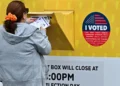





















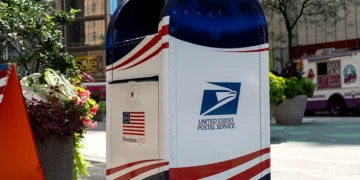















































The U.S. Department of Justice has petitioned the Supreme Court to intervene in a legal dispute regarding new U.S. Postal Service regulations for mail-in ballots. The move comes as the November midterm elections approach, with the administration seeking to lift a temporary block on the enforcement of these requirements.
Solicitor General D. John Sauer filed an emergency appeal requesting that the justices stay a 14-day order issued last week by U.S. District Judge Indira Talwani. That order currently prevents the Postal Service from implementing its new rules. While the Justice Department has also appealed the decision to a lower court, that body has not yet issued a ruling. Justice Ketanji Brown Jackson, who oversees emergency appeals from the U.S. Court of Appeals for the 1st Circuit, has directed the states and voting rights organizations involved in the challenge to submit their responses to the administration’s request by Tuesday morning.
At the center of the conflict is a final rule requiring states and local jurisdictions to adhere to specific design standards for mail ballots, such as the inclusion of unique barcodes. Additionally, the rule mandates that election officials submit data on residents voting by mail—including names, addresses, and individual barcodes—to an online portal. The Postal Service intends to enroll these voters in state-specific participation lists and verify that ballot mailings meet these new design criteria. Any materials failing to comply will be rejected and returned to election offices.
Sauer argued in his filing that the regulation pertains to the management of the U.S. Mail rather than the administration of federal elections, asserting that it is constitutionally sound. He contended that while states hold primary authority over election procedures, they cannot utilize the federal mail system while simultaneously claiming exemption from Postal Service rulemaking. Furthermore, he claimed the judge’s injunction undermines efforts to mitigate voter fraud, which he described as a threat that dilutes the impact of lawful votes and erodes public confidence in electoral integrity.
Conversely, state and local election officials have expressed significant concerns regarding the feasibility of these requirements so close to the November 3 midterms. In court filings, they noted that ballot envelopes have already been printed and that the administrative burden of uploading voter data to the new portal would require substantial time and resources. Steven Monteith, an executive vice president at the Postal Service, stated in a filing that the agency is still refining the Federal Ballot Mail Portal and anticipates it will be ready for voluntary use by next week.
The administration maintains that the rule imposes only modest informational requirements and should not impede any voter’s ability to cast a ballot by mail. Sauer emphasized that the Postal Service is not tasked with verifying voter eligibility, but rather with ensuring that envelopes meet established design and informational standards.
These mail-voting restrictions were developed following an executive order signed by President Trump in March. That order also directed the Department of Homeland Security to create lists of U.S. citizens and instructed the attorney general to prioritize the prosecution of election officials who issue ballots to ineligible voters. Although Judge Talwani previously blocked the administration from advancing that directive, the Supreme Court issued a procedural ruling last week that froze her decision. The high court did not address the merits of the mail-ballot restrictions at that time, characterizing the states’ lawsuit as premature.
As the legal battle continues, the timeline for the upcoming elections remains tight. Some municipalities in Wisconsin have already distributed ballots, and North Carolina is scheduled to begin sending them to certain voters this Friday. Most other states are expected to initiate their mail-ballot distribution process by mid-September. The report also notes that talwani is also considering a request for longer relief from two dozen Democratic-led states and voting rights groups challenging the legality of the mail-voting measures. The report also notes that she held a hearing earlier Thursday to consider their bid for a preliminary injunction. The report also notes that missouri’s top court blocks new House map favoring GOP until voters can weigh in. The report also notes that judge blocks Trump’s latest effort to narrow birthright citizenship. The report also notes that dOJ charges ICE officer who shot immigrant with lying to investigators. The report also notes that the Supreme Court Finally Ends the Racial Districting Game.
Source: CBS News