


















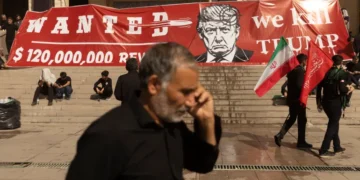











































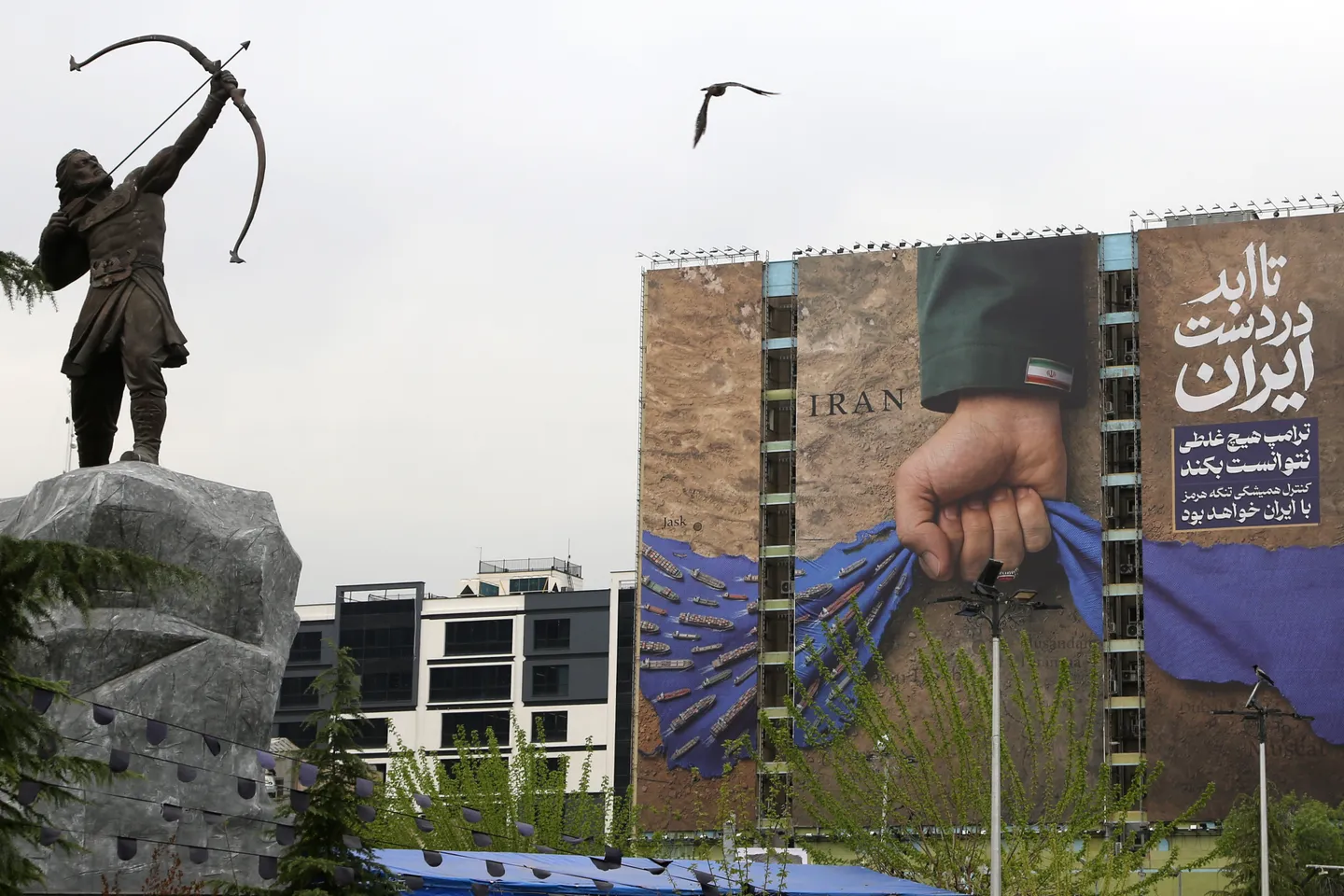
A 60-day ceasefire established under a memorandum of understanding between the United States and Iran expired this past Monday without an extension. The lapse has triggered widespread concern that the ongoing conflict could shift into a significantly more volatile phase. As US President Donald Trump continues to demand a complete surrender from Tehran, Iranian leadership has signaled a major strategic pivot, moving away from a defensive focus toward what officials describe as a fully offensive posture.
Iranian authorities have indicated they are prepared to escalate tensions within the Strait of Hormuz and the broader region. An Iranian official stated in a recent interview that the country is ready to take difficult actions and make decisive moves to counter US pressure. Analysts suggest this transformation is already manifesting both in practical military operations and within the internal structure of Iran’s political and security establishment.
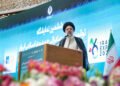
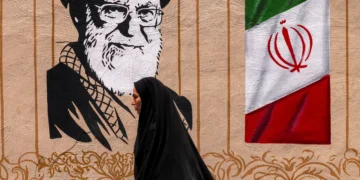
Mohammed Eslami, a political scientist at the European University Institute, notes that this transition toward an offensive approach is already institutionalized. He points to recent appointments by Supreme Leader Mojtaba Khamenei, who has filled key security vacancies with senior military figures. Among these is former IRGC commander Mohsen Rezaee, who was appointed as the Supreme Leader’s representative on the Supreme National Security Council. While Western media often categorizes such figures as hardliners, Eslami views these moves as a clear signal of Tehran’s commitment to a prolonged conflict.
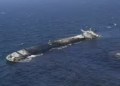
These developments follow the tenure of Mohammad Bagher Zolghadr, a former IRGC general whom The Economist previously described as an apparatchik who advocated for expanding the power of the IRGC in response to US and Israeli strikes. Practically, the shift is already visible; while there have been no recent attacks on Iranian soil, the country has conducted multiple drone operations and targeted several ships in the Persian Gulf over the past week.
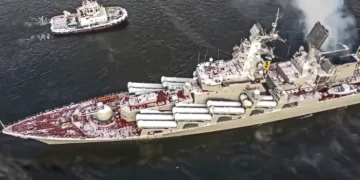
Experts believe that if Iran is indeed moving from defense to offense, it is unlikely to engage in a direct, conventional war with the United States. Instead, Tehran is expected to widen the theater of conflict. Esam Alahmadi, a Yemeni political analyst and researcher at Selcuk University, argues that Iran will likely leverage its decades-old network of regional allies. Rather than a direct confrontation, Tehran may resume strikes on US military bases, target naval assets, and encourage groups like the Houthis to increase their activity.
The strategic objective, according to Alahmadi, is not necessarily to defeat the United States militarily, but to make the political, economic, and military costs of a long-term conflict unsustainable. By dispersing US forces across the Gulf, Iraq, the Red Sea, and Israel, Iran aims to force the Trump administration to secure maritime corridors that handle roughly 30 to 35 percent of global trade. Tehran appears to be betting on a war of attrition, operating under the belief that the US lacks the stamina for a sustained fight.
This strategy also aims to complicate Washington’s global military planning. Eslami suggests that Tehran hopes a prolonged conflict will force the US to expend strategic munitions and weapon stockpiles—such as Patriots and THAAD systems—that might otherwise be reserved for a future confrontation with China. The concern is that the US would be reluctant to deplete its reserves against Iran, leaving it vulnerable elsewhere.
The potential for escalation carries significant risks. Analysts warn that as the conflict expands, there is a greater chance that Iran’s regional proxies could trigger a military response that exceeds Tehran’s original calculations. Alahmadi cautions that if an Iranian-led attack results in significant US casualties or the sinking of a vessel, the American response could be severe, potentially targeting Iran’s core military, economic, and oil infrastructure.
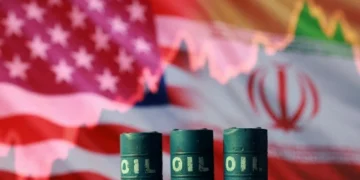
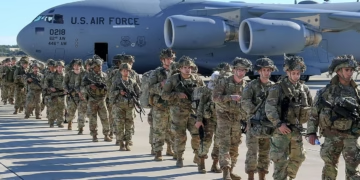
Financial markets have already begun to reflect these heightened regional risks. Following the expiration of the ceasefire and Tehran’s aggressive rhetoric, global stocks declined, government bond yields rose, and oil prices climbed to their highest levels in several weeks. The uncertainty has also impacted domestic sentiment in the US, with reports surfacing regarding the concerns of families of troops deployed on the USS Abraham Lincoln, which has faced operational challenges during its extended deployment.
Ultimately, the goal of this offensive posture is to reinforce Iran’s long-standing objective of reducing the US military presence in the region. As the conflict intensifies, the threshold for what Washington can contain continues to rise, placing the Trump administration in a position where it must make increasingly difficult choices about its regional commitments and the security of its personnel. The report also notes that rezaee, who commanded the IRGC against Iraqi forces during the 10-year-long military conflict, advocated the continuation of the war against Baghdad. The report also notes that signalling that maintaining military and commercial traffic through the Strait of Hormuz comes at an increasingly high cost, that strategy could also include attacks on US naval vessels operating near Iranian waters. The report also notes that as well as international maritime navigation, become vulnerable, Iran can attempt to move from being the party receiving strikes to being the party capable of imposing corresponding costs,” Alahmadi says, if US forces and interests. The report also notes that iran doesn’t need to destroy US naval power entirely. The report also notes that unsettling many Americans at home, even a single damaging attack on a US vessel in the region could spread widely. The report also notes that replaced by USS George Washington, the carrier has now left the region. The report also notes that they have evacuated some of the bases in the region as they also want to leave Iraq completely in the upcoming months. The report also notes that they think the US wouldn’t risk using more munitions against Iran and remain empty-handed against China.
Source: TRT World