









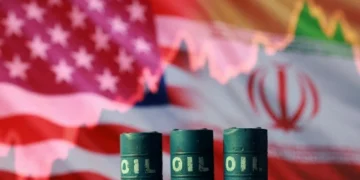
















































The United Arab Emirates (UAE) has declared an immediate and indefinite trade embargo on Iran, effectively severing all commercial and financial transactions between the two nations. The UAE Ministry of Foreign Affairs announced the decision on Wednesday, citing a need to address regional escalations that threaten national security and stability.
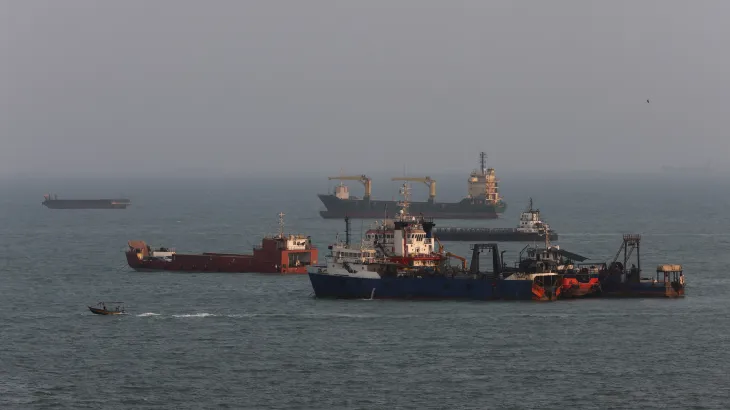
This drastic policy shift follows a report from the UAE Ministry of Defence, which claimed its air defense systems detected two ballistic missiles launched from Iranian soil. According to the ministry, one missile landed within the UAE’s territorial waters, while the other fell outside the country’s borders. Officials stated the projectiles were aimed at maritime traffic and vowed to respond decisively to any future threats against the nation or regional shipping lanes.
Tehran has categorically denied the allegations. Iranian Foreign Ministry spokesperson Esmaeil Baghaei dismissed the claims as “baseless,” characterizing the reported incident as a “false flag operation” orchestrated by the United States and Israel. Tensions remain at a breaking point following the ongoing conflict that erupted after the February 28 death of Supreme Leader Ayatollah Ali Khamenei during US-Israeli strikes on Tehran.
The impact of this embargo is expected to be profound. Mark Kimmitt, a retired US general and former assistant secretary of state, told Al Jazeera that the UAE’s move could prove more damaging to Iran than existing American sanctions. Kimmitt noted that Dubai has long functioned as a critical financial and logistics hub, providing Iran with a discreet pathway to bypass international trade restrictions.
“I don’t think that you can overstate or understate the importance of the trade, both financial and goods trade, between Dubai and Iran,” Kimmitt explained. He suggested that Tehran might view the blockade as bordering on an act of war, comparing the situation to the comprehensive embargo the United States imposed on Japan during the post-World War II era.
Data from the Observatory of Economic Complexity (OEC) highlights the depth of this economic relationship. In 2023, official bilateral trade reached $6.2 billion, with the UAE exporting approximately $5.8 billion in goods, including $2.81 billion in telecommunications equipment, computers, tobacco, and nuts. In return, Iran exported agricultural products, spices, and building materials to the UAE. Beyond these official figures, the UAE has served as an essential informal conduit for Iran to acquire consumer goods and industrial equipment that are otherwise unavailable due to global sanctions.
The diplomatic fallout comes as a June 17 memorandum of understanding between the US and Iran expired on Monday with no signs of renewal. Meanwhile, US Treasury Secretary Scott Bessent recently announced plans to intensify economic pressure on Iran, including a naval blockade of Iranian ports and unprecedented measures designed to achieve total economic isolation.
The current crisis is the latest in a series of hostile exchanges. Since the conflict began in February, Iran has launched over 530 ballistic missiles, 26 cruise missiles, and more than 2,200 drones toward targets in the UAE, which it identifies as US-linked assets. These strikes have resulted in 15 deaths and 246 injuries within the UAE, impacting civilian infrastructure, the Jebel Ali port, the Musaffah fuel terminal, and the Barakah Nuclear Energy Plant.
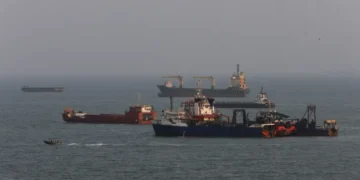
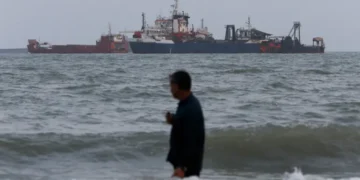
Recent months have seen continued friction, including an accusation from Abu Dhabi that Iran targeted two state-owned Abu Dhabi National Oil Company (ADNOC) vessels in the Strait of Hormuz. Iran has denied these claims as well.
The economic toll on Iran has been severe for years; GDP per capita has dropped from $8,000 in 2012 to $5,000 in 2024. Analysts suggest that by closing the Dubai route, the UAE is effectively shutting down one of the few remaining escape valves for the Iranian economy.
Despite a brief attempt at diplomatic cooperation in May 2024, when the two countries convened a Joint Economic Committee in Abu Dhabi to discuss logistics, energy, and tourism, the relationship has rapidly deteriorated. The current embargo marks a definitive end to those collaborative efforts.
As the situation unfolds, the international community is closely watching how the loss of this trade corridor will influence Iran’s internal economic stability and its ongoing military posture in the Gulf region. The report also notes that with little prospect of being renewed, the recent developments come shortly after the June 17 memorandum of understanding (MoU) between the US and Iran lapsed on Monday. The report also notes that it added, the decision was made in “light of escalations that undermine peace and security in the region”. The report also notes that which began with US-Israeli strikes on Tehran that killed then-Supreme Leader Ayatollah Ali Khamenei on February 28, Iran hit back with drone and missile strikes on US military assets a, in the first six weeks of the war. The report also notes that who say Iran is heavily reliant on its neighbour for critical imports and access to financial markets, the UAE’s embargo has been described as highly significant by analysts. The report also notes that however, the UAE says civilian sites have also been hit either by missiles or by debris from missiles intercepted by US-supplied THAAD and Patriot missile defence systems. The report also notes that on March 1, the day after the US and Israel launched strikes on Iran, Dubai’s port of Jebel Ali, the largest constructed deep-water harbour in the world, was struck. The report also notes that a day later, a fire broke out at Musaffah fuel terminal in southwest Abu Dhabi when it was struck by a drone. The report also notes that then, falling debris from a drone interception caused a fire at the Fujairah oil terminal along the eastern coast of the UAE.
Source: Aljazeera