













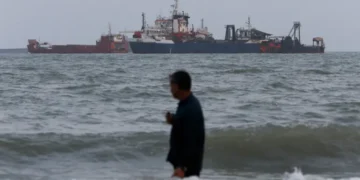



























































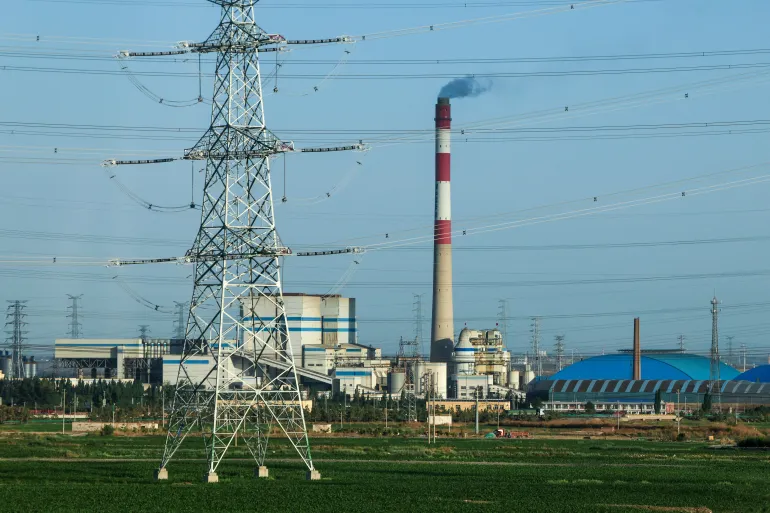
The ongoing conflict between the United States-Israel and Iran has triggered a significant global energy crisis, forcing a pivot back to coal as traditional oil and gas supply chains face severe disruption. Since the closure of the Strait of Hormuz following strikes on Tehran on February 28, approximately one-fifth of the world’s oil and liquefied natural gas (LNG) supplies have been effectively cut off from international markets.
The impact on energy security has been profound, particularly in Asia, which relied on the Strait of Hormuz for 82 percent of its oil and gas shipments in 2022. Key importers including China, India, Japan, and South Korea have faced acute shortages as regional infrastructure, such as Qatar’s Ras Laffan complex and the UAE’s Fujairah terminal, suffered damage from Iranian strikes. By March, these attacks had knocked out 17 percent of Qatar’s total LNG exports.
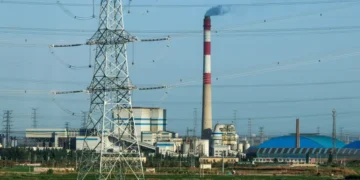
As oil prices soar, coal has emerged as the primary, albeit dirtier, alternative to maintain power grids. While coal prices have also increased, the fuel remains significantly cheaper and more accessible than imported gas. This shift has provided a massive financial windfall for major producers. South Africa’s Thungela Resources reported that its half-year profits doubled compared to 2025, driven by surging demand and increased production at its Ensham mines in Queensland, Australia. The company’s headline earnings per share rose to 4.80 South African rand ($0.30), up from 1.92 rand ($0.12) during the same period last year.
Production at the Ensham facility climbed 38 percent in the first half of 2026, reaching 2.2 tonnes. Thungela officials noted that prices are expected to remain elevated as both European and Asian markets brace for the upcoming winter season.
The global reliance on coal was already trending upward in 2025, fueled by the energy demands of artificial intelligence data centers in the US and Eurasia, according to World Bank data. However, the current conflict has accelerated this trend, causing several nations to abandon or delay climate commitments made at the COP26 summit in 2021. Energy data firm Ember projects that global coal output will rise by 1.8 percent by the end of 2026 in a “worst-case” scenario.
Asian nations have been at the forefront of this reversal. Japan has reactivated older, high-emission coal plants, while South Korea has postponed the scheduled retirement of its coal-fired power stations. In Pakistan, electricity generation from imported coal surged by 90 percent by July compared to the previous year. Similarly, Bangladesh, Thailand, the Philippines, and Vietnam have all ramped up coal usage to compensate for dwindling gas reserves.
Nick Hedley, an energy transition analyst at Zero Carbon Analytics, explained that many of these countries lack the renewable infrastructure to replace lost gas supplies. “For the likes of Bangladesh, it’s easy to lift coal use when global gas supplies are disrupted because the country invested heavily in coal infrastructure in recent decades, and much of that capacity has been sitting idle,” Hedley noted.
The situation is further complicated by domestic production challenges. In China, which consumes a vast portion of the world’s coal, output fell recently following a deadly explosion at the Liushenyu mine in May that claimed 82 lives. Meanwhile, India is moving forward with new mining projects intended to boost global supplies by 2.5 billion tonnes annually, citing rising electricity demand exacerbated by intense heatwaves.
European nations are also recalibrating their energy strategies. Germany has signaled it will prioritize electricity generation over earlier climate targets, and Italy has pushed its coal phase-out deadline from late 2025 to 2038. Indonesia, the world’s top coal exporter, reversed its production curbs in March to capitalize on the price surge, with rates reaching $131.85 per tonne in July compared to $102.20 the year prior.
While coal is abundant, its environmental cost remains high, as mining causes significant water pollution and burning it releases vast quantities of carbon into the atmosphere. The current reliance on the fuel highlights a critical vulnerability in the global transition to clean energy.
“The lesson here is that Asian countries need to speed up their shift to clean energy and electrification to safeguard themselves against future global crises,” Hedley concluded.
As negotiations regarding the reopening of the Strait of Hormuz continue, the global energy market remains in a state of flux, with coal serving as the temporary buffer against total power instability. The report also notes that soon after strikes on Tehran began on February 28, Iran closed the Strait of Hormuz, through which about one-fifth of the world’s oil and liquefied natural gas (LNG) supplies were shipped during peacetime. The report also notes that according to the US Energy Information Administration, about 82 percent of oil and gas shipments through the Strait of Hormuz went to Asia in 2022. The report also notes that experts said, this represents a notable uptick considering that countries are meant to be transitioning away from coal. The report also notes that coal is considered one of the dirtiest fossil fuels, although abundant and relatively cheap to produce. The report also notes that besides being unable to ship exports through the strait, Gulf countries caught up in the conflict have also been badly impacted by Iranian strikes. The report also notes that facilities in Saudi Arabia and Oman have also been hit. The report also notes that high-emission coal plants to cope with the energy shocks while South Korea has delayed the shutdown of coal-powered plants it promised to wind down by 2040, japan has lifted restrictions on older. The report also notes that the government at first imposed power cuts, closed universities and rationed fuel sales for vehicles before announcing it had ramped up coal-powered electricity generation, in Bangladesh.
Source: Aljazeera