





































































International Youth Day serves as a critical reminder of the essential role young people play in building a sustainable and resilient future. This contribution is particularly vital in scientific sectors tasked with solving the world’s most pressing issues, with water security standing at the forefront. In arid and semi-arid regions, the combination of population growth, rising water demand, and climate change is placing unprecedented stress on limited natural resources. Addressing these complex hurdles requires a new cohort of researchers, engineers, and innovators equipped with the skills and determination to engineer sustainable solutions.
Rain enhancement science has emerged as a field with significant potential to bolster global water sustainability. The discipline integrates expertise from diverse sectors, including meteorology, atmospheric science, aviation, data analytics, and environmental research. This multidisciplinary nature creates unique opportunities for young professionals with varied backgrounds to contribute to water-related solutions. Since its inception in 2015, the UAE Research Program for Rain Enhancement Science (UAEREP) has been instrumental in elevating this field as a key area for global research and innovation.
For the UAEREP, fostering the next generation of scientists is a core objective. Dr. Ahmed Al Kamali, Director of the programme, notes that scientific journeys often begin with curiosity and evolve as new opportunities arise. His own path, which moved from an interest in aviation to a career in meteorology and weather modification, was shaped by advanced studies at the University of Reading. This experience underscores the importance of exposing students to emerging scientific fields early in their careers to create pathways for impactful research.
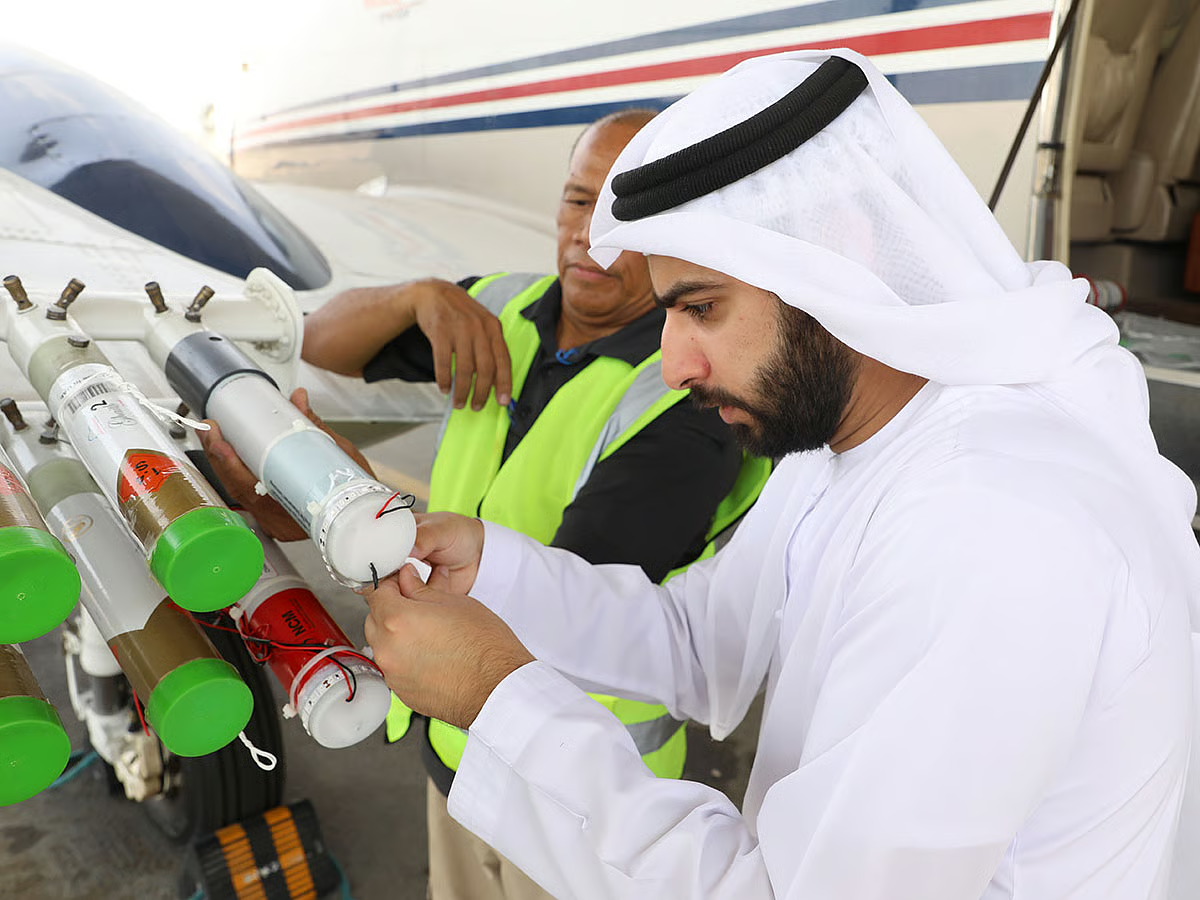
The programme goes beyond supporting research by providing early-career scientists with direct access to cutting-edge methodologies and international professional networks. Every research proposal submitted to the UAEREP is evaluated on its potential for human capital development and knowledge transfer. The framework specifically assesses how teams integrate students into their projects, offering them hands-on experience through internships, field campaigns, and collaborative research initiatives. These opportunities allow young talents to see how theoretical research translates into operational applications that directly benefit communities.
International partnerships remain a cornerstone of this development strategy. Young researchers have gained invaluable experience through placements at global centers of excellence. These include the University of Reading, the Swiss Federal Laboratories for Materials Science and Technology (EMPA), and the Center for Western Weather and Water Extremes (CW3E) at the Scripps Institution of Oceanography, University of California San Diego. Additional collaborations involve the University of Colorado Boulder, Wuhan University, MBZUAI, and the University of Hyogo. These links bridge the gap between academic theory and real-world application, providing participants with diverse perspectives.
Beyond formal research projects, the UAEREP organizes the International Rain Enhancement Forum (IREF), which acts as a platform for students to showcase their work and engage with world-renowned experts. Dedicated poster sessions allow emerging researchers to receive constructive feedback and integrate into a global network focused on water sustainability. Similarly, the Rain Enhancement Hub webinar series connects university students with leading specialists, keeping them informed on the latest climate research and encouraging them to contribute their own innovative perspectives.
As science continues to present new challenges, the need for fresh ideas remains constant. On this International Youth Day, it is clear that the future of water security depends on the creativity and knowledge of the next generation. For young people entering the field, meteorology and rain enhancement offer a chance to engage directly with issues that impact global economies and daily life. Through education and practical experience, the next generation is being prepared to transform research into the practical solutions necessary to secure the world’s water future.
Source: Gulf News