



































































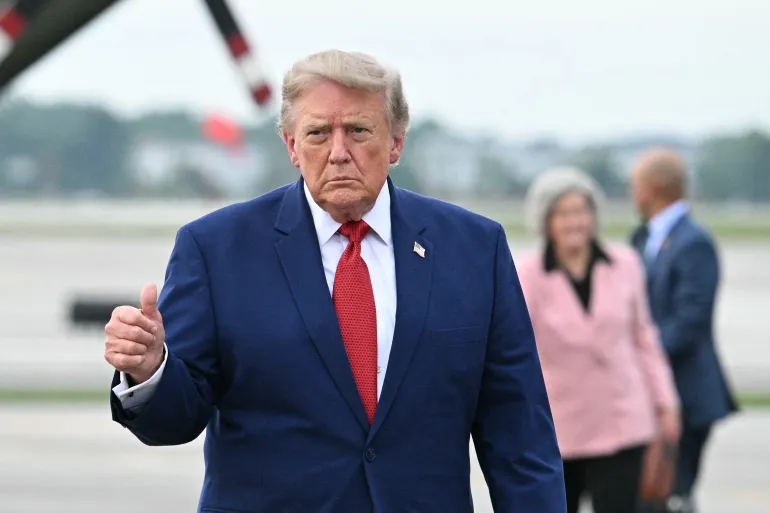
United States President Donald Trump has doubled down on claims that the United States maintains “total control” over the Strait of Hormuz, even as transit through the arterial waterway fell to a one-week low amid the ongoing US-Israel war with Iran. Trump made the statement in a Truth Social post on Wednesday, reiterating a similar claim he made to reporters the day before as diplomatic efforts to end the conflict and fully reopen the strait have continued to stall.
“The U.S.A. has total control over the Strait of Hormuz. I THINK WE WILL KEEP IT!” Trump said. He went on to claim the ongoing US blockade of Iranian ports “is being called, by everyone, ‘A WALL OF STEEL,’ and there is nothing Iran can do about it.” Trump further characterized Iran as “all talk and no action, the Bully of the Middle East No Longer,” ending his message with, “Praise be to Allah!”
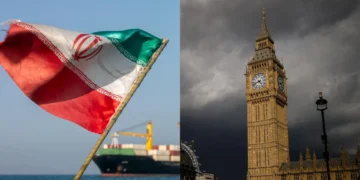
While ships can still transit through the strait, they face several obstacles and heightened threats. That has caused the volume of traffic to drop dramatically. Reuters reported that just eight ships transited through the Strait of Hormuz on Tuesday, far below the pre-war rate of 130 to 140 ships. Data from the trade analytics platform Kpler indicates this is a significant decline from the previous ten-day average of approximately 12 ships per day.
Despite the president’s rhetoric, Iran continues to assert its influence over the waterway, pursuing separate management talks with Oman. Wider peace negotiations with the US have largely stalled, and Iran maintains that it will not allow full traffic in the strait until the US naval blockade is lifted, sanctions are removed, and its frozen assets are released. The US and Israel launched the war on February 28, and while a Memorandum of Understanding was signed in June, it dissolved in mid-July.
Recent military incidents have exacerbated regional tensions, including a US Navy helicopter strike on a Panama-flagged cargo vessel on Tuesday. Furthermore, the Yemen-based Houthis have opened a new front in the conflict, with a recent attack on an Egyptian-owned ship resulting in six deaths, the first fatalities from such an operation in the Bab al-Mandab Strait.
In response to the escalating situation, Pakistan’s Foreign Ministry spokesperson, Tahir Andrabi, stated on Wednesday that Islamabad is working to “bring the two parties to the negotiating table” and prevent efforts to undermine the peace process. He noted that Pakistan’s deputy prime minister and deputy foreign minister held talks with officials from Iran, Saudi Arabia, and Kuwait on August 10, and that Pakistani Interior Minister Mohsin Naqvi is currently visiting Tehran.
Some analysts view Trump’s latest statements as part of a concerted effort to frame the conflict as a victory, despite falling short of stated goals of ending Iran’s nuclear programme, ending its influence in the region, and fomenting wider regime change. Dennis Citrinowicz, a senior researcher at the Institute for National Security Studies, wrote on X that the administration’s determination to show it is “winning” is creating a “virtual reality” that hinders decision-making based on the actual situation on the ground.
Citrinowicz added, “The United States does not control the Strait of Hormuz. Despite everything that has happened, Iran retains sufficient capabilities to disrupt maritime traffic through the strait.” These sentiments contrast with claims made by US Energy Secretary Chris Wright, who stated on Tuesday that the seven-day average for oil leaving the strait is up to almost 9 million barrels per day. Wright argued that, when combined with upgraded land delivery infrastructure, fossil fuel deliveries from the region were close to pre-war levels.
However, the data provided by the administration has faced skepticism. In a post on X, Brett Erickson, an analyst at Obsidian Risk Advisors, stated there is “zero evidence that 9Mbpd is exiting the Strait of Hormuz per day,” emphasizing that the figures are not “maybe” or “potentially” accurate. Meanwhile, the Trump administration continues to signal a desire for an off-ramp in the war, which remains politically unpopular in the US ahead of the midterm elections in November.
Source: Aljazeera