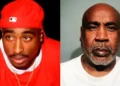




















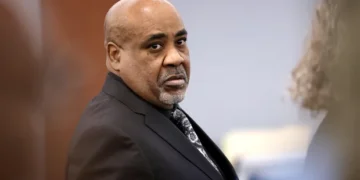































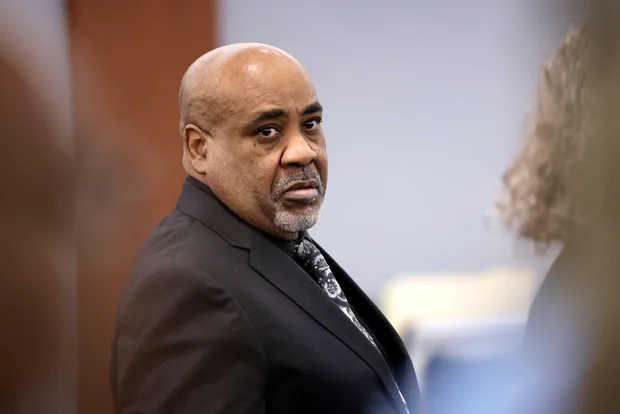
A jury has reached a verdict in the long-standing investigation into the 1996 death of iconic rapper Tupac Shakur, finding 63-year-old Duane “Keffe D” Davis guilty of orchestrating the fatal shooting in Las Vegas. The conviction, delivered Monday following a trial that lasted several weeks, marks the first time a legal resolution has been reached in a case that has remained a focal point for hip-hop fans and investigators for nearly 30 years.
Davis was convicted on a charge of murder with a deadly weapon, specifically involving the intent to promote, further, or assist a criminal gang. While he faces a potential life sentence, prosecutors announced Monday evening that they would drop the gang enhancement portion of the charge due to logistical challenges regarding witnesses. Davis had entered a plea of not guilty to the charges.
The courtroom atmosphere was tense as the verdict was read. Sekyiwa “Set” Shakur, the rapper’s sister, was observed crying and reaching toward a companion for support. Davis’ son was also present, appearing visibly distressed as he covered his face with his hand.
During closing arguments, Chief Deputy District Attorney Binu Palal contended that Davis had actively sought out Shakur and Death Row Records co-founder Marion “Suge” Knight. According to the prosecution, the attack was an act of retaliation following a physical altercation earlier that evening involving Davis’ nephew. Palal described the incident as a premeditated plan rather than an impulsive act, noting that the group had searched for the victims before spotting them and executing a U-turn to approach their vehicle.
The prosecution’s case relied heavily on Davis’ own public admissions made over the years. Palal emphasized that while Davis’ accounts of the night had shifted, he consistently placed himself inside the white Cadillac from which the gunfire originated. “The core facts remain. The material facts remain,” Palal stated, arguing that Davis provided the weapon and directed the attack, even if he was not the one who pulled the trigger.
Defense attorney Michael Sanft challenged the lack of physical evidence, such as surveillance footage or phone records, that would definitively place Davis in Las Vegas on the night of September 7, 1996. Sanft argued that the prosecution failed to provide independent evidence to corroborate Davis’ statements, asserting, “They have nothing in this case that says that man was here in Las Vegas on Sept. 7, 1996.”
The trial featured testimony from 24 prosecution witnesses and three defense witnesses over nine days. Prosecutors acknowledged the difficulties of litigating a case that is nearly three decades old, noting that evidence collection methods in the 1990s differed significantly from modern standards. For instance, investigators mentioned a hotel bill found at Davis’ home during a search, though its exact date and current location remained unclear during the proceedings.
Prosecutors also highlighted Davis’ 2019 memoir, “Compton Street Legend,” and various interviews as evidence of his involvement. Prosecutor Marc DiGiacomo pointed to a scrapbook Davis maintained containing articles about the rapper, telling jurors, “This guy’s scrapbooking his murder, for God’s sake.” Palal rejected defense claims that Davis fabricated his stories for financial gain, arguing that profiting from the narrative did not negate the truth of his involvement.
Shakur, widely regarded as one of the most influential figures in music history, was shot while stopped at a red light in Las Vegas. He succumbed to his injuries six days later, while Knight survived the encounter. Under Nevada law, an individual who assists in the commission of a murder can be held criminally responsible. Davis is the only surviving member of the four individuals identified by prosecutors as being inside the Cadillac that night; the others, including the man who allegedly provided the gun, are deceased.
The trial underscored the deep-seated rivalry between the South Side Compton Crips and the Mob Piru gang, which were linked to the competing record labels Bad Boy Records and Death Row Records. A gang expert testified that Davis served as a “shot caller” within his organization, a claim the defense disputed by questioning the lack of evidence regarding his authority over others.
The proceedings concluded after the jury deliberated for less than three hours. This verdict brings a formal legal conclusion to a case that has persisted in the public consciousness for decades, finally addressing the events of that night in 1996. The report also notes that palal acknowledged that Davis’ accounts of the killing evolved over the years but argued those differences reflected Davis’ changing motivations and efforts to protect himself. The report also notes that four of whom were alternates, heard testimony from 24 prosecution witnesses and three defense witnesses over nine days, the panel of 16 jurors. The report also notes that 7, 1996, and stopped at a red light when a white Cadillac pulled up beside him, and shots were fired. The report also notes that davis is the only person still alive among the four men prosecutors say were in the Cadillac. The report also notes that palal held up Davis’ 2019 memoir, “Compton Street Legend,” and played an interview in which Davis encouraged people to buy it to get the “real truth.” Although the book contains a disclaimer saying some facts were changed, Palal argued that names, hotels and other details changed while the central account did not. The report also notes that he said the N-word aloud, prompting people watching in an overflow courtroom to recoil and shake their heads, while reading an excerpt. The report also notes that north Carolina teen indicted in San Diego mosque shooting over livestream.
Source: CBS News