














































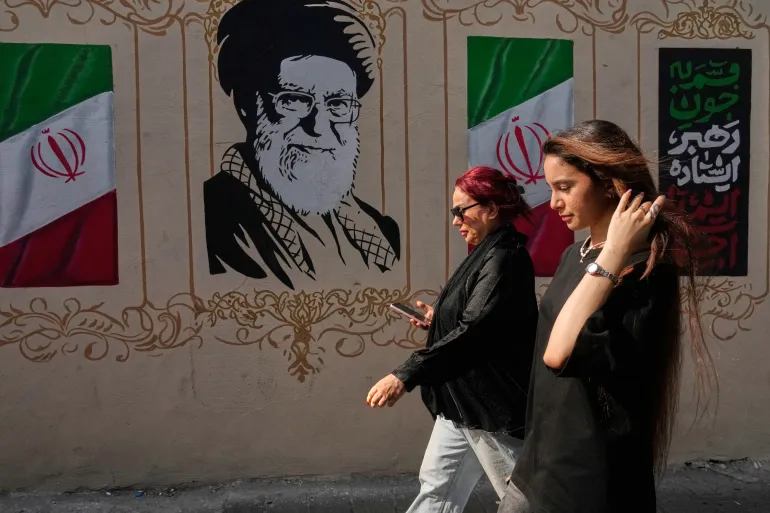
The United States has launched a new phase of its “maximum pressure” campaign against Iran, which the Trump administration has labeled an “economic D-Day.” This initiative, dubbed “Operation Economic Outcast,” aims to cripple the Iranian economy by expanding secondary sanctions across five critical sectors: aviation, digital assets, gold, shipping, and technology.
While Washington maintains that these measures are designed to target the Iranian government and the Islamic Revolutionary Guard Corps (IRGC), many Iranians argue that the policies are effectively isolating the civilian population from the international community. The sanctions have already triggered a currency collapse, leading to significant inflation in the costs of food and medicine, and now they are increasingly impacting the education sector.
A major consequence of these latest measures is the suspension of general licenses that previously allowed for limited cooperation between American universities and Iranian entities. The US Treasury Department’s Office of Foreign Assets Control (OFAC) has also suspended permissions for professional and amateur sports exchanges, as well as certain non-commercial personal remittances. A brief wind-down period for these activities remains in effect until September 8, after which any engagement will require specific OFAC authorization.
The impact on students has been immediate. The Educational Testing Service (ETS) has paused the administration of TOEFL and GRE exams within Iran and cancelled previously scheduled tests. An ETS spokesperson stated that the organization is in full compliance with US sanctions law, though they are exploring paths to resume services for Iranian nationals, who are currently restricted to testing outside the country.
Duolingo has implemented even stricter measures. Following an August 24 directive from the US Treasury, the company announced it would stop offering its English proficiency test to anyone testing within Iran or using Iranian government-issued identification, effective September 1. The company noted that this policy applies to individuals outside of Iran as well, if they rely on Iranian documentation. Duolingo stated it would reassess the situation if regulations change, but currently, it has no clarity on when that might occur.
The atmosphere among Iranian students is one of panic and frustration. In a Telegram group dedicated to TOEFL preparation, members have expressed deep concern over their future prospects. One student, Faezeh, noted that her academic plans are now delayed, forcing her to consider the high costs of traveling to countries like Turkiye or Armenia just to sit for a required exam while the domestic economy continues to falter.
Others feel the cumulative effect of these sanctions is a form of exclusion from the global community. Danial, a resident of Tehran, described the feeling as being removed from the list of “accepted human species.” Beyond language testing, students are observing with alarm as universities in the United Kingdom, Norway, and Australia pause PhD applications and sponsorships for Iranian applicants.
The frustration is compounded by the perceived disconnect between US rhetoric and reality. Many Iranians recall that when thousands were killed during anti-government protests in January, the US president promised that “help is on its way.” However, current Secretary of State Marco Rubio has characterized Iran as a “Failed Nation,” emphasizing a distinction between the Iranian people and their leadership while simultaneously tightening the economic net.
As the US continues to pressure Iran’s neighbors to limit trade and targets financial institutions in the United Arab Emirates, the civilian cost of this “economic D-Day” continues to mount. For thousands of young Iranians, the path to international education and professional advancement is becoming increasingly obstructed, leaving many to wonder what further restrictions may be in store as the geopolitical standoff persists. The report also notes that and one sector in particular appears poised to take a major hit: education. The report also notes that cloud services and platforms, they have financially isolated Iranians through blocked bank transfers and digital exclusion through restricted software. The report also notes that which counts Iran among its primary targets, has dashed countless dreams, the US travel ban. The report also notes that construction and manufacturing, among others, those sectors were added to a comprehensive list that includes financial sectors. The report also notes that or engaging in any significant transaction with, or providing any assistance to anyone operating in those sectors may be designated as a blocked party under US secondary sanctions, any person anywhere in the world operating in. The report also notes that that could bring about asset freezes and an effective quarantine from US-linked and much of global commerce. The report also notes that that is why, despite some humanitarian-linked protections, the years-long “maximum pressure” campaign of the US against Iran has had wide-ranging impacts on civilian life, including availability of some medicine and medical equipment.
Source: Al Jazeera