








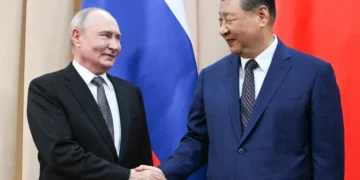



























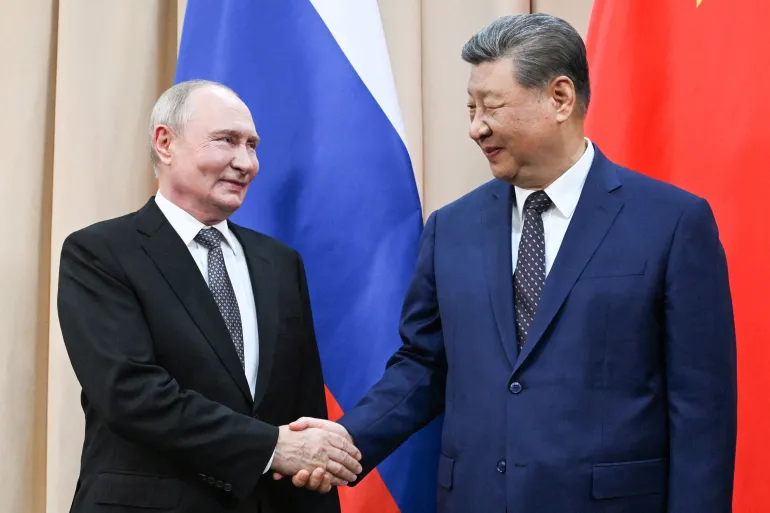
Chinese President Xi Jinping and his Russian counterpart, Vladimir Putin, met on the sidelines of the Shanghai Cooperation Organisation (SCO) summit in Bishkek, Kyrgyzstan, to reaffirm their strategic partnership. During their first face-to-face meeting since May, Xi expressed his satisfaction with the encounter, noting that bilateral relations between Beijing and Moscow have become increasingly “more solid” despite a global climate marked by “uncertainty and unpredictability.”
Xi emphasized that the prospects for the two nations remain “even brighter,” even as he acknowledged that the international order faces growing instability. Putin echoed these sentiments, stating that cooperation between the two powers is successfully developing across all sectors. The summit, which celebrates the 25th anniversary of the regional security and economic bloc, serves as a platform for the leaders to project a unified front against Western influence and promote a multipolar world vision.
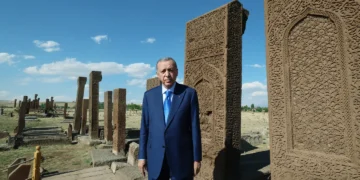
The gathering in the Kyrgyz capital brings together over a dozen heads of state, including India’s Narendra Modi, Iran’s Masoud Pezeshkian, and Pakistan’s Shehbaz Sharif, with Turkish President Recep Tayyip Erdogan attending as a dialogue partner. The event occurs as the war in Ukraine enters its fifth year and tensions between the United States and Iran continue to escalate. While Russia’s economy has grown more dependent on China due to Western sanctions, Kremlin spokesman Dmitry Peskov noted that the leaders focused primarily on economic ties, discussing the Ukraine conflict only in passing.
Diplomatic efforts regarding the Ukraine war remain largely stalled. During a separate meeting with Putin, Indian Prime Minister Narendra Modi expressed New Delhi’s readiness to support a resolution to the conflict. Putin responded by stating that Moscow is “following the path” toward a resolution, though he provided no further details. Reports from the previous week indicated that CIA Director John Ratcliffe had visited Moscow for discussions, potentially involving warnings against supplying weaponry to Tehran.
Regional instability was further highlighted by Iranian President Masoud Pezeshkian, who addressed the recent exchange of fire between the United States and Iran. Speaking to Modi, Pezeshkian stated that continuing the war is not in the interest of Tehran or the wider region, emphasizing a desire for a path toward agreement. Putin is also scheduled to hold separate bilateral talks with the Iranian leader.
As the summit progresses, the alliance continues to expand its reach. The SCO now includes 10 member states and 15 “dialogue partners,” including Saudi Arabia, Qatar, and Turkey, alongside two observer nations, Afghanistan and Mongolia. Despite the bloc’s claim to represent approximately 40 percent of the global population and 25 percent of the world’s GDP, the organization remains a diverse group with occasional internal disagreements among its members. The report also notes that china has consistently denied giving Russia material support for its assault on its neighbour. The report also notes that the summit takes place four-and-a-half years into Moscow’s Ukraine invasion and six months into the war between the United States and Iran. The report also notes that that has seen Western countries call on Beijing to pressure Moscow to end its offensive. The report also notes that uS media speculated that as well as Ukraine, Ratcliffe sought to convey a warning to Russian counterparts that Moscow should refrain from supplying weapons to Tehran.
Source: Al Jazeera