
















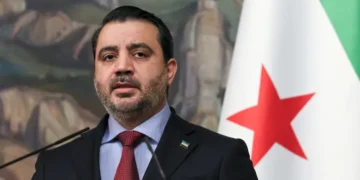
















































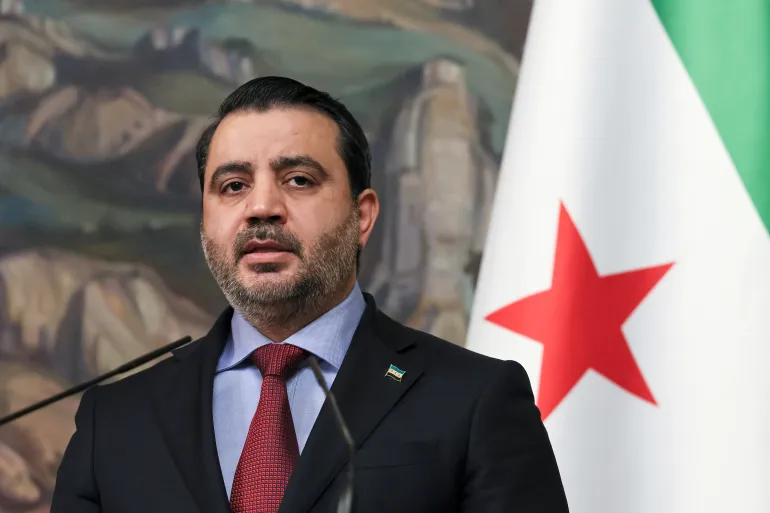
Syrian Foreign Minister Asaad al-Shaibani has declared that the door for diplomatic engagement with Israel remains open, calling on the Israeli government to capitalize on what he described as a “historic opportunity.” In an interview published on Sunday, al-Shaibani expressed his expectation that negotiations regarding a security agreement—which would facilitate an Israeli withdrawal from Syrian territory—could resume in the near future.
These discussions were previously halted following the onset of the US-Israel conflict with Iran, and no specific timeline has been established for their restart. Al-Shaibani emphasized that while Damascus believes in the necessity of contact, particularly with a neighbor that poses a persistent security threat, the effort is contingent on tangible results. “If this contact doesn’t bring results, then we don’t need it,” he stated, adding bluntly, “We do not trust Israel currently.”
The United States has spent more than a year attempting to broker a security framework between Israel and the government of President Ahmed al-Sharaa. However, progress has been repeatedly undermined by Israeli military incursions and strikes on government assets, which Israel justifies as necessary security measures. The Israeli prime minister’s office did not provide a comment regarding the minister’s remarks.
President al-Sharaa has maintained that Syria poses no threat to its neighbors, focusing instead on national reconstruction following 14 years of civil war. Since the 2024 ouster of Bashar al-Assad, Israel has occupied territory in southwestern Syria and conducted extensive bombing campaigns against military sites, citing the need to protect its citizens. Al-Shaibani criticized this approach, asserting that Israel’s reliance on “brute force” has failed to achieve its security objectives.
Tensions were further exacerbated last week when Israel struck the Abu al-Duhur airbase, alleging that Syria intended to permit a Turkish deployment at the site—a claim both Damascus and Ankara have denied. Al-Shaibani noted that Syria had explicitly communicated to Israel that the base would not host Turkish forces prior to the attack. He defended Syria’s military cooperation with Turkey, Jordan, and Saudi Arabia, stating that Damascus remains grateful for Turkish assistance in rebuilding its armed forces and will not forgo that support.
Regarding the proposed security deal, al-Shaibani revealed that the two sides had previously reached a near-consensus on paper, which included the establishment of security zones near the border. These plans envisioned a buffer zone monitored by the United Nations alongside areas for Syrian military deployment. However, he accused Israel of evading implementation, suggesting a lack of genuine political will to finalize the agreement.
The status of the Golan Heights, which Israel seized during the 1967 Six-Day War, remains a significant point of contention. While al-Shaibani indicated that the immediate priority is to halt Israeli aggression, he suggested that peace and the future of the Golan could be addressed once a security foundation is established. Israeli officials have publicly signaled their unwillingness to return the territory to the al-Sharaa administration.
US special envoy for Syria, Tom Barrack, is currently working to develop a mechanism to prevent conflict between Israel, Turkey, and Syria. Al-Shaibani confirmed that no agreement on this mechanism has been reached, stressing that it must focus on ending attacks rather than “entrenching the Israeli occupation.” Despite the ongoing volatility, the foreign minister maintained that Syria holds a “very great hope” for building stable regional relationships, stating that the country is “extending its hand for understandings, for peace, for diplomacy.” The report also notes that he said negotiations over the security agreement were frozen at the start of the US-Israel war on Iran and that no date has been set for a resumption of talks. The report also notes that “We believe there should be contact, especially with a party that constantly threatens the security of Syria. The report also notes that with several last year criticising the new government, even as al-Sharaa worked to strengthen ties with Washington, israeli officials have talked about a range of potential dangers in Syria. The report also notes that he said the US is pressuring Israel to return to the dialogue table. The report also notes that instead of violating its airspace and conducting raids and arrests in the south of the country, al-Shaibani said Syria respected Israel’s security concerns but that it must also respect those of Damascus. The report also notes that syria and Israel have technically been in a state of war since 1948.
Source: Al Jazeera