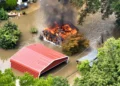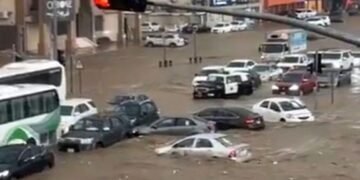



































































Days after a series of powerful storms swept through northwest Indiana, thousands of residents remain without electricity, leading to growing frustration and calls for accountability. The severe weather, which began on August 11, resulted in at least seven deaths and displaced approximately 1,000 people, while record-breaking rainfall triggered significant flooding across the region.
In Gary, where roughly one in three residents lives in poverty, the impact has been particularly severe, with more than half of the city losing power. Local resident Shatiya Hardin described the situation as “absolutely horrible,” noting the daily struggle to manage heat and care for vulnerable family members. “At night we’re sweating, we’re irritable, we have children to look out for, elderly people who need electricity for oxygen tanks,” Hardin said. She added that the area remains in a state of “survival mode,” with no local service and streets left in total darkness after sunset.
As of Sunday morning, the Northern Indiana Public Service Company (NIPSCO) reported that just over 28,000 customers were still waiting for power to be restored. At the peak of the weather event, that figure reached 374,500 customers.
In response to the widespread damage, Indiana Governor Mike Braun requested an expedited major disaster declaration from FEMA on Thursday, covering 54 counties. Initial estimates suggest that the total losses from the storms and subsequent flooding could exceed $5 billion. Governor Braun stated that the declaration would provide critical resources to accelerate the state’s recovery efforts.
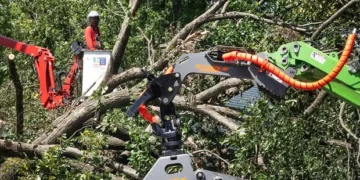
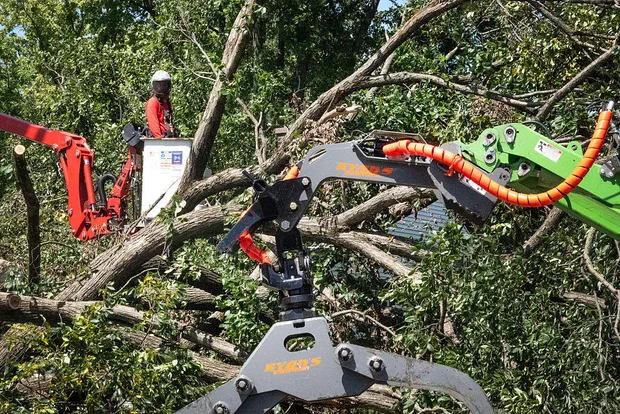
Legal action has also emerged, with a class-action lawsuit filed this week against NIPSCO. The plaintiffs allege that the utility provider failed to adequately trim vegetation near power lines, which they claim was the primary cause of the widespread outages. NIPSCO has formally disputed these allegations, asserting that its spending on vegetation management has more than doubled since 2016. “We strongly disagree with the characterization of NIPSCO’s vegetation management practices,” the company stated.
Gary Mayor Eddie Milton acknowledged the need for a shift in how the city handles such emergencies. “We’re going to revisit what should we do better from an emergency management standpoint,” Milton said. He emphasized that he intends to demand greater accountability from utility providers moving forward.
For now, many residents in Gary continue to rely on community centers for essential services, including hot meals, air conditioning, and a place to charge mobile devices. The report also notes that the storms brought record rainfall that flooded several communities. The report also notes that we don’t have service in this area at all whatsoever. The report also notes that at night, the streets, the roads, everything is pitch black besides the lights from the cars.
Source: CBS News