
































































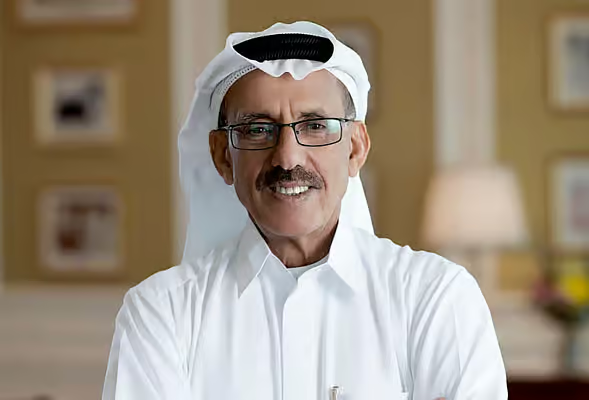
Emirati billionaire Khalaf Al Habtoor has publicly questioned the methodology behind global “richest” lists, arguing that such rankings often lack a clear scientific or financial basis. While he acknowledges his own name occasionally appears on these charts, he maintains that the metrics used to estimate personal wealth are frequently disconnected from the reality of private enterprise.
Al Habtoor emphasized that determining the net worth of individuals who own private companies is inherently flawed, as their financial books and accounts are not accessible to the public. He noted that without access to precise data regarding assets, liabilities, and personal investments, these figures remain speculative estimates rather than established facts. Furthermore, he argued that the market capitalization of publicly listed companies should not be automatically equated with the personal wealth of their leadership.
Instead of focusing on rankings, Al Habtoor advocates for measuring success through the longevity of a business, the number of jobs created, and the overall contribution to society and the economy. “Estimated numbers change, lists come and go, but history knows who built,” he stated, adding that genuine achievement does not require a ranking to be validated.
In his statement, Al Habtoor paid tribute to the pioneering business families who were instrumental in developing the UAE’s private sector long before the nation became a global economic hub. He specifically recognized families such as Al Ghurair, Al Futtaim, Al Mulla, Juma Al Majid, Al Gurg, Al Rostamani, Al Masaood, Al Fahim, and Khalifa and Omeir bin Yusuf.
“They built real businesses, accumulated expertise and knowledge across generations, and played a fundamental role in building the private sector we see today,” he remarked. For Al Habtoor, these figures represent the true standard of success, having established foundations that have endured through decades of growth.
Current Regional and Global Updates
- US Sanctions: The United States is set to impose what are described as the “toughest sanctions in history” on Iran, according to Bessent.
- Regional Conflict: The President of Iran has stated that now is the time to end the ongoing war while the country remains in a position of strength.
- Naval Movements: The aircraft carrier USS George Washington has arrived in the Middle East, coinciding with the departure of the USS Abraham Lincoln.
- Employment Regulations: New salary rules under the UAE’s Nafis program are scheduled to take effect in September, requiring attention from affected employees.
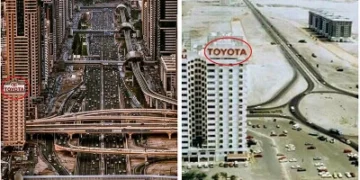
- Local Enforcement: Tenants residing in the Dubai Toyota Building are facing fines due to the installation of illegal partitions, with authorities outlining the formal eviction process.
Source: Khaleej Times