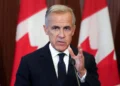










































































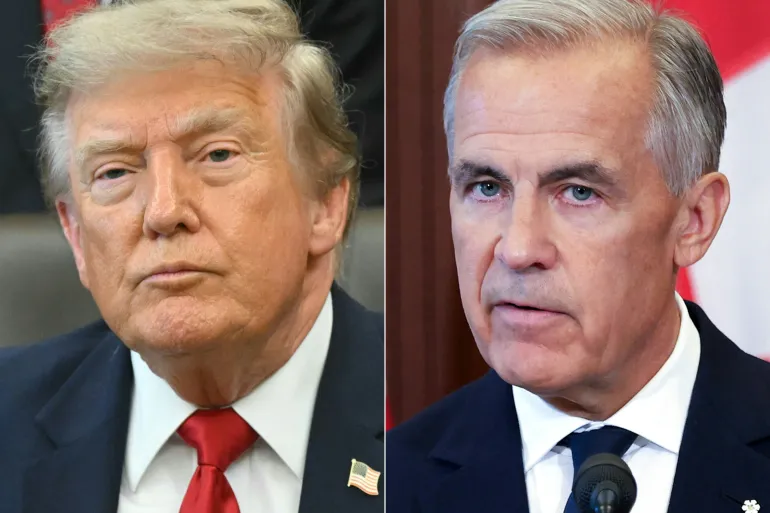
Canadian Prime Minister Mark Carney has pledged to “match Washington’s new tariffs dollar for dollar” following the abrupt breakdown of high-stakes trade negotiations between Ottawa and the United States. The retaliatory move comes in response to US President Donald Trump’s decision to impose a 50 percent levy on $20bn worth of Canadian goods—roughly 5.5 percent of the country’s total exports—a development that threatens to upend the long-standing stability of the North American trade relationship.
The diplomatic impasse reached a breaking point on Friday, with Carney confirming in Ottawa on Saturday that the discussions failed because the terms proposed by the US were “uneconomic, unfair and undermined the net benefits for Canada.” Among the contentious demands, Carney noted that Washington sought to restrict Canada’s sovereignty regarding future trade deals. Furthermore, he alleged that US negotiators issued unacceptable threats targeting the French language and “Quebec culture,” characterizing the overall US position as a scenario where “they asked too much, and they offered too little.”
President Trump dismissed these concerns on his Truth Social platform, asserting that Canada seeks the advantages of being a US state without the formal status. He further justified the tariffs by claiming that Canada has long imposed “massive amounts” of duties on American farmers, declaring, “No more!!!” This latest escalation follows a series of tariff threats and minor trade disputes that have persisted since the beginning of Trump’s second term.
The US tariffs target more than 500 product categories, impacting a diverse range of Canadian exports. Affected goods include alcohol such as beer, wine, and liquor; dairy products like milk and cream; and various technology items, including smartphones, cameras, and radar equipment. The list also encompasses athletic gear—specifically hockey, golf, and gym equipment—along with wood products like lumber and furniture, and a variety of seasonal holiday goods ranging from toys to perfumes. These measures also challenge the US-Mexico-Canada Agreement, potentially jeopardizing the future of the trade pact.
In response, the Canadian government has announced that its own retaliatory measures, set to begin on September 8, will focus on US steel, dairy, appliances, farm equipment, pulp, paper, and electronics. While Carney has indicated that more specific details on the targeted items will be released shortly, the broader economic outlook remains concerning for both nations.
Experts warn that the trade war will likely result in higher costs for businesses and increased consumer prices. David Mercer, reporting from Calgary, noted that the economic blow could lead to higher unemployment and potential bankruptcies for small and medium-sized enterprises. Julian Karaguesian, a trade expert at McGill University, suggested that the tariffs would effectively price hundreds of Canadian goods out of the US market. However, Steven Okun, CEO of APAC Advisors, noted that while politically painful for both sides, the impact on Canada’s overall economy might be limited given that the affected goods represent only about 5 percent of its total exports.
Despite the current friction, Prime Minister Carney is framing the situation as a catalyst for Canada to diversify its trade partnerships. He has been actively engaging with leaders in Asia and Europe to reduce the country’s heavy reliance on the US market. This is a significant challenge, however, as 73 percent of Canadian exports—totaling $409bn last year—are destined for the United States. By comparison, the United Kingdom and China account for only 6 percent and 4.4 percent of exports, respectively.
The economic fallout is expected to reach American households as well. The Business Roundtable, representing 200 CEOs of major US corporations, has warned that these tariffs risk inflating costs for families and businesses alike, urging both governments to return to the negotiating table. As Okun observed, blanket tariff policies often fail to achieve their intended goals, frequently causing inflation rather than the promised increases in investment or trade volume. The report also notes that and how will it impact the two Western economies, so what prompted this latest escalation. The report also notes that in Ottawa on Saturday, Carney said the talks with the US broke down late the day before after Trump set conditions that were ultimately unacceptable. The report also notes that “We’re the partner of choice in many respects for countries around the world, and the Americans wanted to restrict that. The report also notes that they will likely hit popular Canadian brands from Crown Royal whisky to Molson beer. The report also notes that cheese, however, is not on the list even though Trump said a reason for the tariffs is Canada’s “discrimination” against US cheeses, The Washington Post reported. The report also notes that at gyms and in swimming pools, other sports supplies targeted include those used in golf.
Source: Al Jazeera