


























































The United Arab Emirates is aggressively expanding its integrated supply chain infrastructure throughout 2026, consolidating maritime, land, air, rail, and free zone operations. This strategic shift aims to transform the nation from a traditional import-export hub into a comprehensive end-to-end logistics platform, linking manufacturing and storage directly with ports, airports, and border crossings to ensure global trade flows remain resilient.
Regional connectivity is a primary focus of this expansion. The Sharjah Ports, Customs and Free Zones Authority has partnered with Oman Customs to establish a logistics corridor connecting Sharjah’s coastal ports—including Khorfakkan, which is currently targeting a future capacity of 10 million containers—with Omani hubs such as Sohar, Duqm, and Salalah. Domestically, Sharjah is also developing the Al Dhaid Logistics Complex, a massive project spanning over 16 million square feet with an initial capacity of 1.5 million TEUs.
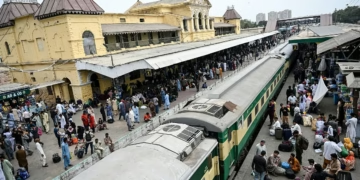
Rail infrastructure is playing an increasingly critical role in this network. Following contracts signed by Hafeet Rail in February 2025 to develop railway facilities in Oman, cross-border freight capabilities are scaling up. Within the UAE, Etihad Rail recorded significant activity in 2026, transporting approximately 1.8 million tonnes of sulphur, over 4 million tonnes of aggregates, and 129,000 containers across 11 terminals that link major industrial hubs like Khalifa Port and Jebel Ali.
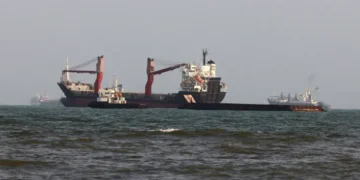
Air freight capacity is seeing similar growth through the Abu Dhabi Airports Free Zone. Key developments include the 8.3-million-square-metre Al Falah Logistics Park and the East Midfield cargo terminal, which is expected to handle 1.5 million tonnes annually upon its 2027 completion. Meanwhile, on the east coast, Fujairah Terminals managed over 70,000 TEUs and 100 cargo vessels during recent regional disruptions, proving its value as an alternative trade route alongside planned expansions at Rugeilat Port and Dibba Al Fujairah.
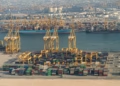
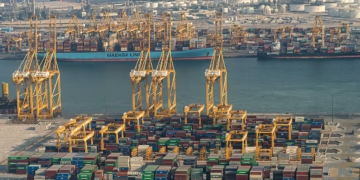
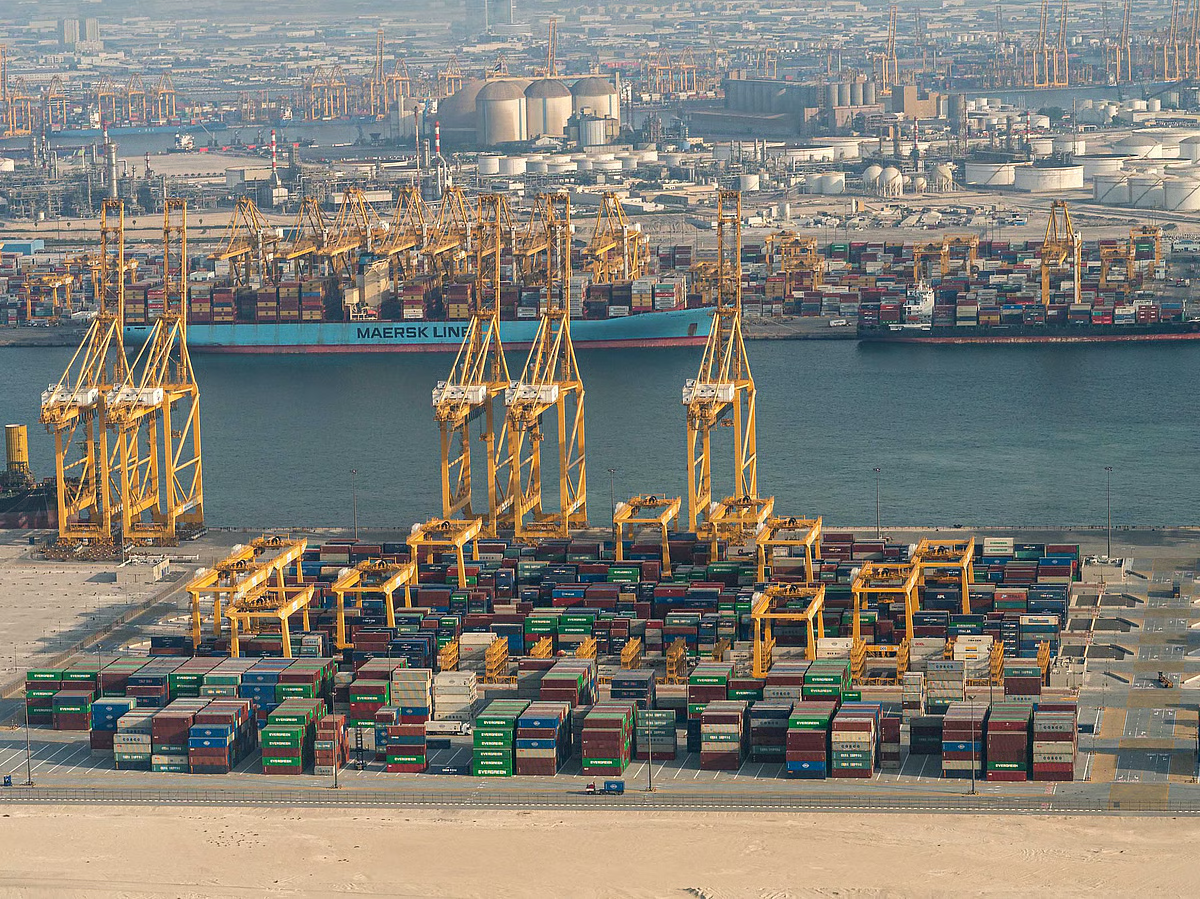
In Dubai, the logistics corridor continues to bridge sea and air freight between Jebel Ali Port and Al Maktoum International Airport. The Jebel Ali Free Zone (Jafza) has seen robust growth, attracting AED854 million in new investments during the first four months of 2026, with expansions spanning the manufacturing, logistics, healthcare, and food production sectors. This ecosystem has also attracted major multinational firms, such as healthcare provider Novo Nordisk, which recently established one of its three global distribution hubs in the country.
Technological integration remains central to these operations. Digital tracking platforms, such as those managed by ADDED, expanded their partner network to over 30 logistics operators in 2026, enabling real-time cargo rerouting and coordinated emergency responses. This synergy between physical infrastructure and digital systems has bolstered the national economy, contributing to a 3% growth in the UAE’s real GDP during the first quarter of 2026 to Dh485 billion at constant prices, while non-oil foreign trade reached a record Dh1.937 trillion in the first half of the year.
By prioritizing supply chain resilience, the UAE is creating a multi-route framework that enhances cargo accessibility, storage, and re-exportation capabilities. This comprehensive approach ensures that the nation remains a vital node in the evolving global trade landscape, providing the necessary infrastructure for sustained economic development.
Source: Gulf News