








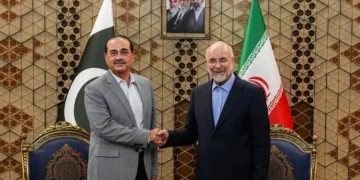


















































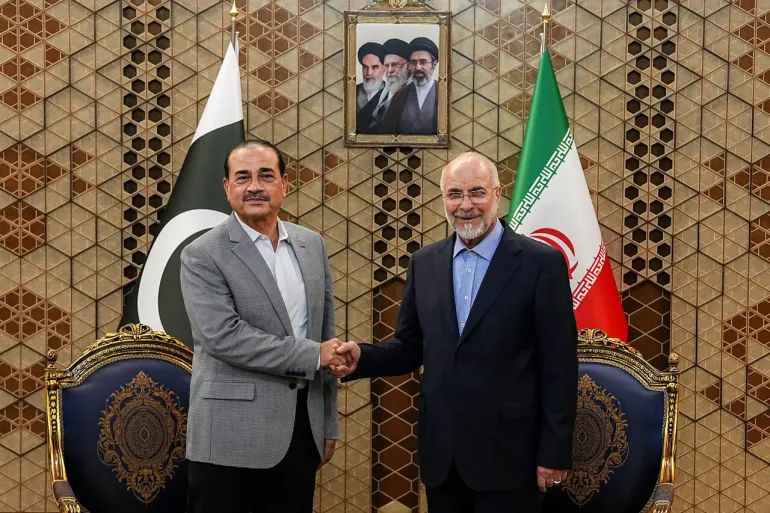
Pakistan’s Chief of Army Staff and Chief of Defence Forces, Field Marshal Asim Munir, is traveling to Tehran this Monday for consultations with senior Iranian officials. The visit, which was officially announced by the Iranian Foreign Ministry on Sunday, marks Munir’s third trip to the country this year as Islamabad continues its efforts to mediate the ongoing conflict between the United States and Iran.
Foreign Ministry spokesperson Esmaeil Baghaei stated that the visit aims to build upon Pakistan’s ongoing initiatives to help strengthen peace and security in the region. The trip follows a flurry of diplomatic activity, including two phone calls between Munir and Iranian Foreign Minister Abbas Araghchi within the last four days. During these conversations, the two leaders discussed regional developments and strategies to bolster stability in West Asia.
While Pakistani officials confirmed the trip on the condition of anonymity, the country’s military media wing, the Inter-Services Public Relations (ISPR), along with the Foreign and Information ministries, did not provide further comment on the agenda. The visit comes at a precarious time, as the diplomatic framework established by the Islamabad Memorandum of Understanding (MoU) on June 17 has effectively stalled. The 60-day window for the agreement expired in mid-August without an extension, leaving the situation in a state of flux.
Munir is expected to engage with Iran’s newly appointed military leadership, including Islamic Revolutionary Guards Corps chief Major-General Ahmad Vahidi, Chief of General Staff Major-General Ali Abdollahi, and the new Secretary of the Supreme National Security Council, Mohsen Rezaei. These officials were all appointed earlier this month. The discussions are likely to address the recent Mecca Joint Defence Agreement, a mutual defense pact signed on August 7 by Pakistan, Saudi Arabia, and Turkiye, as well as the ongoing threat posed by Houthi attacks on shipping lanes.
The Houthi issue remains a point of significant concern for Islamabad, particularly following an August 11 attack on a Tanzania-flagged commercial vessel in the Bab al-Mandeb Strait that resulted in the deaths of three Pakistani sailors. Deputy Prime Minister and Foreign Minister Ishaq Dar had previously condemned the strike as a violation of international law. Tehran is widely believed to provide support to the Houthi forces.
The diplomatic mission coincides with mounting economic pressure on Tehran. US Treasury Secretary Scott Bessent is scheduled to announce a new package of sanctions on Monday, described by American officials as the toughest in history, aimed at destabilizing the Iranian government. Iran has characterized these measures as economic warfare. Meanwhile, regional tensions have been further exacerbated by the United Arab Emirates’ recent decision to suspend trade and financial transactions with Iran following allegations of ballistic missile fire from Iranian territory—a claim that Tehran has denied.
Analysts remain divided on the potential impact of Munir’s visit. Qamar Cheema, head of the Islamabad-based Sanober Institute, noted that Pakistan is viewed as a neutral facilitator with no personal stake in the outcome, providing a rare off-ramp for the involved parties. Conversely, Javad Heiran-Nia, director of the Persian Gulf Studies Group in Tehran, suggested that Pakistan’s persistence is driven by self-interest, specifically the need to avoid a full-scale war that would threaten its energy imports and worker remittances.
Despite the challenges, regional diplomatic efforts continue. Oman’s Foreign Minister Badr bin Hamad Albusaidi is also scheduled to visit Tehran on Tuesday. As Washington prepares new sanctions and the naval blockade of the Strait of Hormuz remains in place, the international community continues to watch whether these mediation attempts can prevent a further cycle of escalation. The report also notes that days after the Islamabad Talks, the first direct US-Iran negotiations in more than four decades, ended without a breakthrough, munir’s first visit to Tehran this year came in April. The report also notes that arriving hours after US Secretary of State Marco Rubio said there had been “slight progress” in talks between Washington and Tehran, he returned in May. The report also notes that the issue carries particular weight for Islamabad. The report also notes that which it has led after the war began six months ago, the visit comes at a fraught moment for Pakistan’s mediation effort. The report also notes that tehran says the US has not met those conditions. The report also notes that pakistan’s Interior Minister Mohsin Naqvi travelled to Tehran earlier this month to revive the stalled mediation push but returned without any concrete results. The report also notes that tensions elsewhere in the region have sharpened too.
Source: Al Jazeera