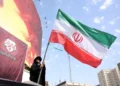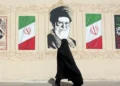











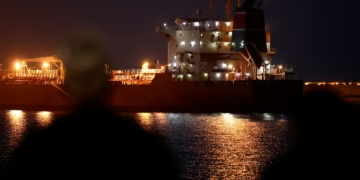
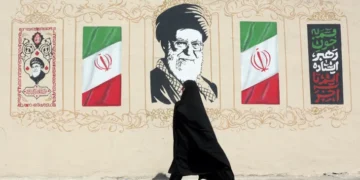








































With diplomatic efforts to resolve the ongoing war on Iran currently at a standstill, the United States is moving to escalate its economic pressure on Tehran. President Donald Trump recently announced what he described as the “most crushing economic operation” against the nation, signaling a shift toward what he termed “economic warfare and isolation on an unprecedented scale.” This follows the administration’s existing “Operation Economic Fury,” a campaign active since the conflict began in February, which has already utilized naval blockades and targeted sanctions against Iranian shipping, financial, and oil sectors.
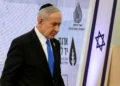
US Treasury Secretary Scott Bessent has framed the new strategy as the “greatest coordinated economic isolation in the history of the world.” Speaking to CNBC, Bessent stated that the administration is preparing to implement the “toughest sanctions in history” to force a collapse of the Iranian government. The US has issued a clear ultimatum to the international community, warning that any country, business, or financial institution providing a lifeline to Iran—including through cash transfers, oil swaps, or ship registries—will face severe economic penalties. “It is time for our allies and the rest of the world to make a decision,” Bessent said, adding that nations must choose between the US and Iran.
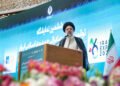
Tehran has responded with strong defiance, labeling the impending US measures as a violation of international norms. Foreign Ministry spokesman Esmaeil Baghaei described the move as an “assertion of extraterritorial sovereignty,” warning that it threatens the foundational basis of the UN-based inter-State system. Iranian Foreign Minister Abbas Araghchi dismissed the threat, noting that Iran has lived under US sanctions for decades and that these latest efforts are unlikely to succeed. He characterized the administration’s rhetoric as a familiar tactic, stating, “We have seen this movie before.”
The Iranian government has also issued a direct warning to other nations regarding their participation in the US-led economic blockade. Mohsen Rezaei, secretary of Iran’s Supreme National Security Council, stated that any country that assists in imposing these restrictions will be treated as an enemy. He outlined a three-stage response, beginning with diplomatic efforts to persuade nations to distance themselves from Washington. However, he warned that if these efforts fail, Iran is prepared to launch a “seismic” retaliation. Rezaei specifically cautioned regional neighbors that if they support the US economic warfare, they risk the total disruption of oil exports from the Gulf region.
Since the outbreak of the war on February 28, Iran has already conducted strikes against various military and civilian facilities across the Middle East, including sites in Qatar, Kuwait, Saudi Arabia, Bahrain, and the United Arab Emirates. These actions have caused damage to energy infrastructure and military installations. Analysts suggest that Tehran is adopting an “offensive doctrine” centered on preemption and deterrence to prevent perceived threats from materializing. Hamidreza Azizi of the Clingendael Institute noted that Iran appears to be signaling its intent to raise the costs for any regional state that aligns with US policy.
The effectiveness of the US campaign remains a subject of debate among experts. Paul Musgrave of Georgetown University in Qatar noted that it will be difficult for the Trump administration to achieve its goals unilaterally, as such measures typically require multilateral coordination with major powers like Russia and China. China, which purchased 80 percent of Iran’s oil exports in 2025 according to data from Kpler, has already pushed back against the threats. A spokesperson for the Chinese Foreign Ministry stated that sanctions and pressure do not resolve underlying issues, calling instead for a return to diplomatic and political solutions. Observers suggest that Beijing’s response may be influenced by its desire to maintain a temporary truce and stabilize ties with Washington. The report also notes that here’s what we know about what the US is planning and how Iran could respond. The report also notes that it is currently running a naval blockade on Iranian ports in a bid to prevent oil exports and has targeted companies, brokers and tankers accused of helping Iran sell its oil abroad, in particular. The report also notes that “ANY country that allows its financial institutions, businesses, airports, or government entities to provide any type of lifeline to Iran will itself face TREMENDOUS Economic Consequences,” he wrote. The report also notes that “Oil smuggling, swap lines, cash transfers, exchange houses, ship registries, front companies – it all needs to stop NOW. The report also notes that one day after Trump’s social media tirade, Bessent told the news service CNBC that the US would apply the “toughest sanctions in history” on Iran, on Thursday last week. The report also notes that “It is going to work in Iran, and we are going to collapse this regime.”. The report also notes that “We’re going to them and saying: You’re either with us or against us,” Bessent said.
Source: Al Jazeera