









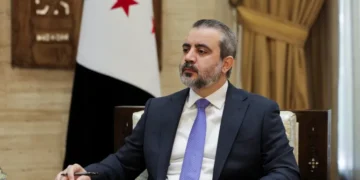








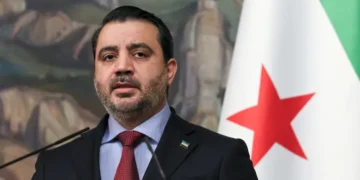



















































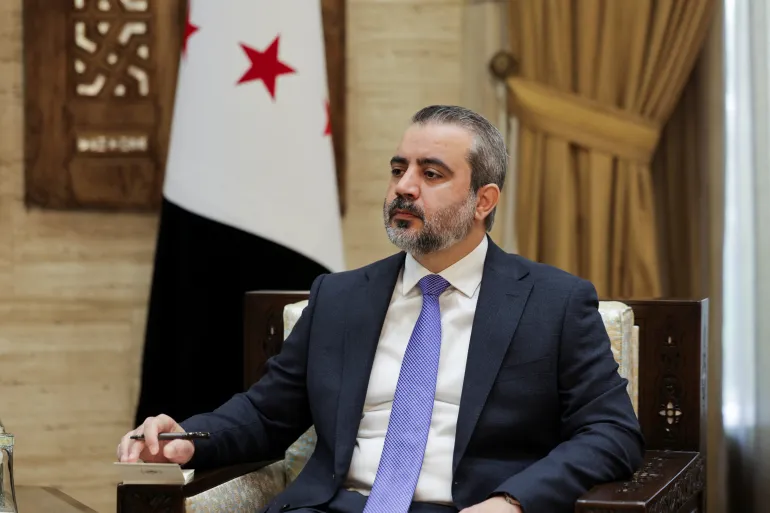
Syrian Foreign Minister Asaad al-Shaibani recently met with a high-level Israeli delegation in Jordan to address escalating regional tensions. The discussions, mediated by the United States, were convened following an Israeli airstrike on the Abu Duhur airbase in northwestern Idlib last Thursday. Syrian state media, citing diplomatic sources, indicated that the talks were aimed at establishing practical mechanisms to halt Israeli attacks, arrests, and targeting operations, while also attempting to revive negotiations for a lasting security agreement.
Reports from the AFP news agency identified the head of Israel’s Mossad intelligence agency, Roman Gofman, as a key participant in the meeting. Beyond the immediate border friction, the parties addressed the broader rivalry between Israel and Turkiye, seeking to prevent their ongoing conflict from further destabilizing Syrian territory. The United States has been actively attempting to broker a security framework between Israel and the government of Syrian President Ahmed al-Sharaa for over a year.
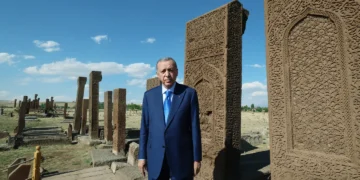
Since the collapse of the Bashar al-Assad administration in December 2024, Israel has conducted hundreds of strikes across Syria and deployed troops into a United Nations-patrolled buffer zone in the occupied Golan Heights. Israel justified its recent bombing of the Abu Duhur airbase by claiming it was necessary to prevent Turkish military deployment at the site—an assertion that both Syria and Turkiye have officially denied. The incident has further strained relations between Israeli Prime Minister Benjamin Netanyahu and Turkish President Recep Tayyip Erdogan.
During the summit, the Syrian delegation emphasized that the nation remains a sovereign state with the full right to rebuild its national army and determine its own alliances. Damascus explicitly rejected any arrangements that would infringe upon these sovereign rights. Syria’s primary objectives in the negotiations include an Israeli withdrawal to pre-Assad-overthrow positions, the full restoration of the 1974 disengagement agreement, and the reaffirmation of Syrian sovereignty over the occupied Golan Heights.
Israeli media characterized the discussions as positive, noting that Israeli officials entered the talks with specific red lines. These conditions include preventing Turkish military activity within Syria, maintaining a demilitarized status on the Syrian side of the Golan Heights, ensuring the security of the Druze community, and restricting the Syrian army from acquiring certain strategic weapon systems. Furthermore, Israel has conditioned any potential withdrawal from occupied territories on achieving specific diplomatic milestones.
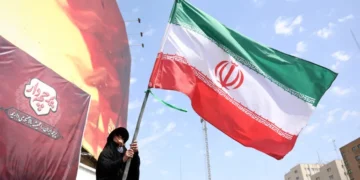
The current diplomatic effort follows a period of frozen negotiations that began in late February when the US and Israel initiated a war on Iran. Prior to this meeting, Foreign Minister al-Shaibani told Reuters that while Damascus maintains deep distrust toward Israel, the diplomatic door remains open. He noted that Syria had previously cut off all contact following the recent strike on the Abu Duhur airbase. Earlier this year, the two sides had reportedly reached a tentative agreement on paper regarding security zones in southern Syria and a buffer area reserved for UN forces.
Political analyst Hassan Mneimneh of the Middle East Institute expressed skepticism regarding the potential for genuine de-escalation. He suggested that Israel is likely to leverage the current situation to impose new demands, utilizing US mediation to counter Turkish influence in northern Syria. According to Mneimneh, Syria’s participation is driven by a desire to prevent the country from becoming a permanent battlefield between Israel and Turkiye, and to protect its territorial integrity from Israeli expansion reaching toward Jabal al-Sheikh. Ultimately, Damascus views these talks as a critical step to avoid the total disintegration of its state authority while it attempts to consolidate its political structure following the fall of the previous regime. The report also notes that when the US and Israel launched their war on Iran, without a date set for resumption, but the negotiations froze at the end of February.
Source: Al Jazeera