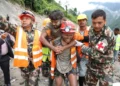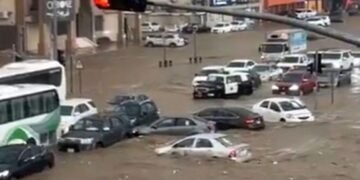













































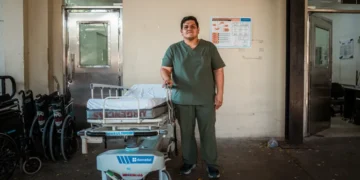

















Dhan Bahadur Tamang, a 32-year-old support worker, was working at the Upper Trishuli 1 hydropower project near the China-Nepal border when he noticed a sudden, alarming shift in air pressure within the underground tunnel. Under the glow of industrial floodlights, he watched as dust began to rise, signaling that something was approaching. Moments later, a massive flood wave—triggered by a rock and ice avalanche—roared down the valley, having already decimated settlements upstream along the Trishuli River.
The disaster struck with little warning, catching workers off guard. Tamang described a scene of immediate chaos as colleagues began shouting and scrambling for safety. He recalled being lifted onto a tanker truck as water surged into the tunnel, forcing him to climb onto pipes to keep his head above the rising, violent torrent. Despite sustaining leg injuries, he survived as the water velocity eventually receded. With the main entrance blocked, he and other survivors navigated the darkness, wreckage, and debris until they finally emerged into the light.
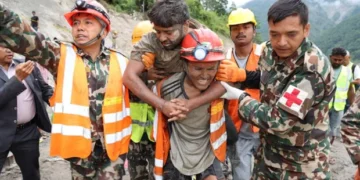
The scale of the tragedy is immense, with Nepal’s disaster authority confirming a death toll of 1,259 people, while the number of missing has climbed to 5,083. Chinese state media reported an additional 21 deaths and 541 missing in Tibet, bringing the total regional toll to 1,280 dead and 5,624 missing. Search operations remain critical, with an army official noting that teams from India, South Korea, and China are working to locate at least 900 individuals believed to be trapped in various hydropower tunnels.
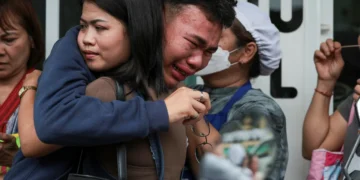
The search for the missing has become a desperate mission for families, particularly those seeking news of foreign nationals. Among them is Sanjeev Rai, an American who traveled to Kathmandu after his wife, Jiwan Jyoti, went missing during a pilgrimage to Mount Kailash. While 294 foreigners have been rescued, 583 remain unaccounted for, many of whom were pilgrims on the same route. Rai, like many others, is struggling with the uncertainty of the situation.
Logistical challenges continue to hamper relief efforts, as destroyed infrastructure has cut off communities near the epicenter. UN Resident Coordinator Lila Pieters Yahia emphasized that reaching survivors is extremely difficult, prompting discussions on the use of cargo drones and porters to deliver essential supplies. Foreign ministry spokesman Lok Bahadur Poudel Chhetri stated that Nepal requires specialized international assistance, including heavy-lift drones, temporary bridges, body bags, and DNA testing kits for victim identification.
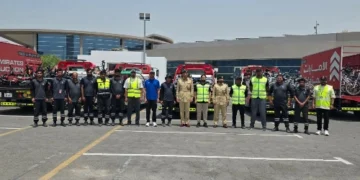
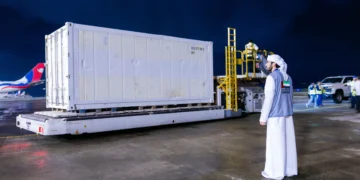
The international community has begun responding to the crisis, with the United Arab Emirates taking a significant role. The UAE has allocated $10 million in aid and dispatched two aircraft carrying a total of 128 tonnes of relief supplies, including food, shelter materials, and power generators. A specialized Emirati mission, comprising members of the Joint Operations Command, the Dubai Police Search & Rescue Team, and the UAE Aid Agency, has been deployed to assist with medical evacuations, first aid, and search operations in coordination with local authorities. The report also notes that leaders discuss regional developments, uAE President receives call from Trump. The report also notes that bahrain, Kuwait, Jordan deal with attacks after US launches new strikes on Iran. The report also notes that two tankers on fire after hitting mines in Strait of Hormuz: IRGC. The report also notes that renewed campaign won’t last long, trump says prepared to strike Iran again. The report also notes that stay up to date with the latest news. The report also notes that by the time I could have realized anything, I was over a top of a tanker (truck). The report also notes that the vehicle began moving,” he said, once I was up.
Source: Khaleej Times