

























































As Washington seeks ways to end the Gulf standoff, countries across the Middle East are increasingly looking beyond the Strait of Hormuz. From Saudi Arabia and the United Arab Emirates to Iraq, Syria and Türkiye, governments are exploring alternative land routes capable of moving energy and goods to global markets without relying on the narrow, volatile waterway. Analysts say that if the crisis persists, the region’s gradual shift towards these corridors could weaken Iran’s leverage over global energy markets while reshaping the political and economic geography of the Middle East.
Dania Koleilat Khatib, an expert in US-Arab relations and co-founder of the Research Center for Cooperation and Peace Building, notes that the region is moving toward a future where the waterway holds less significance. “Hormuz will become less and less important,” Khatib tells. “The US will also encourage alternative routes and the Middle East will turn to alternative corridors because the region does not want to be subject to Iran’s blackmail.” She emphasizes that strategic autonomy is the primary driver for these investments. “It’s much better to have alternative routes than to have a fight with Iran on Hormuz because the military conflict with Iran does not guarantee any concrete result even with the US involvement,” she says.
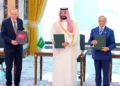
Türkiye and Saudi Arabia, the two heavyweights of the Middle East alongside Pakistan, have recently signed a military pact signalling their intention to develop alternative strategic avenues to defend regional interests with indigenous forces against any potential threat from Israel, Iran or any outsiders. This cooperation is expected to extend into infrastructure development, ensuring that energy corridors are protected by a unified regional security framework rather than relying solely on external naval powers.
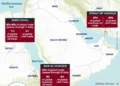
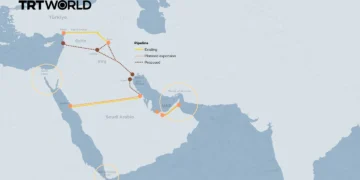
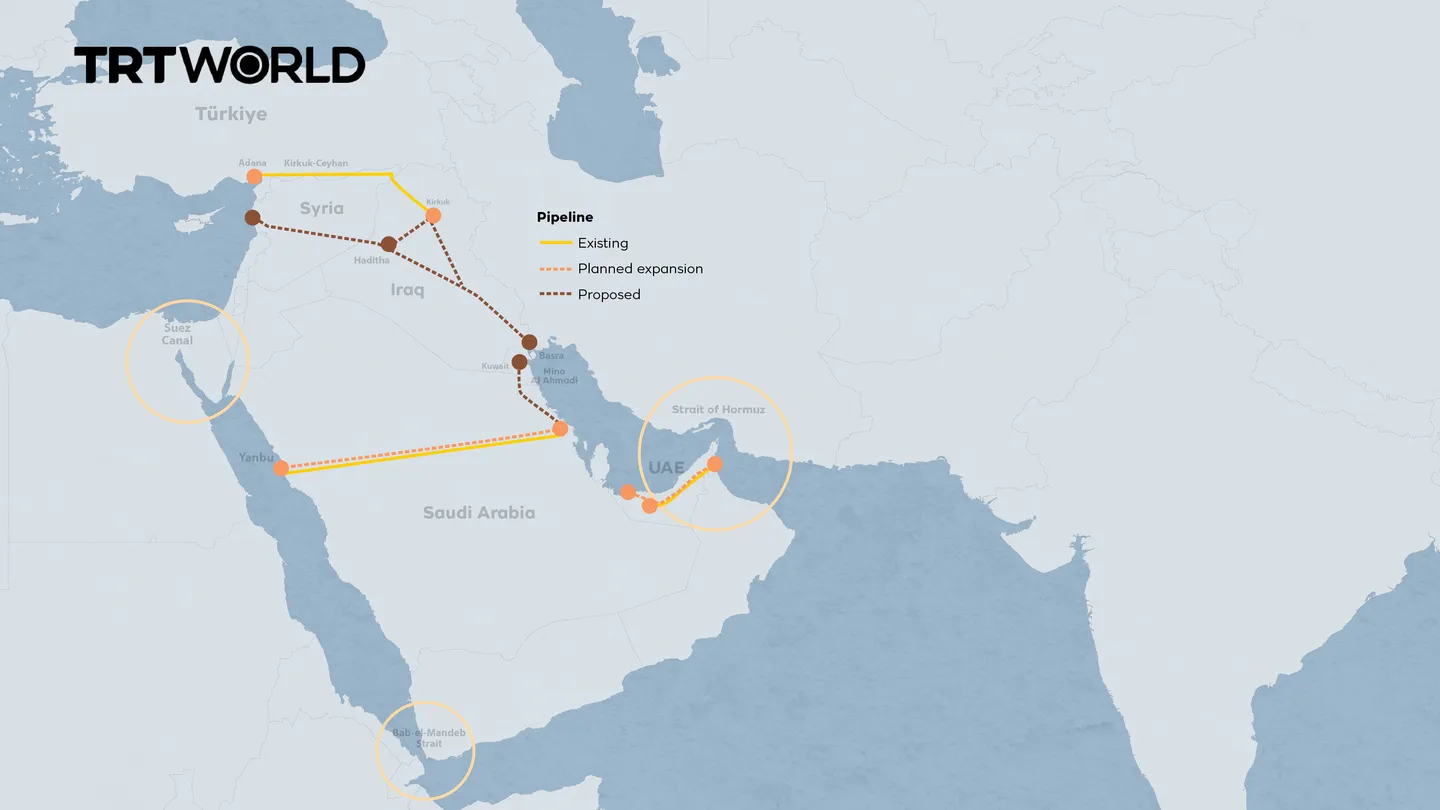
The region is not starting from scratch. Saudi Arabia and the UAE already operate pipelines that allow part of their oil exports to bypass the Strait of Hormuz, with a combined capacity of nearly 10 million barrels per day—roughly half the volume that passed through the waterway before the current crisis. Saudi Arabia’s East-West pipeline transports crude from the kingdom’s eastern oil fields to the Red Sea port of Yanbu, providing Riyadh with an alternative export route that avoids the Gulf. The pipeline can transport between 1.5 and 1.8 million barrels per day, serving as a critical safety valve for the global supply chain.
The UAE has also invested in bypass infrastructure through the Habshan-Fujairah pipeline, which links Abu Dhabi’s oil fields to the Gulf of Oman. However, neither country considers its existing infrastructure sufficient. Saudi Arabia is considering expanding its pipeline network to connect with neighbouring Gulf producers or building new export routes that could further insulate the region from maritime blockades. These projects represent a long-term commitment to decoupling regional economic stability from the security of the Strait.
Chris Newton, a senior analyst at Inter-Regional, notes the technical limitations of these shifts. “Several of the best alternatives for crude oil – Saudi Arabia’s East-West Pipeline, the UAE’s Habshan-Fujairah line – have performed well despite being within range of Iran’s weapons, though that could change any time,” Newton says. During the war, Iran has targeted both UAE and Saudi oil facilities from Fujairah to Yanbu, signalling that even the safety of alternative routes might be compromised and demonstrating how geography can become a deadly trap. Despite these risks, the perceived necessity of these routes continues to drive investment.
Not every Gulf state has the same room to manoeuvre. Unlike Saudi Arabia and the UAE, Kuwait, Bahrain and Qatar lack alternative export routes that bypass the Strait of Hormuz, leaving them vulnerable to maritime disruptions. Analysts say those countries may eventually have to rely on Saudi or Emirati infrastructure to keep their energy exports flowing. Qatar could face particular challenges because its economy depends heavily on liquefied natural gas rather than crude oil exports. “Crude oil can probably be rerouted the most in the short-term, but other commodities like LNG less so,” Newton says.
Although developing alternative corridors around the Strait of Hormuz could cost between $50 million and $100 million and take years to complete, analysts argue that simply investing in them could reassure global markets by signalling that the region is no longer held hostage by a single chokepoint. Besides the Syria-Iraq talks, Ankara and Baghdad, the two neighbours that have operated the 970-kilometre Kirkuk-Ceyhan oil pipeline from central Iraq to Türkiye’s Mediterranean coast for decades, have recently signed a deal allowing crude to flow to global markets more efficiently. The Kirkuk-Ceyhan pipeline is Iraq’s largest crude export route, with a maximum capacity of up to 1.5 million barrels per day.
In the wake of Hormuz tensions, Iraq has also recently launched the Basra-Haditha pipeline project with a planned capacity of 2.5 million barrels per day, which aims to transport crude oil to not only Syria’s Baniyas and Türkiye’s Ceyhan in the Mediterranean but also to Jordan. This project is a cornerstone of Iraq’s strategy to diversify its export options. “They would also influence commercial relationships extending outside the region – if more Gulf energy flows to the Mediterranean, it’s obviously closer to some consumers than others,” one analyst noted. The value of the Suez Canal and Egypt’s revenue could change depending on the corridors that actually get built and how that affects ship traffic.
The geopolitical implications are profound. “If the value of Hormuz were reduced, Iran’s leverage over the region and the global economy would weaken to the extent that it was unable to threaten Hormuz alternatives,” experts suggest. While around 80 percent of global commerce still moves by sea, making the complete bypassing of the Strait of Hormuz an unlikely prospect, the diversification of transit routes is a clear trend. “They want overland routes to do the work that the ocean does,” analysts conclude.
The shift is not merely about oil; it is about establishing a new regional order. By creating interconnected grids and pipelines, Middle Eastern nations are effectively building a defensive economic perimeter. This integration is designed to withstand the pressures of the ongoing US-Iran conflict, ensuring that regional trade remains resilient even if maritime tensions escalate further. The focus on indigenous infrastructure reflects a growing consensus that regional security must be managed from within.
Ultimately, the move toward alternative corridors marks a significant departure from the status quo. As these projects move from planning stages to operational reality, the strategic importance of the Strait of Hormuz will likely continue to decline. While the transition will be costly and technically demanding, the political will to reduce reliance on the waterway is stronger than ever, signaling a permanent change in how the Middle East interacts with the global economy.
Source: TRT World