


































































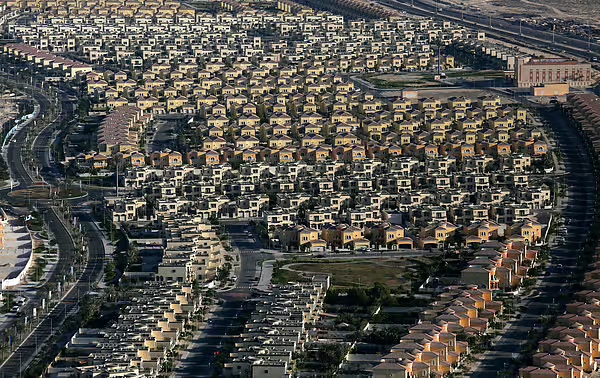
Dubai’s residential real estate market experienced a cooling trend during the second quarter of 2026, characterized by a decline in both sale prices and rental costs. This shift follows five years of rapid growth, as increased housing supply and moderated buyer activity move the sector toward a more balanced state. According to data from Cushman & Wakefield Core, city-wide residential sale prices decreased by 4 per cent quarter-on-quarter, while average rents fell by 6 per cent during the same period.
Price corrections are now visible across the majority of apartment and villa submarkets. Apartment valuations saw significant drops, particularly in Palm Jumeirah, which fell 9 per cent, followed by Downtown Dubai and Business Bay, both down 7 per cent. Conversely, Dubai Hills Estate and Jumeirah Village Circle showed greater resilience, with declines of 4 per cent and 3 per cent, respectively. The villa market displayed mixed results; while The Springs and The Meadows saw a 9 per cent decrease and Dubai Hills Estate dropped 5 per cent, other areas like Palm Jumeirah and Jumeirah Village Circle managed to maintain modest growth.
The rental market also faced downward pressure as tenants increasingly sought better value in response to affordability concerns. Downtown Dubai led the decline in apartment rents with a 14 per cent drop, followed by Dubai Hills Estate and Dubai Marina at 10 per cent, and Palm Jumeirah at 9 per cent. Villa rentals also softened, with Dubai Hills Estate recording the most significant quarterly decline at 12 per cent. These figures represent a continuation of a correction that began late last year, when property prices fell for two consecutive months to reach Dh1,673 per sq ft.
Despite the cooling pricing environment, construction activity remained robust throughout the second quarter. Developers completed more than 13,200 residential units, with notable projects delivered in Sobha Hartland, Damac Lagoons, Jebel Ali Village, Dubai Science Park, and The Valley. Looking ahead, approximately 32,000 additional units are slated for completion in the second half of 2026, contributing to a significant development pipeline that extends through 2030.
Cushman & Wakefield Core anticipates further market moderation as buyer and seller expectations continue to diverge and transaction volumes remain subdued. While established end-user communities are expected to maintain resilience due to underlying demand, the consultancy cautioned that potential supply chain issues and contractor capacity constraints could impact the timing of project handovers in the coming months, even as overall delivery targets remain largely on track.
Source: Khaleej Times