









































































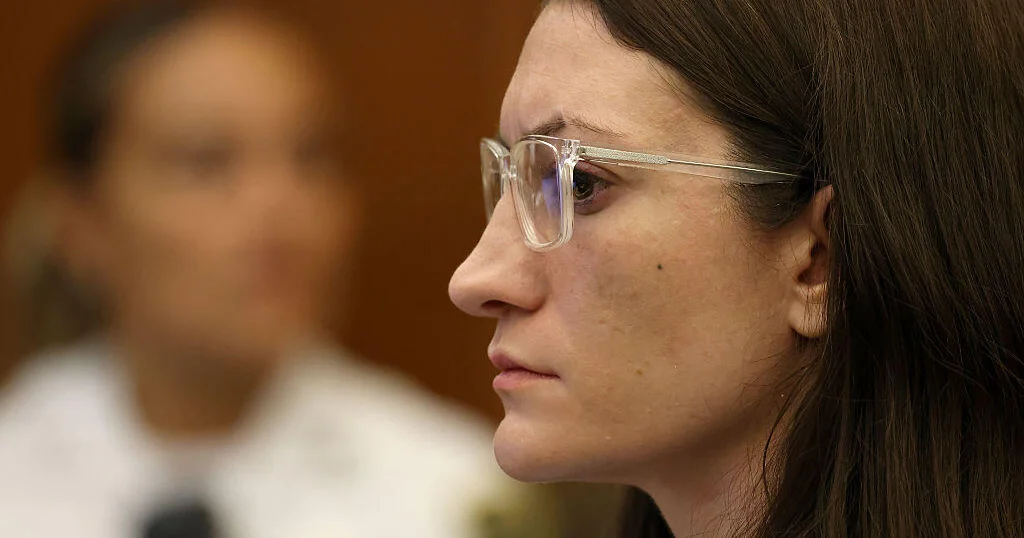
The jury in the trial of 36-year-old Lindsay Clancy is tasked with determining whether she can be held criminally responsible for the January 2023 deaths of her three children: 5-year-old Cora, 3-year-old Dawson, and 8-month-old Callan. Clancy has entered a plea of not guilty to three counts of first-degree murder. Her defense team contends that she was suffering from postpartum psychosis at the time of the incident, rendering her unable to be held legally liable due to insanity, while the prosecution maintains that the actions were planned and not the result of a psychotic break.
Legal experts emphasize that the core of the case rests on the defendant’s mental state at the time of the events. legal contributor Jessica Levinson noted that the trial hinges on whether Clancy possessed the capacity to understand the criminality of her actions or the ability to conform her behavior to the law. The jury has been presented with conflicting testimony from forensic psychiatrists, leading legal contributor Rebecca Roiphe to describe the proceedings as a battle between opposing experts, with the verdict depending on which side the jury finds more credible.
Should the jury return a guilty verdict for first-degree murder, Massachusetts law mandates a sentence of life in prison without the possibility of parole. WBZ-TV legal analyst Jennifer Roman explained that a conviction on a lesser murder charge would still result in significant prison time, though it could potentially allow for parole eligibility in the future. Regardless of the specific conviction, Clancy’s physical condition—she is currently paralyzed from the waist down following an attempted suicide—will likely dictate the nature of her incarceration. Roman noted that her physical limitations and ongoing 24/7 suicide watch will be significant factors in how the prison system manages her care.
Alternatively, if the jury finds Clancy not guilty by reason of mental disease or defect, she would not face a prison sentence but would be subject to indefinite commitment. Legal analyst Caroline Polisi explained that she would be placed in a state mental health facility, similar to her current placement at Tewksbury Hospital. Under Massachusetts law, there is no fixed time limit for such a commitment. Clancy would undergo periodic evaluations, and any potential release would require a judge to determine that she no longer poses a danger to herself or the community.
Polisi drew a comparison to the case of Andrea Yates, who was found not guilty by reason of insanity in 2006 for the deaths of her five children and remains in a psychiatric facility today. Roman added that, in practice, this could function as a life sentence if the facility determines she cannot safely return to society. While these potential outcomes are significant, Polisi cautioned that jurors are instructed to base their verdict solely on the law and the evidence presented, rather than considering the repercussions of their decision. Closing arguments in the trial are expected to conclude this week. The report also notes that certainly given her physical limitations and the fact that she’s on 24/7 suicide watch currently is going to influence how the prison system deals with her and manages her, if that’s ultimately what happens,” Roman said. The report also notes that it would go to a judge to decide if she is a danger to herself or others, if doctors deem her fit to be released. The report also notes that was she able to understand that what she was doing was wrong or criminal. The report also notes that 11 mastermind Khalid Sheikh Mohammed. The report also notes that suspect in murders of 5 found dead day after their bodies were discovered. The report also notes that 48 Hours” probes Missouri murder mystery. The report also notes that everyone Thinks Lindsay Clancy Killed Her Kids.
Source: CBS News