
























































The recent Friday sermon delivered across the United Arab Emirates focused on the life and legacy of Prophet Muhammad, encouraging worshippers to embody his principles of mercy, wisdom, and moral excellence. The khutbah served as a reminder of the Prophet’s birth, framing his arrival as a source of guidance and light for humanity.
Core Themes of the Sermon
- Spiritual Duty: Worshippers were reminded to remember Allah, express gratitude for His blessings, and consistently establish prayer.
- Moral Conduct: The sermon emphasized the importance of humility, patience, and the practice of sending blessings upon the Prophet.
- National Focus: The address also touched upon the Covenant of the Union and the ongoing development of the nation.
The sermon detailed the historical significance of the Prophet’s birth, describing it as the fulfillment of ancient supplications. It referenced the words of Prophet Ibrahim, who prayed, “Our Lord, and send among them a messenger from themselves,” and the glad tidings shared by Isa ibn Maryam, who spoke of a messenger to come named Ahmad. These historical accounts underscored the anticipation surrounding his life.
Reflecting on his character, the sermon highlighted that the Prophet was born an orphan and raised under the guardianship of his grandfather, who named him Muhammad with the expressed hope that he would be praised in heaven and on earth. This hope was realized, as his life became a testament to the divine promise: “And We have raised high your mention.”
The sermon described the Prophet as a man of profound beauty and character. It cited the testimony of his companions, such as Anas, who noted that he had never touched anything softer than the Prophet’s palm or smelled a more pleasant fragrance. Jabir ibn Samurah described the Prophet as more radiant and beautiful than the moon on a clear night. His speech was characterized by light and dignity, and his smile was described as luminous.
Addressing the congregation, the sermon linked the anniversary of the Prophet’s birth to the start of the new academic year. This connection served as a call to action for students, parents, and educators. The message emphasized that the Prophet’s life marked a beginning for knowledge and reading, urging the youth to learn so they might rise and contribute to the growth of their homeland.
Parents were reminded that their children are a sacred trust, encouraged to support them and instill a love for learning. Teachers were similarly urged to guide their students with wisdom and serve as positive role models, recognizing that they are shaping the minds and futures of the next generation.
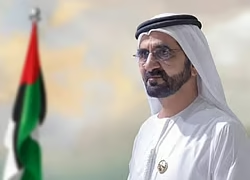
The sermon concluded with prayers for the nation and its leadership. It sought divine protection for the UAE’s sons serving in national service and asked for the continued stability, prosperity, and honor of the country. Specific prayers were offered for the President of the UAE, Sheikh Mohammed bin Zayed, asking for his support and guidance, while also honoring the memory of the noble companions, including Abu Bakr, Umar, Uthman, and Ali. The report also notes that and we bear witness that our Prophet Muhammad is the Messenger of Allah, we bear witness that there is no deity worthy of worship except Allah. The report also notes that servants of Allah, and myself, to have taqwa of Allah, to proceed: I advise you. The report also notes that give you a light by which you will walk, and forgive you, fear Allah and believe in His Messenger; He will grant you a double share of His mercy. The report also notes that and Allah is Most Forgiving, Most Merciful.” (Al-Hadid: 28). The report also notes that the greatest and happiest of all births dawned upon the world, on a blessed night in the month of Rabi‘al-Awwal. The report also notes that the one for whom nations had long awaited, the one whose coming had been repeatedly foretold was born. The report also notes that when he said: “Our Lord, and send among them a messenger from themselves” (Al-Baqarah: 129), he was the fulfilment of the supplication of his father Ibrahim (peace be upon him).
Source: Gulf News