








































































Key Details of the New Shared Housing Framework
- Effective Date: Law No. (4) of 2026 became active on Wednesday, August 26, 2026, following its publication in the Official Gazette on February 27.
- Scope: The law applies across all of Dubai, including free zones and special development zones, though it excludes labour accommodation.
- Grace Period: Owners and operators have a one-year window from August 26, 2026, to align their units with the new standards.
- Penalties: Once enforcement begins, fines range from Dh500 to Dh500,000, with repeat offenses within a year potentially reaching Dh1 million.
- Regulatory Oversight: The law mandates the creation of a Shared Housing Register and requires specific operating permits for all units.
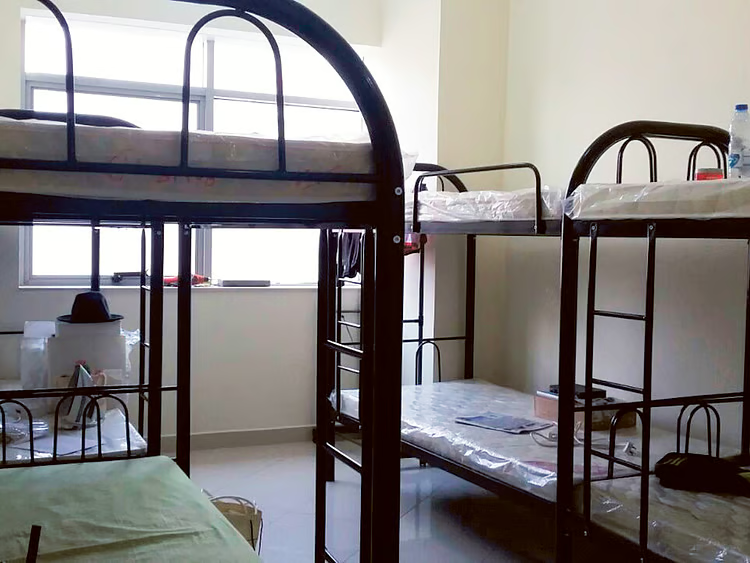
Dubai’s regulatory landscape for shared housing has officially shifted with the implementation of Law No. (4) of 2026. Issued by His Highness Sheikh Mohammed bin Rashid Al Maktoum, Vice-President and Prime Minister of the UAE and Ruler of Dubai, the legislation aims to formalize the sector, ensure safe living conditions, prevent overcrowding, and protect the rights of both property owners and residents.
While the law is now in force, many residents are questioning whether immediate inspections or evictions are imminent. Dubai Municipality has clarified that enforcement will proceed in accordance with an official timeline, once all necessary procedures are finalized. The current one-year grace period is intended to serve as a regulatory phase, allowing operators to bring their properties into compliance rather than acting as an immediate trigger for raids or penalties.
Two critical components must be established before the law is fully operational. First, the Dubai Municipality, in coordination with the Dubai Land Department (DLD), has yet to launch the special operating permit system. Once finalized, this process will be accessible through the municipality’s digital platforms. Second, the DLD is still developing the Shared Housing Register, an electronic system designed to track management agreements, tenancy contracts, and resident data. Under the new rules, contracts will only hold legal weight once they are recorded in this system.
The legislation introduces a robust monitoring framework, allowing the competent authority to delegate inspection duties to public or private entities through formal agreements. These inspectors are authorized to conduct both periodic and surprise checks to ensure compliance with permit requirements and housing standards. While the law mandates the creation of a unified monitoring system, the specific launch date for these comprehensive inspection campaigns remains unannounced.
Eviction remains a potential consequence for non-compliant properties, though it is not an automatic or immediate process. If a property fails to meet permit standards, authorities may suspend an operator for up to six months, cancel permits, or disconnect utilities. However, the law explicitly provides for the protection of occupants, ensuring they are granted sufficient time to secure alternative housing if a unit is deemed non-compliant.
The responsibility for compliance rests with property owners and licensed establishments. Owners may manage their units directly, appoint a licensed management company, or lease to a firm that subsequently sub-leases to residents. Notably, the law strictly prohibits tenants or any other unauthorized parties from subletting shared housing units or individual rooms. Full details regarding specific violations and their corresponding fines will be detailed in the upcoming executive regulations. The report also notes that eligible tenants, rent payment rules, what the new law says about outsourced inspections. The report also notes that and thousands of tenants across the emirate are asking the same question: does this mean the knock on the door starts now, dubai: Dubai’s new shared housing law is now in force. The report also notes that as first reported by, Law No. The report also notes that (4) of 2026, regulating the occupancy and management of shared housing, took effect on Wednesday, August 26, 2026, exactly 180 days after it was published in the Official Gazette on February 27. The report also notes that dubai has long carried out inspections of residential buildings to check for overcrowding and illegal partitions.
Source: Gulf News