









































































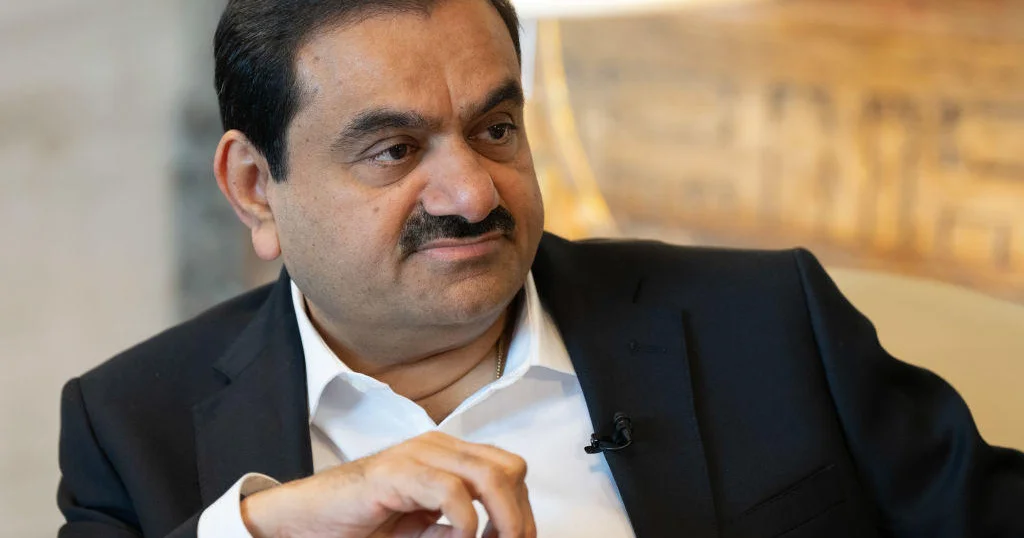
A federal judge on Monday dismissed the criminal fraud charges against Indian billionaire Gautam Adani and several of his co-defendants, following a move by politically appointed leaders in the Justice Department to abandon the prosecution. While U.S. District Judge Nicholas G. Garaufis for the Eastern District of New York granted the dismissal for Adani, he took the unusual step of refusing to drop two specific counts against five other co-defendants, citing a lack of sufficient justification from the government.
In a scathing 47-page ruling, Garaufis took aim at Trent McCotter, the principal associate deputy attorney general, who he said bears sole responsibility for trying to dismiss the case. “The irregularities in the decision to dismiss the indictment are concerning,” Garaufis wrote. He further noted, “On the current record, McCotter appears to have eschewed the professional opinions of innumerable officials from various federal offices and replaced them with his singular judgment.”
The judge emphasized that the decision, which bypassed the U.S. Attorney’s Office that originally brought the case, appears to be highly unusual. Garaufis criticized McCotter for failing to provide adequate reasons for dismissing the obstruction and foreign bribery counts, noting he was “unpersuaded” by McCotter’s “unsworn statements regarding hypothetical concerns of ‘diplomatic strife’ and ‘wasted resources.'”
Throughout this challenging period, our faith in truth, fairness and the rule of law remained unwavering. Judges have some discretion to review motions to dismiss charges, but it is unusual for them to extensively question the government’s rationale for tossing out indictments. Garaufis addressed this directly, stating, “It is evident throughout McCotter’s musings on ‘judicial inquisitions,’ the ‘separation of powers,’ and ‘prosecutorial discretion’ that he would like the court to have no role in reviewing this motion.”
The judge countered this position by asserting, “However, the rule’s legislative history and relevant case law confirm that rule 48(a) was enacted to ensure the court’s limited, but key, role in scrutinizing the government’s decision to dismiss charges once a grand jury returns an indictment.” He added that McCotter’s apparent accusation that officials across four government offices brought a 54-page, 5-count indictment out of spite was a “baseless assertion” that is “unbecoming of his office.”
The high-profile foreign bribery case against Adani was brought at the tail end of former President Joe Biden’s tenure. It managed to survive even after President Trump ordered the Justice Department and the Securities and Exchange Commission to review the matter. However, after Adani retained Bob Giuffra and Jamie McDonald of Sullivan & Cromwell, the Justice Department moved to dismiss the case entirely in May.
McCotter made the determination after he and other government officials met with McDonald, Giuffra, and Andrew DeFilippis of Sullivan & Cromwell. McDonald has since been nominated by Mr. Trump for a senior role. In one of these meetings at the Justice Department, Giuffra made a presentation that disputed evidence of the alleged bribery scheme, according to sources familiar with the matter and records reviewed by.
One slide in the presentation touted how one of Adani’s companies is “powering India’s progress,” and another slide claimed the Trump administration “would not have brought the case.” If prosecutors were to drop the charges, Giuffra also said at the meeting, Adani would be willing to invest $10 billion in the American economy, sources told.
Adani is one of the wealthiest people in India and is widely seen as an ally of Indian Prime Minister Narendra Modi. He leads the Adani Group, a massive conglomerate that owns airports, seaports, power plants, and other assets. Following the dismissal, Adani stated in a social media post: “I welcome the US court’s decision with humility and deep respect for the judicial process. My deepest gratitude to those who never lost faith in us, in the system and in India’s capacity for justice.”
The judge did accept some of the Justice Department’s arguments for dismissing the charges against Adani, saying it was “conceivable that the anti-bribery language used in the financial documents is so generic and vague that it would raise legal risks to the prosecution.” However, he remained firm on his requirements for the remaining co-defendants.
A spokesperson for the Justice Department declined to comment beyond the letter McCotter submitted to the court, in which he stated he made the decision to dismiss the charges “after conducting numerous meetings with defense counsel” and reviewing the case’s progress. The department has not yet provided further details regarding the remaining counts.
Garaufis set a December 31 deadline for the government to advise on its reasons for seeking to dismiss the two counts against the five remaining co-defendants. He also ordered attorneys for the remaining defendants to inform the court that they consent to the dismissal, ensuring the judicial process remains transparent and accountable.
McCotter initially pushed back when Garaufis first started raising questions about the motion to dismiss the case, prompting the judge to order Adani last month to provide answers to the court on whether there was any so
Adani ultimately told the judge no such arrangement existed.
In his ruling Monday, Garaufis said that Federal Rule of Criminal Procedure 48(a) requires the government to “set forth the basis for its motion to dismiss,” which should include its reasons and underlying factual basis
The fact that McCotter came to this decision largely in collaboration with defense counsel, and seemingly without input from the FBI and SEC agents who investigated the alleged misconduct, or the attorneys from the Department, SEC, and U.S.
Has reached out to Adani’s lawyer for comment.
McCotter initially pushed back when Garaufis first started raising questions about the motion to dismiss the case, prompting the judge to order Adani last month to provide answers to the court on whether there was any sort of quid pro quo arrangement.
Source: CBS News