
























































Iran has launched a series of retaliatory strikes against US military positions in Jordan and the United Arab Emirates, marking a significant escalation in tensions following a US operation on Larak Island. This exchange represents the first active military confrontation between the two nations since late July.
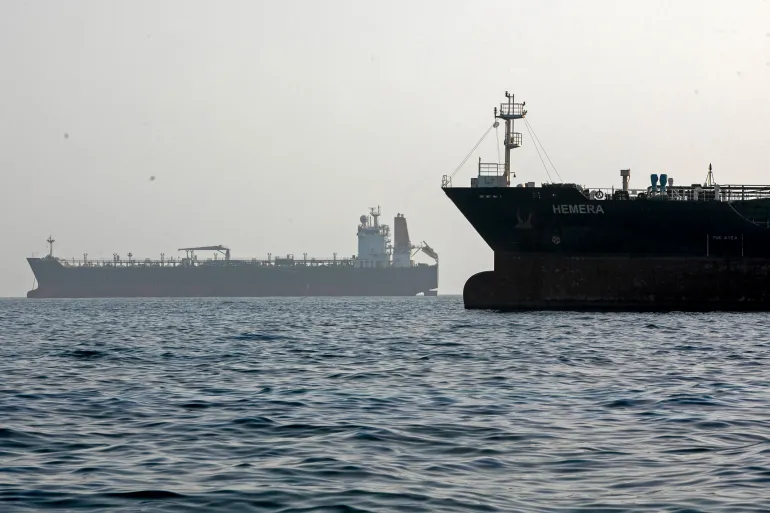
The hostilities began when the United States targeted two Iranian rocket launchers on Larak Island in the Strait of Hormuz. A US official stated that the launchers were preparing to deploy missiles equipped with naval mines into the waterway. US Central Command (CENTCOM) later clarified on X that the action was a limited, precise strike against forces posing an imminent threat to commercial shipping and global commerce, rejecting Iranian claims that the operation was an act of aggression.
In response, the Islamic Revolutionary Guard Corps (IRGC) reported that its forces conducted a combined missile and drone operation targeting the King Hussein and Al Azraq US military bases in Jordan. Tehran characterized these strikes as a legitimate exercise of self-defense under the UN Charter, claiming the operation destroyed technical and repair infrastructure as well as fighter deployment sites. Jordan’s army confirmed that its air defense systems intercepted eight missiles that breached the Kingdom’s airspace at dawn.
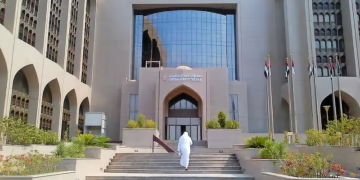
Separately, Iran’s military announced that dozens of drones were launched at US assets stationed at the Al Menhad airbase in the UAE. While the IRGC stated the attack targeted locations housing US forces and helicopters, the UAE Ministry of Defence rejected claims that its airbase was hit, noting instead that its air force responded to a drone approaching from Iran over territorial waters. The UAE Ministry of Foreign Affairs issued a strong condemnation of the Iranian aggression.
US President Donald Trump claimed on his Truth Social platform that Kharg Island was being destroyed, though Iran has not addressed this specific assertion. Meanwhile, the IRGC reported that its own air defenses intercepted a long-range American MQ9 drone over the Strait of Hormuz, causing it to crash into the Gulf.
President Masoud Pezeshkian, speaking for the first time since the escalation, stated that Iran is not seeking war but will never remain passive in the face of aggression. He warned that Tehran would provide a decisive response to any further military actions, emphasizing that regional instability serves no country’s interests. The IRGC spokesperson, Sardar Mohebi, further cautioned that the US had committed a strategic mistake and would face consequences in both military and economic arenas.
The IRGC alleged that the initial US strikes on Larak Island resulted in several civilian and military casualties. The Iranian Foreign Ministry reiterated that the US and its supporting partners bear full responsibility for any further escalation.
Analysts suggest the strikes on Jordan serve as a calculated political signal. Retired US naval officer Harlan Ullman noted that the operation was likely intended to pressure Jordan regarding its support for the American presence in the region. A US official, however, dismissed the effectiveness of the Iranian response, claiming the interception of the missiles proved that Iran’s military capabilities have diminished.
The current tit-for-tat exchanges arrive as diplomatic efforts to resolve the six-month-old conflict appear to be faltering. Washington has increasingly shifted its strategy away from kinetic action toward intensified economic pressure. Last week, the US announced new sanctions under an initiative dubbed “Operation Economic Outcast,” with the Treasury Secretary indicating that additional measures targeting entities doing business with Iran are expected in the coming days. The report also notes that iran “will give a decisive response to the aggressors” if attacked, Pezeshkian was quoted as saying by the Iranian news agency Fars. The report also notes that here’s what we know so far and what could happen to the diplomatic efforts to end the six-month-old war that has disrupted global oil supply and jolted the global economy. The report also notes that “Aggression and crimes will not solve the enemy’s desperation in attempting to weaken the Islamic Republic’s control over the Strait of Hormuz, and every attack will be met with even more devastating responses.”. The report also notes that a US official said Arabic that they were able to intercept Iran’s attacks against Jordan, adding that “the missile attack on US forces in Jordan proves that Iran is no longer the power it once was”, at the same time. The report also notes that “It is a politically significant target,” he said, adding that the Iranian attack was carried out “with malice aforethought, not necessarily to impose damage on the Americans, but to tell the Jordanians: Are you sure you want to support the Americans?”. The report also notes that reporting from Washington, DC, Manuel Rapalo explained that the tit-for-tat exchanges are the scenario that US diplomats who have been working with other countries to bring a diplomatic off-ramp did not want.
Source: Al Jazeera