









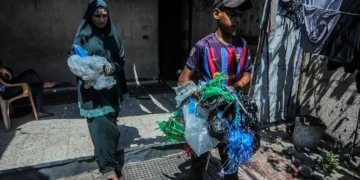
























































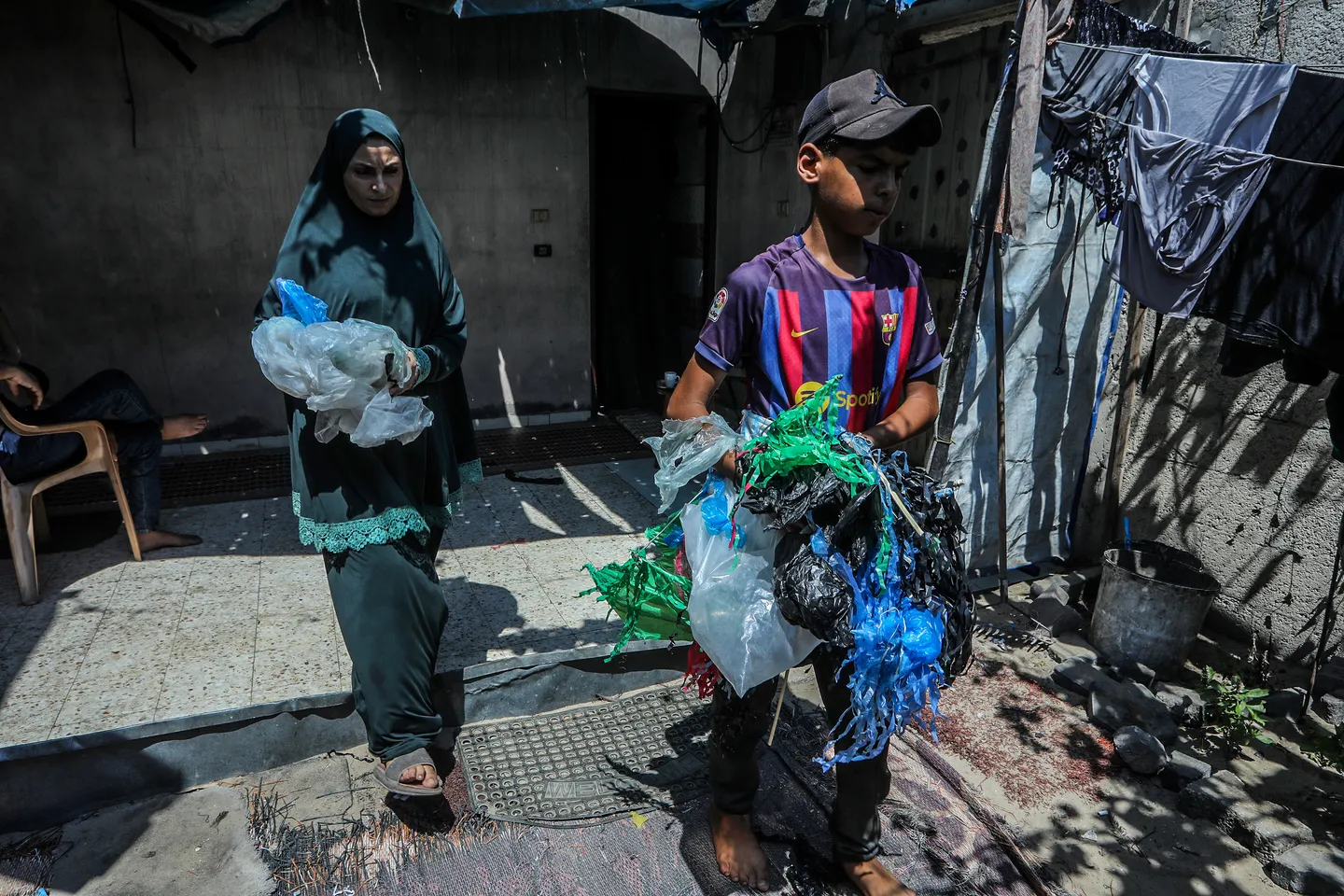
For 11-year-old Abdul-Hadi Arafat, a displaced resident from Gaza City’s Zeitoun neighbourhood, the simple act of gathering sticks, nylon bags, and string to build kites was a primary source of joy. His mother, Salwa Arafat, recalls that he found his greatest happiness watching children run through the neighbourhood with his handmade creations. However, a recent directive from Israeli Defence Minister Israel Katz has transformed this traditional pastime into a source of profound terror.
On August 23, Katz ordered the military to “act immediately and forcefully” against any kites, balloons, or drones launched from Gaza. The directive followed reports that four kites had drifted into the Israeli kibbutz of Nahal Oz. While the Israeli military had previously acknowledged that no suspicious materials were attached to such kites, the new order has effectively criminalized the activity in the eyes of the children.
The impact on Gaza’s youth has been immediate. Salwa Arafat notes that the ban fundamentally altered the significance of the kites for her son. Following his father’s advice to discard them for safety, the boy sat and tore his kites apart, weeping as he felt he was losing one of his final remaining outlets for play. Similarly, eight-year-old Mohamed Mostapha destroyed his own kites, fearing that Israeli forces would target him if he were seen flying one.
Kariman Abu Ras, 66, describes the situation as terrifying for children who have already been stripped of schools, parks, and safe spaces. “Our children have been deprived of their childhood,” she says, noting that they have few options left for simply being children. In response to the military order, local “popular committees” and representatives from various non-profit organisations coordinated with Hamas authorities to urge parents to prevent their children from flying kites, framing the request as a necessary measure to protect innocent lives.
The emotional toll is visible, as seen in a widely circulated video of Muhammad Ahmad al-Mufti, who was filmed crying while ripping apart his kites on rubble-strewn ground. His father had been killed earlier in the war. Child psychologist Dr. Haneen Sukkar explains that for a child’s nervous system to regulate, they must be able to distinguish between safe and dangerous environments. When simple play becomes associated with the threat of being targeted, children lose essential “safety cues,” potentially leading to long-term issues such as hypervigilance, withdrawal, and emotional regulation difficulties.
Human rights advocates have expressed alarm over the military’s rhetoric. Alaa Skafi, director of the Al-Dameer Foundation for Human Rights, argues that threatening action against children playing with kites risks blurring the distinction between civilians and combatants. He cites Article 77 of Additional Protocol I to the Geneva Conventions, which mandates special protections for children during armed conflict, stating that such threats effectively turn civilian children into targets.
The loss of kite flying is merely the latest erosion of childhood in the enclave. Toy vendor Omar el-Khodary reports that basic toys like plastic cars, aeroplanes, and building sets are virtually impossible to obtain due to strict movement restrictions on goods. Items that do arrive are often limited to stuffed toys hidden among clothing shipments, which parents must then repair themselves. Building blocks that were once affordable now cost between 250 and 300 shekels, roughly $85 to $100.
Educational opportunities have also been severely curtailed. The Palestinian Ministry of Education and Higher Education has delayed the start of the school year to September 19. According to UNRWA, approximately 658,000 schoolchildren have missed three consecutive years of in-person education since October 2023, with warnings that a total of five years could be lost if the conflict persists. Furthermore, UNRWA Commissioner-General Philippe Lazzarini has highlighted that Gaza now holds the highest number of child amputees per capita globally, with estimates ranging from 1,000 to over 4,000 since the war began.
Physical access within the territory has also shrunk, with Israel now restricting movement across 65 percent of Gaza, up from 53 percent earlier in the war. Nearly 90 percent of the 2.1 million residents have been displaced, often multiple times. The threat against kite flyers coincides with ongoing violence; on the same day as the military order, an attack in al-Zawayda killed two people, and subsequent strikes destroyed one of Gaza’s oldest mosques and claimed the lives of four others, including two children. Reports indicate that at least 300 children were killed in the 300 days following the October 2025 ceasefire. The report also notes that his mother, Salwa Arafat, said, it kept him busy and brought joy not only to him but to other children around him. The report also notes that in July 2011, children in the enclave set a Guinness World Record for the most kites flown simultaneously. The report also notes that “This is a call to kill children,” Skafi said. The report also notes that toy vendor Omar el-Khodary, 35, said that regular shipments of toys have disappeared entirely. The report also notes that “We tried hard to bring in goods from outside, even at higher prices, and we couldn’t manage it. The report also notes that totally banned,” el-Khodary says, those toys are completely. The report also notes that he says, while beach toys that once cost 10 shekels (about $3.40) now cost around 80 shekels ($27), building blocks that once cost a fraction of the price now sell for at least 250 to 300 shekels (roughly $85 to $100).
Source: TRT World