








































































With over two decades of experience in professional football and sports management, Terry Kidd has spent his career navigating some of the world’s most elite stadiums and training centers. However, he notes that when people reflect on the venues that truly impacted their lives, they rarely focus on the size of a gym or the specific number of courts available. Instead, they emphasize the emotional connection and the sense of belonging they experienced within those spaces.
For years, the sports industry has relied on traditional metrics such as membership sales, utilization rates, and revenue to gauge success. While these figures remain vital for assessing business health, they fail to explain why certain venues become integral parts of a person’s daily life while others remain mere transit points. Kidd, who currently serves as the Centre Manager at AllSports Arena Dubai, believes the industry must shift its focus toward fostering genuine human connection.
The modern consumer is no longer satisfied with simple access to equipment. Today’s visitors seek an environment where they feel welcomed and valued from the moment they enter. According to Kidd, who brings over 20 years of expertise in developing community participation and commercial growth, the most successful destinations recognize that customers are investing in a sense of community rather than just physical infrastructure. A welcoming atmosphere, where staff members recognize regular visitors and provide personalized attention, often proves more significant than the latest technology or the largest square footage.
While leadership teams must prioritize infrastructure and commercial performance, Kidd warns that these elements should not overshadow the reality that people, not buildings, create culture. Small, consistent interactions—such as a friendly greeting at reception or a coach taking a personal interest in a young athlete—build a lasting culture that keeps members returning. This philosophy suggests that commercial success is best achieved by serving the community better rather than simply pushing harder for sales.
As the role of sport continues to evolve, these venues are transforming into multipurpose hubs where families gather, professionals decompress from demanding careers, and children develop a lifelong love for physical activity. Sport possesses a unique capacity to bridge gaps between different ages, cultures, and backgrounds, making it a powerful tool for social cohesion.
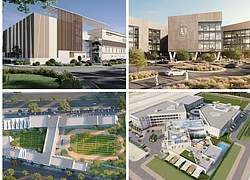
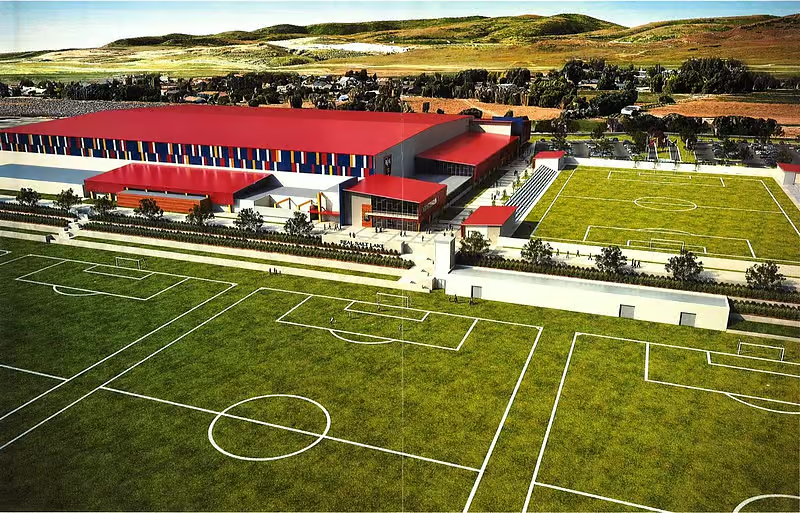
Dubai is uniquely positioned to lead this global shift. Having already established itself as a premier destination for elite athletes and major international events, the city is now poised to complement its world-class infrastructure with high-impact experiences. At Galadari Brothers, this vision has been central to the development of AllSports Arena, the UAE’s largest indoor sports destination. The facility integrates a wide array of activities—including football, padel, swimming, squash, climbing, and gymnastics—to cater to diverse interests and skill levels.
Ultimately, the goal of such a destination is to create a space that transcends its physical walls. By offering opportunities for people to be active and connect with one another, the arena aims to become a staple of the community. Kidd maintains that the true legacy of a sports facility is not found in financial reports, but in the positive changes it facilitates in the lives of its members. By prioritizing community-building, the industry can inspire healthier, happier lives, ensuring that the impact of a venue is felt long after the final whistle blows. The report also notes that during that time, I have been fortunate enough to experience some of the finest stadiums, training centres and sporting facilities in the world. The report also notes that they talk about how those places made them feel. The report also notes that that, in my opinion, is where the future of sport lies. The report also notes that the industry has measured success through memberships sold, utilisation rates and revenue, for many years. The report also notes that think about the places you return to time and time again. The report also notes that the atmosphere feels welcoming and you genuinely enjoy being there, it is because someone knows your name. The report also notes that a coach remembering a child’s first session or a member of staff noticing that someone needs help before they have to ask, culture can begin with something as simple as a genuine smile at reception. The report also notes that however small, it is built by teams that take pride in every interaction.
Source: Khaleej Times