







































































For families residing in Dubai, where international mobility is a way of life, transitioning children between different educational systems is a common occurrence. Parents frequently express concern when moving their children from an International Baccalaureate (IB) school to one following the British curriculum, often questioning whether their child will be academically ahead or behind. However, educators suggest that this is the wrong perspective; rather than viewing it as a loss of progress, it is more accurate to see it as a change in the route toward the same destination.
Both the IB and the British curriculum aim to foster knowledgeable, curious, and independent thinkers. The common misconception that the IB focuses on critical thinking while the British system prioritizes rote facts is inaccurate, as both frameworks rely on a balance of reasoning and knowledge. The primary difference lies in the structure of learning. The National Curriculum for England features more clearly defined subjects and a deliberate, sequential progression. For instance, integrated sciences in the IB may separate into distinct disciplines like Biology, Chemistry, and Physics, while history and geography follow a more thematic and chronological path. This leads toward the well-recognized IGCSE and A-Level qualifications.
While an IB-educated student may need a brief adjustment period to adapt to these firmer academic boundaries, their existing skills are significant assets. Students coming from an IB background are often adept at independent research, connecting ideas across subjects, and asking probing questions. A high-quality British school will aim to preserve these strengths rather than diminish them. When a student appears to be struggling, it is usually a matter of methodology rather than a lack of understanding. For example, a Year 5 pupil might fully grasp the concept of division but simply be unfamiliar with the specific written method required by the English curriculum. Such gaps are typically addressed within days through targeted instruction.
To ensure a seamless transition, schools should build a comprehensive profile of the student rather than relying on a single test score. This process involves reviewing academic reports, analyzing work samples, and considering references from the previous school. Furthermore, established British schools utilize age-appropriate baseline assessments, such as CAT4, standardized reading and progress tests, and specific phonics or early-years measures, to tailor support to the individual child. This data-driven approach allows educators to identify exactly where a student needs additional help.
When intervention is necessary, it should be highly focused. A successful bridging plan identifies two or three clear priorities, assigns responsibility for each, and establishes a timeline for progress reviews. In primary years, the class teacher serves as the primary contact, while older students benefit from a personal tutor who coordinates with subject teachers to manage new routines. Parents can facilitate this process by asking prospective schools specific questions regarding who will oversee the transition, how prior knowledge is assessed, the nature of support for potential gaps, and how progress will be communicated.
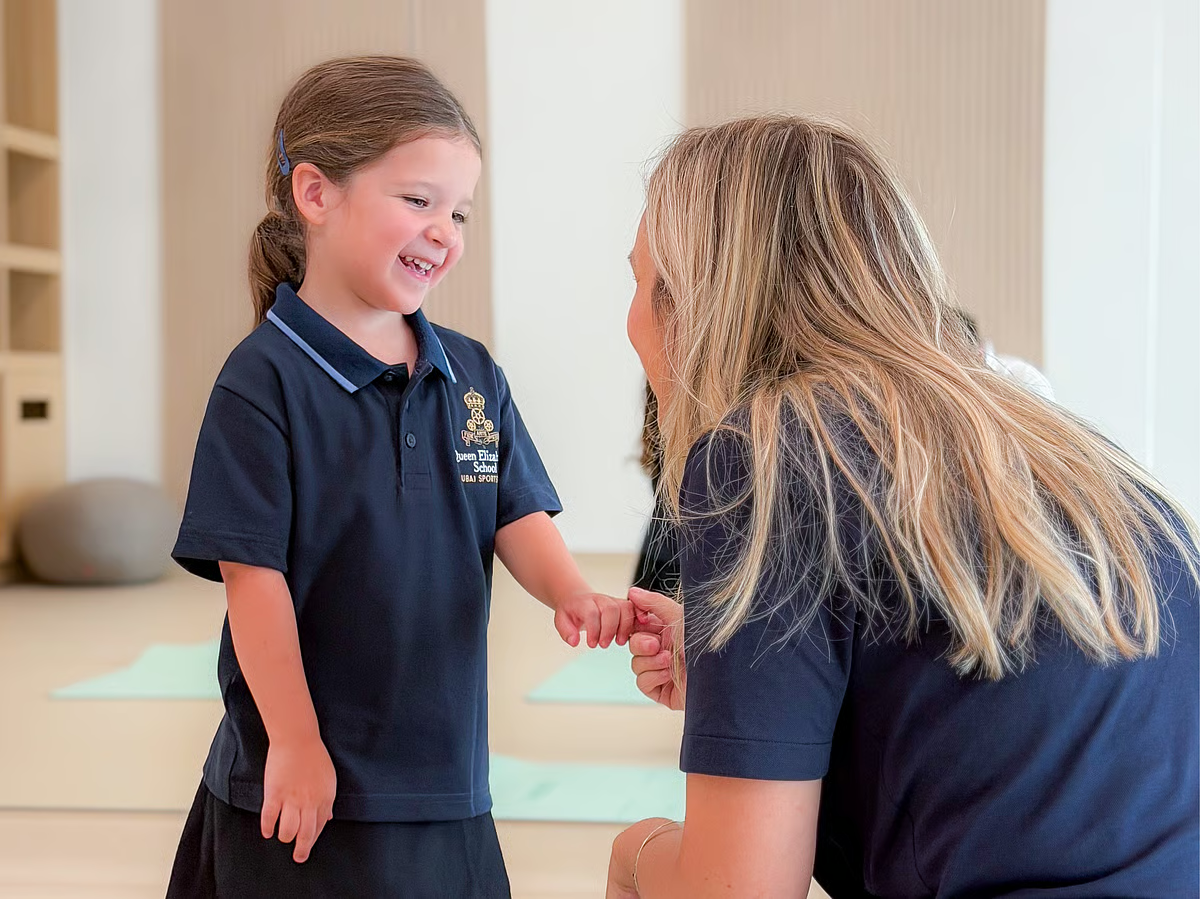
Beyond academic planning, the social and emotional aspects of the move are vital. A structured induction, the assignment of a named adult mentor from the first day, and integration into a house system or pastoral network are essential for helping a child feel a sense of belonging. A student who feels secure in their new environment is far better prepared to engage with the curriculum.
At Queen Elizabeth’s School in Dubai Sports City, the philosophy is to identify what a student already knows, teach the necessary new skills, and ensure the next stage of learning feels manageable. By focusing on these elements, families can ensure that the transition does not result in a loss of momentum. Ultimately, the curiosity and confidence a child brings with them are the primary drivers of their future academic success.
This content was provided by Reach by, the branded content division of GN Media.
Source: Gulf News