



























































A potential breakthrough is emerging in the high-stakes negotiations involving the United States, Iran, and Oman, aimed at reopening the vital Strait of Hormuz. This strategic artery, which facilitates the transit of roughly one-fifth of the global oil supply, has been the focal point of intense diplomatic activity over the past several weeks. The primary objective of these discussions is to restore the June 17 ceasefire agreement between Washington and Tehran while resolving the persistent disputes that have severely hampered international shipping.
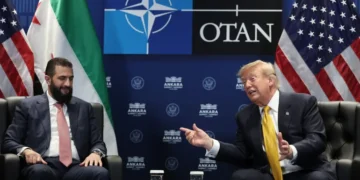
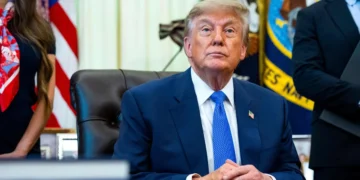
US President Donald Trump expressed a notably optimistic outlook on Tuesday evening. During a press briefing, he characterized the ongoing negotiations with Iran as “moving along very nicely.” When pressed by reporters regarding the imminence of a formal agreement, the president remained cautious but expectant, stating, “We’ll find out. We’ll know in 48 hours.” He further emphasized the urgency of the situation, declaring, “The strait is going to be open very soon, or they’re going to get hit very hard, and then the strait is going to be open.”
These remarks followed reports that the president had opted against executing a previously threatened military strike over the weekend. Despite the administration’s aggressive public rhetoric, the diplomatic track appears to be gaining momentum. Tehran, however, maintains a strict policy of denying any direct engagement with Washington. Instead, Iranian officials insist that all substantive discussions are being conducted exclusively through Omani intermediaries to determine the future management of the Strait of Hormuz.
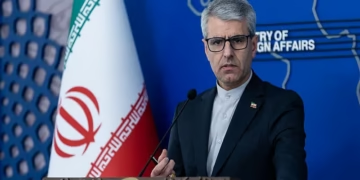
Esmaeil Baghaei, the spokesperson for the Iranian Ministry of Foreign Affairs, described the ongoing dialogue with Oman as “positive.” While he confirmed that these talks are continuing, he also acknowledged significant hurdles. Reports from Iran’s Sepah News suggest that lingering US military threats remain the primary obstacle preventing a final consensus. Despite these tensions, Baghaei noted that the discussions have been evaluated favorably at both technical and political levels, even as fundamental disagreements persist regarding the operational mechanics of the waterway.
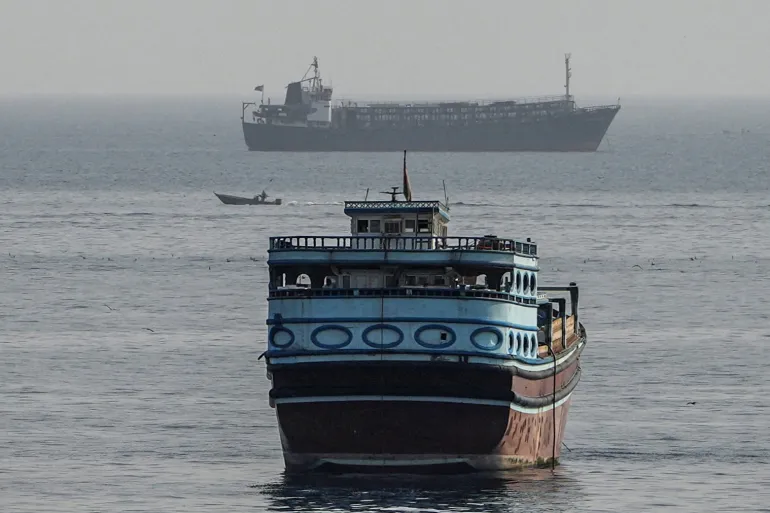
The necessity for a resolution is underscored by the current state of maritime traffic. On Monday, only eight vessels successfully navigated the strait, a stark decline from the approximately 130 ships that transited the passage daily prior to the outbreak of the US-Israel conflict with Iran on February 28. This drastic reduction in commercial activity has prompted mediators to accelerate efforts to secure a temporary arrangement that could stabilize the region before further escalation occurs.
Central to the current impasse are two core questions: the ultimate control of the Strait of Hormuz and the legitimacy of Iranian demands for transit fees. The conflict originally intensified after the US and Israel initiated military operations against Iran, leading Tehran to restrict access to the waterway. While Iran later permitted limited passage, it mandated that vessels utilize a specific northern shipping lane. Following the April ceasefire, Washington countered by proposing that ships utilize a southern route along the Omani coastline, setting the stage for the current mediation efforts.
Baghaei clarified that the current negotiations are focused on “establishing safe inbound and outbound shipping lanes” that aim to “uphold sovereign rights while also addressing the national security considerations of both Iran and Oman.” Nevertheless, Iranian officials have identified several outstanding points of contention, including the specific mechanisms for reopening the waterway, the implementation of maritime service fees, and broader security frameworks. Tehran remains firm in its stance that it is negotiating solely with Oman, asserting that the two nations should jointly manage the strait based on their respective territorial waters.
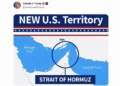
The US administration holds a conflicting vision for the region. American officials have stated that the White House demands total freedom of commercial navigation, explicitly rejecting any requirement for ships to obtain Iranian approval or pay tolls to transit the strait. President Trump was unequivocal on this point, telling reporters, “I’m not going to let them charge. Anybody’s going to charge, we’ll charge.” This stance is supported by Secretary of State Marco Rubio, who has maintained that the current negotiations regarding the strait are distinct from broader geopolitical issues.
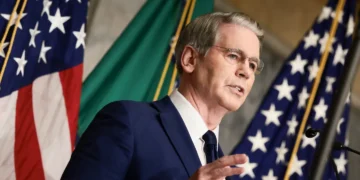
David Des Roches, an expert familiar with the situation, suggested that a compromise might involve Iran conceding free international passage in exchange for control over its own territorial waters. “I think that the rough outlines of a deal are that Iran would deny free international passage in areas of its territorial waters,” Des Roches observed. “I think that’s probably about the best that can be reached at this point in time.”
Abas Aslani, a senior research fellow at the Center for Middle East Strategic Studies, noted that the region has been trapped in a cycle of rapid shifts between military threats and diplomatic overtures, creating an environment of profound uncertainty. “Everybody was bracing for a massive escalation,” Aslani told Al Jazeera. He cautioned that while a deal concerning the Strait of Hormuz would represent a “good start,” it would not serve as a panacea for all regional grievances.
Instead, analysts suggest that a successful agreement could provide a necessary bridge for both sides to return to the terms of the June Memorandum of Understanding. This, in turn, could create the diplomatic space required to eventually address the more complex and long-standing issues surrounding the Iranian nuclear program. For now, the focus remains squarely on the 48-hour window identified by the White House.
As the deadline approaches, the international community remains in a state of watchful waiting. The combination of technical negotiations in Muscat and the looming threat of military action has created a precarious balance. Whether the parties can reconcile their divergent views on sovereignty and navigation remains the decisive factor in whether the Strait of Hormuz will see a return to normalcy or a further descent into conflict.
The United States, Iran and Oman appear to be edging closer to an interim agreement that could reopen the Strait of Hormuz, raising hopes of easing a crisis in one of the most dangerous flashpoints in the Middle East.
Trump made the comments after he reportedly decided over the weekend not to carry out what he had described as the biggest US military attack since World War II, in line with his now familiar pattern of repeatedly threatening to strike Iran before advocating at the last minute for diplomatic solutions instead.
On Tuesday, the United Kingdom Maritime Trade Operations (UKMTO) agency reported a cargo ship had been struck by an unidentified projectile off Oman.
The situation has raised concerns that prolonged disruptions could send oil prices sharply higher.
Tehran responded by closing the strait, disrupting one of the world’s busiest shipping routes and causing global energy prices to spike.
The US later imposed a naval blockade on Iranian ports in an effort to increase economic pressure on Tehran, which was still managing to export its own oil via the strait.
Below is the route map that Iran issued to ships it gave permission to pass during the war.
Furthermore, Iran has intimated that it plans to introduce some form of fee system for ships.
Under international maritime law, tolls for passage cannot be levied on international straits such as Hormuz but coastal states may charge for services they provide, such as navigational assistance, pilotage and environmental protection.
The official said Washington remained committed to restoring the previous system in which “no party controls the lanes or the ability to transit through them”.
“The immediate deal and the one that you’ve seen a lot of focus on is the straits.”
The arrangement would initially last 60 days, during which no transit fees would be charged, Axios reported.
It remained unclear if the US would be willing to accept this.
One proposal put forward earlier by Oman is reportedly based on operations in the Strait of Malacca, which connects the Indian and Pacific Oceans.
There, Indonesia, Malaysia and Singapore ask ships that use the strait to voluntarily help fund navigation, environmental protection, and search and rescue operations.
Negotiators are also discussing the clearance of naval mines from the centre of the strait before seeking a longer-term agreement on how the waterway should operate, Axios reported.
The Reuters news agency, quoting a senior Iranian source involved in the negotiations, reported that Tehran has already dropped its original demand for full control over shipping in both directions but is “unlikely to change its position” further.
Iranian state media have outlined a slightly different proposal.
Press TV reported that negotiations had entered “a new phase” with a “bilateral understanding within reach”.
Much of the reported framework for these talks appears to build on the MoU signed by Iran and the US on June 17 rather than fully replacing it.
Under Article 5 of that agreement, Iran agreed to allow commercial vessels to pass through the Strait of Hormuz without charge for 60 days.
The latest proposals, therefore, appear to focus less on whether ships should be allowed through immediately and more on what happens after the initial 60-day period expires.
The reported framework also closely resembles a proposal outlined by Iranian Deputy Foreign Minister Kazem Gharibabadi last month when he said that “the inbound shipping lane must be entirely under Iran’s control while part of the outbound lane may remain under Oman’s control”.
If Iran is given responsibility for managing some of the shipping lanes, international shipping companies may need to coordinate with Iranian authorities.
But US sanctions could prevent many companies from doing so unless Washington grants an exemption.
Esfandyar Batmanghelidj, founder and chief executive of the Bourse & Bazaar Foundation, a think tank focusing on economic development and diplomacy in West and Central Asia, said this may work in Iran’s favour.
“Iran can also take advantage of the fact that US sanctions may prohibit coordination or payments with the Iranian authorities.
“A large portion of vessel owners will not engage the channel unless expressly authorised by the Trump administration, putting the ball back in Trump’s court to effectively endorse” a proposal, he said.
US media have reported that concerns over dwindling defensive munitions have contributed to Trump’s decision not to carry out his threatened large-scale strikes against Iran.
Keeping the Strait of Hormuz mostly closed also risks pushing up global energy prices, and, therefore, domestic petrol prices, which would prove unpopular as the November midterm elections in the US approach.
Meanwhile, oil analysts warned that if the Strait of Hormuz disruptions continue, many nations could deplete their oil stockpiles at record rates, which could further push up energy prices to unprecedented levels.
Trita Parsi, executive vice president of the Quincy Institute for Responsible Statecraft, said this means Washington’s priority should be ensuring ships can pass safely rather than preventing Iran from playing any role in administering the strait.
Yet the central American interest in strategic waterways has historically been less about who administers them than about whether ships can pass through them freely, predictably and without discrimination,” he said.
“Preventing a hostile state from acquiring coercive leverage has generally been a means of preserving passage, not an end that supersedes passage itself.”
If reopening the strait requires acknowledging that Iran possesses some capacity to regulate traffic in waters along its coast, therefore, Washington “should not reject an agreement merely because it fails to preserve the appearance of unqualified American dominance”, he said.
David Des Roches, a former director of Arabian Peninsula affairs in the US Department of Defense, said “what’s really needed here is some sort of agreement that leads to Iran formally announcing that it will cease to attack neutral civilian shipping whether in Omani waters or in international waters.”
He told Al Jazeera that any eventual agreement was, therefore, likely to reflect the reality that Iran cannot simply be excluded from managing a waterway on its coast.
Other regional flashpoints also remain unresolved, including the conflict between Israel and Hezbollah in Lebanon, attacks by Iran-aligned groups within the region and continued disruptions to shipping in the Red Sea, caused by the Iran-backed Houthis in Yemen, and also Trump’s unpredictability and predisposition towards threatening military action.
“I think the region feels like a high-speed roller-coaster as a couple of days ago.
Source: Aljazeera