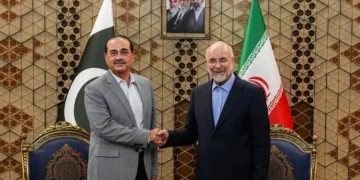









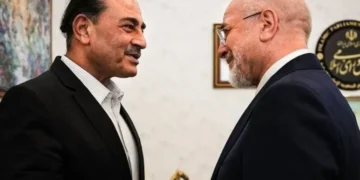












































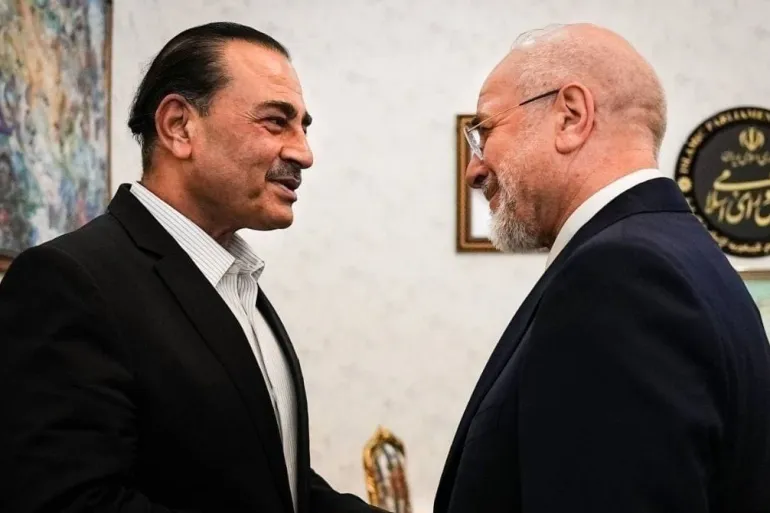
Pakistani Field Marshal Asim Munir conducted a high-stakes diplomatic mission in Tehran this Monday, engaging with top Iranian leadership including President Masoud Pezeshkian and Parliament Speaker Mohammad Bagher Ghalibaf. The visit, which spanned the presidency, parliament, and the Supreme National Security Council, comes as the six-month-long conflict remains deadlocked. As the primary negotiator for Iran in discussions with the United States, Ghalibaf’s involvement underscores the urgency of the current diplomatic impasse.
The timing of the visit was critical, occurring just as the international community braced for US President Donald Trump’s threatened “economic D-Day” sanctions. Following the visit, US Treasury Secretary Scott Bessent introduced “Operation Economic Outcast,” a comprehensive sanctions package targeting Iran’s aviation, technology, gold, and digital assets. While the US administration warned nations against maintaining trade ties with Tehran, officials stopped short of imposing immediate penalties on those countries, citing the potential to “blow up the global financial system.”
Defense Secretary Pete Hegseth reaffirmed the US stance on the same day, stating, “If we need to use kinetic strikes, we’ll use them. If Iran is foolish enough to overplay their hand or mess with the American military, we’ll do what we need to do.” Despite these threats, analysts suggest that Munir’s visit may have been prompted by a direct request from President Trump, who recently contacted the Pakistani army chief to leverage Islamabad’s influence in bringing Iran back to the negotiating table.
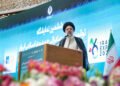
The internal dynamics in Tehran present a significant hurdle for any mediator. Days before Munir’s arrival, President Pezeshkian addressed a group of doctors, advocating for an end to the war while Iran maintains a position of strength. “It is better that we bring the war to an end now as we are in a position of power and dignity,” he stated, asserting that “the whole world acknowledges our victory.” However, this sentiment is not universally shared within the Iranian security apparatus.
On August 21, Major-General Ali Abdollahi, the chief of the general staff of Iran’s armed forces, issued a starkly different message, promising “revolutionary, crushing, regret-inducing and devastating” responses to any American miscalculation. This divergence highlights a growing rift between Iran’s civilian government and its military leadership regarding the state of the conflict. Andreas Krieg, an associate professor of defence studies at King’s College London, noted that while civilian leaders like Pezeshkian and Ghalibaf recognize the unsustainability of the current conditions, elements within the Islamic Revolutionary Guard Corps (IRGC) believe time is working against Washington.
The recent restructuring of Iran’s military hierarchy further complicates the landscape. On August 10, Supreme Leader Mojtaba Khamenei appointed Abdollahi as chief of the general staff and moved General Mohsen Rezaei into the Supreme National Security Council. Ahmad Vahidi has continued to serve as the commander of the IRGC since March. Ahmed Saeed, a former vice admiral in the Pakistani navy, emphasized that these individuals are the “actual architects of Iran’s decision-making.” He added, “It is increasingly the IRGC and the wider security establishment driving decisions on war and peace during this crisis.”
Munir’s strategy appears to rely on his status as a military peer to these commanders, potentially offering him an advantage over traditional diplomats. During his visit, Munir held a significant meeting with General Mohsen Rezaei, a representative of the Supreme Leader. Pakistan’s Inter-Services Public Relations (ISPR) reported that the one-day visit facilitated “comprehensive discussions” regarding the reopening of the Strait of Hormuz and the cessation of hostilities. Iranian officials reportedly “appreciated Pakistan’s constructive role and sincere efforts.”
Interior Minister Mohsin Naqvi, who accompanied Munir, described the talks as “very positive and productive,” noting that “significant progress was made.” While Naqvi has visited Tehran eight times since April without achieving a major breakthrough, analysts believe Munir’s unique position—enjoying the trust of both the Iranian military leadership and President Trump—could be the deciding factor. As Krieg observed, “[Iranian Foreign Minister Abbas] Araghchi can negotiate something, and Qatar can broker it, but none of that matters if the security apparatus does not accept the operational consequences.”
The success of these mediation efforts remains uncertain, as the Iranian security establishment continues to hold the final say on the implementation of any political understanding. An Iranian official close to the negotiations, speaking anonymously, indicated that regional observers are waiting to see how the discussions with the Pakistani delegation will influence Iran’s final strategic decisions. The report also notes that it’s unclear whether Munir’s visit helped stave off broader US action against Iran and its trading partners. The report also notes that in accounts carried by Iranian state media, differed little from what they have been telling their own broadcasters all week, what Iranian officials actually told Munir. The report also notes that “We distrust America, and it must change its behaviour,” Rezaei told Munir, according to IRNA. The report also notes that pezeshkian, meanwhile, pressed Munir to tell Washington to “correct its tone and approach”, warning that “relying on force and bullying will only complicate the process”, according to Tasnim, another Iranian outlet. The report also notes that a track that has run alongside Pakistan’s mediation for months, oman’s Foreign Minister Badr bin Hamad Albusaidi is also expected in Tehran today for a separate round of talks focused specifically on the Strait of Hormuz. The report also notes that ejaz Haider, a Lahore-based defence analyst, said the Omani and Pakistani diplomatic tracks complement each other. The report also notes that “Oman and Islamabad channels complement, because clause 5 of the Islamabad MoU stresses a bilateral understanding on the strait [between Oman and Iran],” he told.
Source: Al Jazeera