









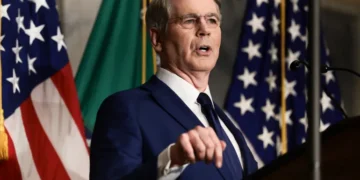
















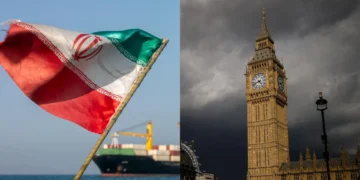





























The United States has unveiled an aggressive new economic pressure campaign against Iran, officially dubbed “Operation Economic Outcast.” Treasury Secretary Scott Bessent announced the initiative on Monday, declaring that the administration intends to target all of Tehran’s revenue streams, with a primary focus on oil exports. The goal, according to Bessent, is to force international entities to choose between maintaining business ties with the U.S. or with Iran, warning that those who facilitate the flow of Iranian capital will face secondary penalties.
Describing the strategy as an “economic D-day,” Bessent likened the effort to the historic Allied landings of World War II, emphasizing that the U.S. objective is to “sever every economic lifeline that sustains this tyrannical regime until Tehran stands alone.” He stated clearly that “no one is above the reach of US sanctions,” and warned that any entity participating in the ecosystem that converts Iranian oil into currency will be targeted. Despite the aggressive rhetoric, Bessent noted that the administration is currently avoiding penalties against major international economic institutions to prevent a collapse of the global financial system, offering a window for partners to remedy their involvement.
The Treasury Department simultaneously imposed fresh sanctions on 60 entities, vessels, and individuals across several nations, including the United Arab Emirates, Hong Kong, China, Switzerland, and Singapore. These targets are accused of enabling the Iranian government’s actions. Bessent added that President Donald Trump has been personally engaging with world leaders to request that they cease all interactions with the Iranian regime, promising that those who align with the U.S. will be rewarded, while those who remain tethered to Tehran should expect isolation.
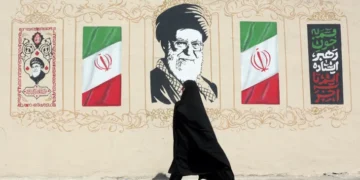
This escalation follows nearly six months of conflict initiated by U.S. and Israeli strikes against Iran in February. While these military actions resulted in the deaths of Supreme Leader Ali Khamenei and other high-ranking officials, they have not yet succeeded in toppling the government. In retaliation, Iran has launched missile and drone strikes across the region and effectively seized control of the Strait of Hormuz, causing global energy prices to surge. Analysts suggest this new economic push is a strategic pivot following the failure of military operations to achieve a decisive political outcome.
Sina Toossi, a fellow at the Center for International Policy, observed that while previous naval blockades and sanctions have damaged Iran’s oil exports, they have failed to force the political capitulation Washington desires. He noted that the disruption in the Strait of Hormuz continues to impose significant costs on the global economy, framing the new “economic D-day” as an intensification of pressure now that kinetic military efforts have stalled.
Iranian Foreign Minister Abbas Araghchi dismissed the latest U.S. measures on Sunday, characterizing them as recycled, ineffective strategies. “They cannot think of any other solution in confronting the great Iranian people, so they repeatedly put forward the same old plans,” Araghchi said. Meanwhile, Pentagon chief Pete Hegseth maintained that the economic strain would eventually force Tehran back to the negotiating table regarding its nuclear program. While Hegseth emphasized that economic pressure is currently the most effective tool, he did not rule out further military action, warning that if Iran “messes with the American military,” the U.S. will respond with necessary force.
The administration has identified five specific areas as Iran’s most vital lifelines: digital assets, technology, gold, aviation, and shipping. As the standoff continues, the U.S. remains focused on using these economic levers to force concessions, even as the broader conflict remains in a state of volatile uncertainty. The report also notes that likening it to the Allies’ forces landing on French shores to push back against Nazi Germany during World War II, bessent also called it “economic D-day”. The report also notes that asked why the US is threatening Iran’s business partners instead of penalising them, Bessent said: “Well, we are giving everyone the opportunity to remedy bad behaviour. The report also notes that multiple rounds of fighting and diplomacy have failed to resolve the crisis. The report also notes that in April, the US announced a blockade on Iranian ports, but Iran has remained defiant despite the naval siege. The report also notes that “Those who stand with the United States will reap the rewards of our partnership. The report also notes that we’ll do what we need to do,” Hegseth told reporters, if Iran is foolish enough to overplay their hand or mess with the American military.
Source: Al Jazeera