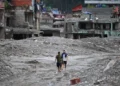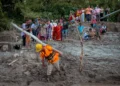































































A week after devastating flash floods swept through the Himalayan region, survivors are navigating the swollen Trishuli River using a makeshift 250-metre (820-foot) cable crossing installed by the Nepal army in Bidur. This precarious lifeline has become a vital link for those stranded after the disaster destroyed critical infrastructure, including roads and bridges. The army plans to install four additional temporary cable links along the river to assist in ongoing relief efforts.
The scale of the catastrophe, triggered by a glacial collapse on August 26, has resulted in a staggering loss of life. Official figures indicate that 1,114 bodies have been recovered in Nepal, while 3,916 people remain missing. Combined with reports from China—which confirmed 16 deaths and 546 missing—the total death toll has reached 1,130, with 4,462 individuals still unaccounted for. Furthermore, at least 17 bodies have been recovered from rivers downstream in India.
Among the missing are more than 800 foreign nationals from over 30 countries, including 583 in Nepal and 261 in China. These individuals include trekkers and pilgrims who were visiting the region, including those traveling to Tibet’s sacred Mount Kailash. While Tibetan advocacy groups have questioned the accuracy of China’s reporting on the disaster, Beijing maintains that its information release has been transparent and timely.
For those on the ground, the situation remains dire. Sujan, a 44-year-old chef from Amsterdam, returned to Nepal after the disaster to search for his family. “My home was taken by the floods, and my family is in a shelter,” he said, explaining that he sought out the zipline crossing in hopes of reaching his wife, children, and elderly mother after being unable to secure helicopter transport. Similarly, 31-year-old daily wage worker Devi Maji used the zipline with her three-year-old son, stating, “I want to get back to my village to see my husband and my other two children.”
The urgency of the situation was highlighted by Bhishma Bhatta, 40, who used the cable crossing to transport his mother, Tulkumaari, to a hospital after she developed severe breathing difficulties and the family exhausted their oxygen supply. “We somehow managed to get her on the zipline… and take her to hospital,” he recounted.
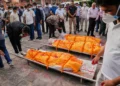
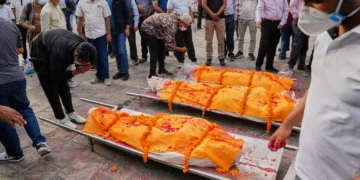
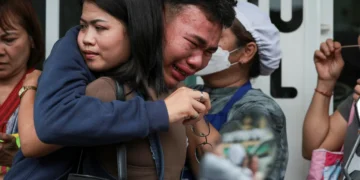
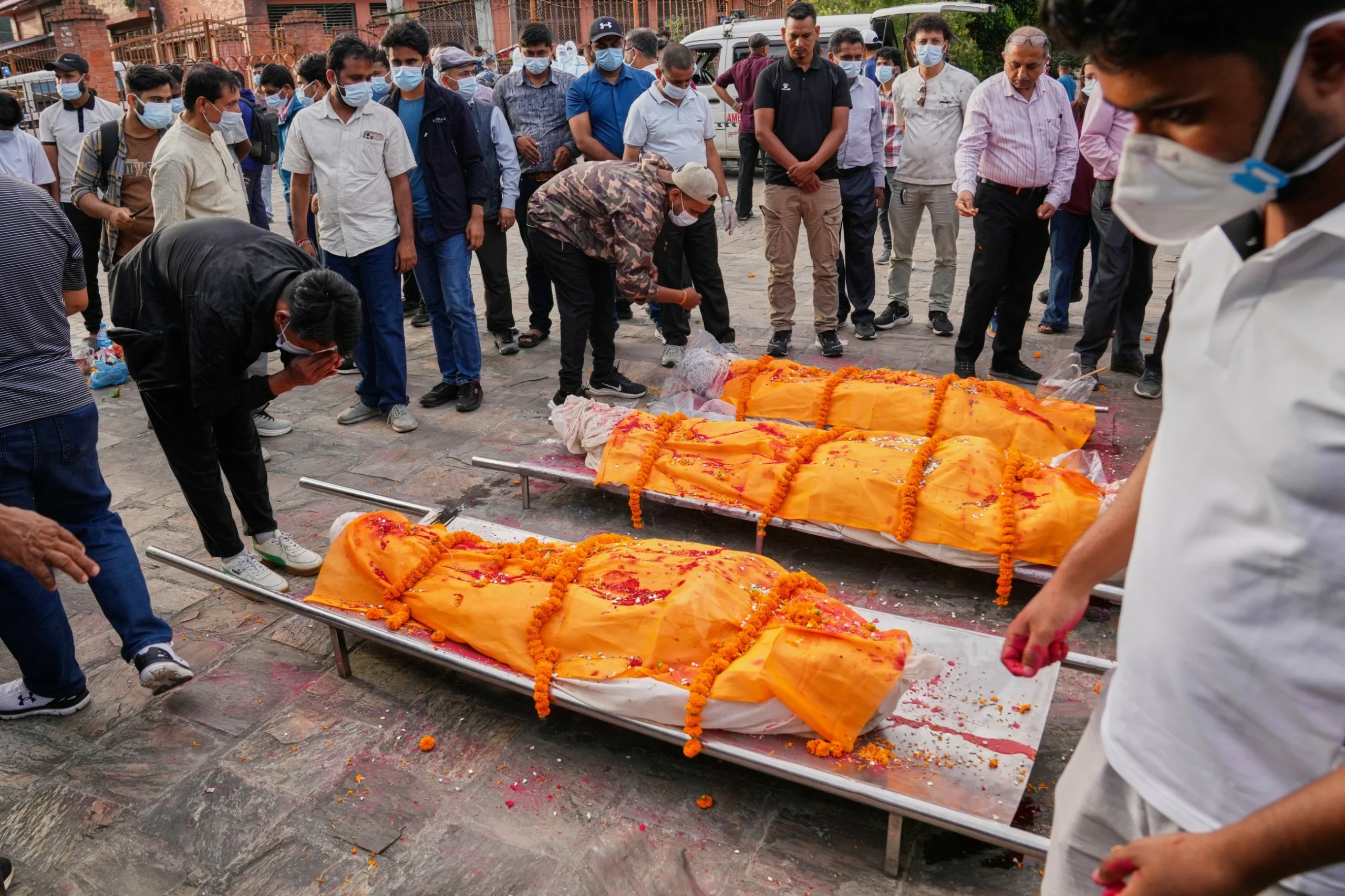
In Kathmandu, the tragedy has forced families to confront the reality of the loss. Hundreds have queued to provide DNA samples to help identify victims, while others have held symbolic funerals, burning straw effigies in accordance with Hindu rites. “We had to do this to set his soul free, so that he is at peace and happy wherever he is,” said Dolma Newar Tamang during a ceremony for her husband.
Government officials in the hard-hit Rasuwa district have described the event as an “unimaginable disaster.” Dhruba Prasad Adhikari, a local official, noted that the scale of the flooding far exceeded any previous expectations. Rescue teams continue to work in difficult conditions, digging through thick sludge and debris in hopes of finding survivors, including within the tunnels of damaged hydropower plants.
Prime Minister Balendra Shah addressed parliament on Wednesday, describing the disaster as a national “thunderbolt” and emphasizing the immense pressure on the country’s limited resources. He noted that while Nepal contributes minimally to global greenhouse gas emissions, it is disproportionately suffering the consequences of climate change, which scientists say is accelerating glacier melt in the Himalayas. “Climate change is a global contribution, and disaster response is also a global responsibility,” Shah stated.
The United Nations has provided a preliminary assessment estimating building damage alone at $158 million, though the total economic impact—including the destruction of roads, bridges, and agricultural land—is expected to reach billions of dollars. Despite the grim statistics, Foreign Minister Shisir Khanal expressed a sliver of hope, telling reporters that he does not want to give up on the possibility that some of the missing may still be alive, adding, “Miracles do happen.” The report also notes that flood survivors gripped a makeshift cable as Nepali soldiers and residents pulled them to safety on Wednesday, a week after one of the country’s worst disasters, high above the swollen Trishuli River. The report also notes that waiting for their turn to be hauled across, desperate people gathered on the riverbank. The report also notes that medicines, food and other essentials were ferried over the waters, those needing urgent treatment. The report also notes that the catastrophic flooding has killed more than 1,200 people and left nearly 4,800 missing in Nepal and China’s Tibet region. The report also notes that with helicopters flying food, temporary shelters and medicine to those left with almost nothing, rescuers are still searching for survivors and victims. The report also notes that for Bhishma Bhatta, 40, there was no time to wait. The report also notes that rescue teams have recovered more than 1,100 bodies, and nearly 4,500 people are missing, after the gigantic wave of freezing water, rocks and debris triggered by a glacial collapse roared down the China-Nepal border on August 26. The report also notes that in Nepal’s high-altitude Rasuwa district — the first and hardest hit — government official Dhruba Prasad Adhikari said people were confronting an “unimaginable disaster.” “We have to face the reality: this flood is far bigger than anything we could have thought of,” he told an AFP journalist, who reached the area after a more than 12-hour journey by treacherous mud-covered roads.
Source: Gulf Today