










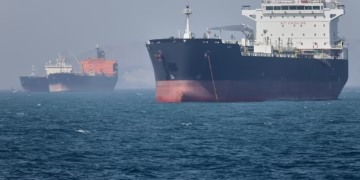



























































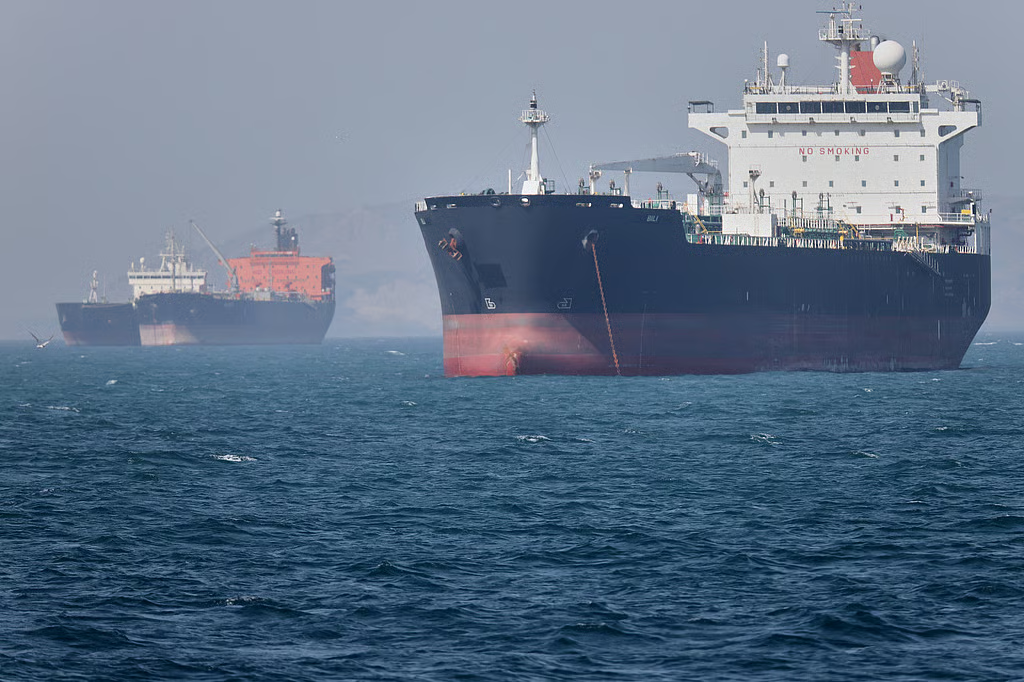
The geopolitical stability of the Strait of Hormuz is under intense scrutiny following a failed attempt by the Iranian regime to assert control over the vital waterway. On Monday, August 31, 2026, the Islamic Revolutionary Guard Corps (IRGC) alleged that a supertanker navigating the southern route near Oman had struck two naval mines, resulting in a fire and forcing the vessel to halt. However, by midday, U.S. Central Command definitively rejected the claim, noting that no such incident occurred and characterizing the report as a disinformation tactic intended to intimidate commercial shipping.
Maritime Security and Strategic Assessments
- Incident StatusNo vessel hit a mine; U.S. officials confirm the claim was fabricated.
- Strategic IntentThe Institute for the Study of War (ISW) suggests Iran aimed to restore influence by creating a perception of danger, specifically targeting the southern route.
- Operational RealityIncreased commercial traffic indicates that Tehran is struggling to deter vessels from using the southern passage.
- U.S. CountermeasuresImproved coordination within Central Command has enabled the effective clearing of mines and the escorting of commercial fleets.
The ISW noted that the IRGC’s claim lacked the standard details required to verify a maritime incident, such as the vessel’s identity, flag, or precise location. This omission reinforces the view that the action was a desperate attempt to maintain deterrence after U.S. forces successfully cleared mines and provided security for shipping lanes. Furthermore, U.S. strikes on Iranian radar systems are expected to further constrain the regime’s ability to disrupt maritime traffic.
Military Infrastructure and Regional Strikes
U.S. forces have intensified their campaign against IRGC facilities linked to attacks on commercial shipping and American personnel. Recent operations have targeted key strategic sites across the region, reflecting a broader effort to degrade Iran’s conventional military capabilities.
- Impacted LocationsExplosions and strikes were reported in Sirik, Jask, Asaluyeh, and near Chabahar and Konarak, all of which host critical maritime and military infrastructure.
- Larak IslandU.S. forces previously struck two rocket launchers at this location that were reportedly being prepared for deployment.
- Hardware ProductionThere is evidence of a surge in U.S. anti-missile hardware production, highlighted by the military’s successful response to multiple missile launches in Jordan.
- Coordinated DefenseOn September 1, 2026, the successful interception of drone and missile attacks launched by Iran against commercial ships demonstrated enhanced defensive coordination.
Regime Stability and Future Outlook
The broader implications of these events have sparked debate regarding the internal state of the Iranian government. While Treasury Secretary Scott Bessent has described the regime as being in a “death spiral,” he clarified that total collapse is not necessarily the formal objective of the current U.S. administration. Experts suggest that while the regime faces severe economic disruption and military losses, it remains entrenched.
Current assessments indicate that economic hardship has not yet triggered widespread protests capable of threatening the government’s stability. While some observers have used the term “panic” to describe Tehran’s behavior, the regime continues to navigate a complex environment of military pressure and diplomatic isolation. The U.S. campaign has significantly weakened Iran’s conventional forces, though it has not yet fully achieved all public objectives, including the dismantling of the nuclear program or the total degradation of ballistic-missile capabilities. The report also notes that iSW also said repeated Iranian claims about tanker mine strikes were likely intended to make the southern route appear unsafe. The report also notes that also Read: Iran’s Hormuz weapon is slipping away. The report also notes that the assessment supports a narrower conclusion: Iran’s maritime coercion appears to have been weakened. The report also notes that legal limits, also Read: Weaponising Hormuz: How Iran’s coercive leverage collides with global energy. The report also notes that reports identified explosions or strikes around. The report also notes that a fishing pier, a maritime organisation tower and Jiroft Airport, iranian state media also reported damage to a fishmeal factory. The report also notes that and the United States has not confirmed that those civilian sites were intended targets, those claims have not been independently verified.
Source: Gulf News