





























A federal judge in California has issued a landmark ruling declaring that immigration provisions used by the US government to target non-citizens for their political speech are unconstitutional. The decision, handed down by US District Judge Noel Wise on August 28, represents a major legal challenge to the administration’s strategy of leveraging immigration enforcement to suppress activism, particularly among pro-Palestinian voices.
The ruling stems from a lawsuit filed by The Stanford Daily and an anonymous F-1 visa holder, identified as Jane Doe. The plaintiffs argued that the government’s policy created a climate of fear on university campuses, forcing international students to delete social media posts, avoid political engagement, and hesitate before reporting on the conflict in Gaza. They contended that these actions effectively chilled protected expression.
In a comprehensive 90-page decision, Judge Wise sided with the plaintiffs on six of their eight claims. The court found that the government’s application of the Immigration and Nationality Act of 1952—which allows for visa revocation based on potential foreign policy consequences—constituted viewpoint- and content-based restrictions. The judge emphasized that the government cannot penalize protected speech simply because it objects to the underlying viewpoint.
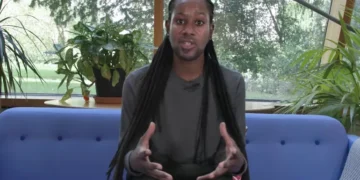
Human rights lawyer Maria Kari, who has represented several activists targeted by these measures, including Momodou Taal, Yaakub Ira Vijandre, and Mahmoud Khalil, welcomed the ruling. Kari described the decision as a significant victory, noting that constitutional free-speech protections do not vanish at the border or depend on US citizenship status. She argued that silencing activists for opposing US funding of war crimes is profoundly un-American.
The legal dispute centers on a January 2025 executive order that directed federal agencies to identify and remove non-citizen students and faculty whose political activities were deemed contrary to US foreign policy interests. Secretary of State Marco Rubio had previously asserted broad discretion to determine when a non-citizen’s presence threatened compelling foreign policy interests. During the proceedings, Rubio suggested that while the policy could theoretically reach minor protests, it was intended for more significant matters, though he conceded that complaining about issues like paper straws would not trigger a visa revocation.
Judge Wise’s ruling, which extensively cites founding figures like Benjamin Franklin and James Madison, establishes a constitutional limit on the administration’s authority. However, Kari cautioned that the practical impact remains limited because the ruling is declaratory rather than injunctive. It does not automatically halt future visa revocations or secure the release of those currently detained in ICE facilities.
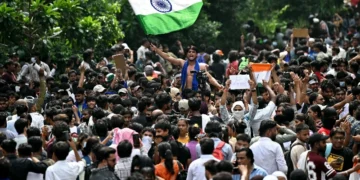
The policy’s real-world impact has been severe. In March 2025, Mahmoud Khalil, a Columbia University graduate and permanent resident, was detained by ICE for his role in campus organizing. Shortly thereafter, federal agents arrested Rumeysa Ozturk, a Tufts University doctoral student, following her co-authorship of an op-ed criticizing her university’s stance on the war in Gaza. These cases, along with those of students like Momodou Taal and Mohsen Mahdawi, transformed individual immigration actions into a broader confrontation over political dissent.
Kari warned that the administration is now moving toward a new, alarming frontier in immigration enforcement. She noted that the government is increasingly weaponizing these provisions against individuals based on their family connections, regardless of their own actions or statements. She anticipates that the legality of this expanded application will be further tested in court.
The administration has sixty days to appeal the decision. While Kari expects the government to pursue an appeal, she remains optimistic about the plaintiffs’ position, noting that the Ninth Circuit Court of Appeals has previously affirmed that free speech protections extend to non-citizens. For now, the ruling serves as a critical check on the government’s ability to use immigration status as a tool for political censorship on American campuses. The report also notes that uS District Judge Noel Wise ruled on August 28 that the government’s application of the provisions to revoke visas and pursue deportations over protected speech violated the First and Fifth Amendments. The report also notes that too many brave and principled pro-Palestinian voices have become collateral damage due to Washington’s attempts to suppress criticism of the genocidal Israeli state, according to human rights lawyer and writer Maria Kari. The report also notes that rubio’s own arguments showed just how far the provision could reach. The report also notes that when something is on appeal it means that other judges in other jurisdictions are more likely to say, ‘that case is on appeal, I don’t have to rely on it’.”. The report also notes that as the possibility of deportation was enough to make some students think twice, the result was a form of censorship that did not require the government to silence every student directly. The report also notes that i think Judge Wise’s decision does a brilliant job of laying out the pattern we’ve seen unfold since March 2025 when the foreign policy grounds provision was invoked after three decades of non-use with Mahmoud Khalil’s request,” Kari says. The report also notes that protests for Palestine have died down and people – citizens and noncitizens alike – are scared.”, since then… campuses are quiet. The report also notes that wise’s decision follows a similar ruling last year in Massachusetts in AAUP v.
Source: TRT World