

















































The escalation of water-related conflicts is taking center stage as the annual World Water Week conference opens in Stockholm and online. Organized by the Stockholm International Water Institute (SIWI) under the theme “Water for People and Progress,” the event addresses the mounting pressures on global water security.
Data from the Pacific Institute, a nonprofit think tank based in the United States, reveals a record high of 420 water-related conflicts in 2024. This figure represents a 78 percent increase from the 235 incidents documented in 2022. These conflicts are primarily fueled by attacks on essential infrastructure and disputes over resource access, particularly in regions embroiled in long-term warfare.
The Pacific Institute categorizes these incidents into three distinct types: casualties, triggers, and weapons. Casualty events, where water infrastructure like dams, pipelines, or treatment plants is damaged or destroyed, accounted for 55 percent of conflicts in 2024. Triggers, involving disputes over scarcity or unequal access among farmers, communities, or armed groups, made up 28 percent of cases. Finally, the weaponization of water—deliberately manipulating supplies through contamination, flooding, or supply cuts—represented two percent of incidents, highlighting the dangerous intersection of climate stress and conflict.
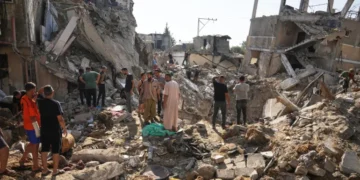
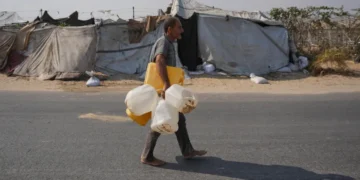
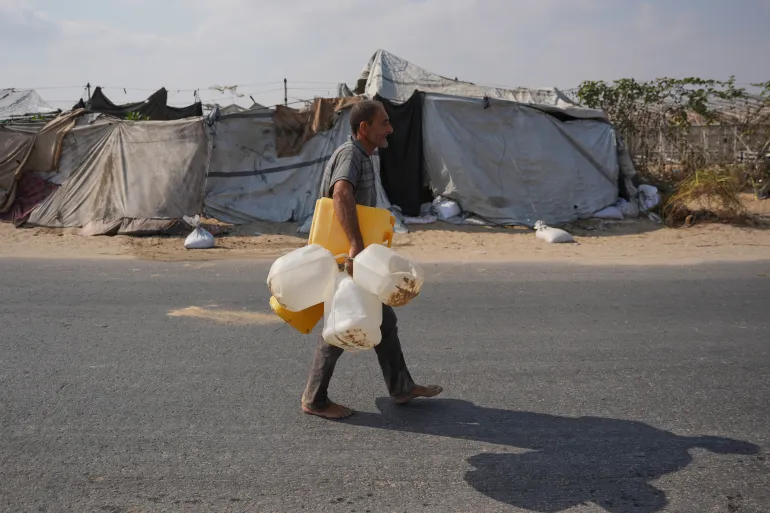
In Gaza, the humanitarian situation is dire, with 1.9 million of the 2.1 million residents displaced. UNICEF reports that 90 percent of water and sanitation infrastructure has been destroyed or damaged by Israeli military operations. Up to 70 percent of the population cannot access the minimum daily requirement of six liters of water for cooking and drinking, while 90 percent of households face moderate-to-high water insecurity. Medecins Sans Frontieres (MSF) notes that water prices have surged by 500 percent, exacerbating the spread of skin and diarrheal diseases among vulnerable groups.
The occupied West Bank also faces significant challenges, as settler attacks and demolitions target Palestinian water systems. Repeated raids on the Ein Samiya wells near Ramallah have disrupted supplies for approximately 100,000 people. Meanwhile, in Sudan, the ongoing conflict between the Sudanese Armed Forces and the Rapid Support Forces has displaced 12 million people. A Geneva Academy report highlights that attacks on reservoirs and treatment plants, particularly in Darfur, have triggered cholera outbreaks and worsened famine risks across the Blue Nile, Kordofan, and Darfur regions.
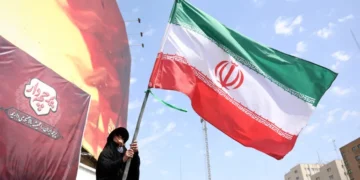
In Iran, recent air strikes have further strained a water system already crippled by drought, low rainfall, and groundwater depletion. Attacks since February 28 have damaged desalination plants and reservoirs in Hormozgan province and Qeshm Island, hindering access for tens of thousands. These strikes occurred while reserves were critically low; some reservoirs were 92 percent depleted, and in the city of Mashhad, water levels dropped below three percent.
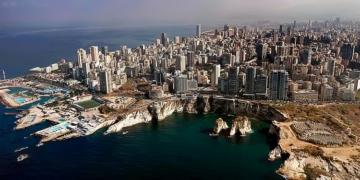
The conflict has underscored the fragility of water infrastructure across the Gulf, a region heavily reliant on desalination. These plants provide 99 percent of Qatar’s drinking water, 90 percent in Bahrain, 90 percent in Kuwait, 86 percent in Oman, and 70 percent in Saudi Arabia. While desalination facilities in the UAE, Kuwait, Bahrain, and Iran sustained damage during the war, the broader impact on water availability remained limited.
Ukraine continues to face a severe water crisis as the war with Russia targets energy and water networks. UNICEF estimates that 12.7 million people require humanitarian support, with 4.3 million having received safe-water assistance last year. Attacks have slashed electricity generation by 70 percent, which in turn disrupts heating and water distribution. The June 2023 Kakhovka Dam disaster continues to impact 100,000 people, leaving approximately 10 million individuals without reliable access to safe water. The report also notes that the Pacific Institute has tracked global water conflicts through its Water Conflict Chronology, classifying each incident by whether water served as a casualty, trigger, or weapon of war, for more than three decades. The report also notes that including by cutting supplies, contaminating sources, flooding areas, or controlling access, weapon: Water is deliberately manipulated to harm or pressure opponents. The report also notes that underscoring the growing links between water stress, climate pressures and conflict, with two percent of incidents in 2024 categorised this way, water weaponisation is less frequent but persistent. The report also notes that where are water-related conflicts the biggest threat in 2026. The report also notes that the medical charity, Medecins Sans Frontieres (MSF), also known as Doctors Without Borders, reported that water prices have risen by up to 500 percent. The report also notes that fighting between the Sudanese Armed Forces and the Rapid Support Forces has displaced about 12 million people and created a humanitarian crisis affecting more than 30 million, since April 2023. The report also notes that in Kherson, strikes this month cut supplies to entire neighbourhoods.
Source: Al Jazeera