







































































Israeli military authorities have officially opened a criminal investigation into the death of five-year-old Hind Rajab, who was killed alongside her family on January 29, 2024. The incident, which occurred in Gaza, became a global symbol of the conflict’s impact on civilians after audio of the child’s final, desperate pleas for help was broadcast worldwide.
For over 930 days, the circumstances surrounding the event remained a point of intense international contention. Initially, Israeli officials denied that their forces had fired upon the vehicle. Later, the military acknowledged that troops were present in the area, but only this week did it formally announce a criminal probe. The investigation is reportedly focused on alleged failures in coordinating the movement of a Palestine Red Crescent ambulance, as well as a separate inquiry into the deaths of 15 medics and rescue workers in Rafah.
Nasir Qadri, a human rights lawyer and professor of international law at Koc University, noted that the timing of this announcement follows a familiar institutional pattern. He argues that such investigations often serve to protect the state from external legal accountability rather than to uncover the truth. According to Qadri, the military typically follows a sequence of initial denial, followed by a lengthy review process, and eventual closure without prosecution, citing either insufficient evidence or the complexities of combat decision-making.
The legal context for this development is tied to the International Criminal Court (ICC). Under Article 17 of the Rome Statute, a state may challenge the admissibility of cases before the ICC by demonstrating that it is conducting its own genuine domestic investigations. The ICC is mandated to intervene only when a state is deemed “unwilling or unable” to prosecute its own nationals. Consequently, legal experts suggest that Israel has a direct incentive to initiate these probes while facing active ICC proceedings and genocide referrals before the International Court of Justice (ICJ).
The Hind Rajab Foundation, a Brussels-based advocacy group, has dismissed the announcement as a “masquerade” intended to preserve impunity. The foundation points to data indicating that of 52 publicly known military investigations into violations in Gaza and the West Bank, 88 percent were either closed without findings of wrongdoing or left in a state of indefinite suspension. A spokesperson for the group stated that the probe appears designed to create an illusion of accountability rather than to deliver justice.
Internal military records claim that over 1,000 wartime incidents have been referred to internal review mechanisms, resulting in 74 criminal cases. However, there is no comprehensive public accounting of the status of these cases. Critics point to the 2022 case of journalist Shireen Abu Akleh, where the military admitted a “high possibility” of soldier involvement but declined to open a criminal investigation, as evidence of a systemic failure to hold personnel accountable.
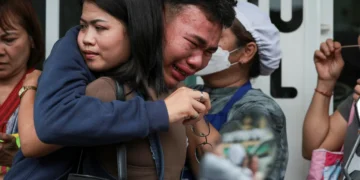
The skepticism is shared by the family of the victims. Relatives have expressed a lack of confidence in the Israeli judiciary, asserting that the vehicle was deliberately targeted. They continue to call for an independent international investigation, emphasizing that their pursuit of justice is not limited to the case of Hind Rajab, but extends to all children killed in the conflict.
Further complicating the optics of the announcement, the military simultaneously closed a separate case regarding an April 2024 strike that resulted in the deaths of seven World Central Kitchen aid workers, including Zomi Frankcom. For observers like Tunisian director Kaouther Ben Hania, who has documented the tragedy, these developments function as a “smokescreen” intended to deflect criticism during a period of high international pressure.
As the legal battle continues, the Hind Rajab Foundation maintains that genuine accountability can only be achieved through the ICC and international courts. Until then, the foundation and other human rights organizations argue that the current domestic process remains a charade, failing to address the underlying patterns of violence or provide meaningful consequences for the loss of civilian life. The report also notes that israeli forces killed five-year-old Hind Rajab alongside her family on January 29, 2024, in what has become one of the most shocking acts of violence against Palestinian civilians in Gaza in nearly three years. The report also notes that as she waited for a rescue that could never reach her, hind lived through the initial gunfire only to be left trapped among her family’s dead bodies in the wreckage of the car. The report also notes that was heard by millions of people around the world, and it turned her into a symbol Israel has spent over two years trying, and failing, to bury along with her, her final phone call pleading for someone to come. The report also notes that its strikes in Lebanon and elsewhere, the announcement by the genocidal army comes as Israel faces renewed legal scrutiny over its genocide in Gaza. The report also notes that “Israel is currently subject to active ICC proceedings, faces genocide referrals before the ICJ, and is operating under the July 2024 Advisory Opinion finding its occupation violates peremptory norms,” Qadri says. The report also notes that also, the same week Israel opened a criminal probe into Hind’s killing, it closed another case on the April 2024 strike that killed World Central Kitchen worker Zomi Frankcom and six colleagues, ruling out any criminal investigation despite the military’s own earlier admission that it had killed them “unintentionally.
Source: TRT World