





















































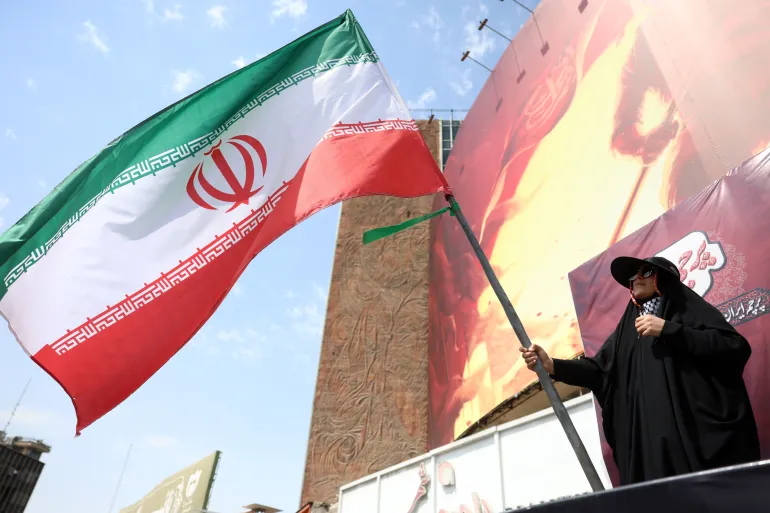
Iran’s parliament, currently dominated by hardline factions, has moved forward with a legislative proposal designed to combat what officials describe as foreign “infiltration.” The plan, which focuses heavily on the academic, media, and cultural sectors, was approved in its general outlines during a remote session held on Sunday.
Proponents of the bill argue that it serves as a necessary extension of existing espionage laws, which were enacted following the 12-day conflict with the United States and Israel last year to strengthen national security. Ruhollah Nejabat, a hardline MP representing Shiraz, noted that the proposal was initially introduced earlier this year to mitigate the “influence” of foreign adversaries.
The legislative framework, which consists of 19 articles, remains subject to further parliamentary debate and must eventually secure approval from the Guardian Council, a 12-member constitutional watchdog. The current version of the bill establishes a tiered system for foreign countries, with the United States and Israel expected to occupy the highest category of scrutiny.
Under the proposed regulations, the Ministry of Interior would launch a mandatory registration portal for a wide array of activities involving foreign counterparts. This includes the exchange of statistics, research samples, scholarships, scientific data, and legal or artistic services. Existing foreign-linked activities would be required to register within three months of the portal’s activation.
The bill imposes strict oversight on the media and education sectors. The ministries of education, science, and health are tasked with integrating “enemy infiltration” awareness and media literacy into school curricula, guided by the Ministry of Intelligence and the Supreme Council of the Cultural Revolution. Furthermore, any interaction with foreign media requires prior authorization, and interviews with outlets deemed hostile by the state are prohibited.
Severe penalties are outlined for those found in violation of these rules. Individuals who disseminate information, analysis, or policy recommendations under foreign direction that is deemed harmful to national security or public trust face up to 30 years in prison. Additionally, cultural works—including films, music, and literature—that are perceived to depict Iran negatively or promote “anti-Islamic culture” could face production bans, fines, or professional disqualification.
The legislation also targets civil society, requiring NGOs, political parties, and associations to register and potentially seek government approval for foreign funding, contracts, or training. Foreign-supported workshops or classes could lead to imprisonment for organizers and legal repercussions for participants.
However, the bill provides specific exemptions for the armed forces, the Ministry of Intelligence, and political officials engaged in relevant foreign activities. These groups are not required to register their interactions on the government portal.
The proposal has faced significant pushback from the government of President Masoud Pezeshkian. Majid Ansari, a religious leader and the president’s deputy for legal affairs, stated that the administration is in “explicit opposition” to the bill. Ansari warned that the legislation would impose serious restrictions on scientific progress, hinder international academic collaboration, and accelerate the country’s “brain drain” while damaging Iran’s global image. He further argued that the bill contradicts the constitution.
Public reaction has been one of alarm, with experts and students expressing concern over the potential for increased isolation and the erosion of personal freedoms. One researcher at the University of Tehran, who requested anonymity due to security risks, noted that many in academic circles fear the vague and expansive nature of the provisions. She expressed concerns that students who have participated in anti-government protests abroad could face legal or security consequences upon returning to Iran.
Critics, including legal experts like Norouzi, have warned that such legislation is counterproductive. Norouzi argued that this style of lawmaking does not foster order but instead propagates disorder within the country. As the bill awaits further refinement, the debate continues to intensify, particularly as the deadline for a memorandum of understanding with Washington has passed amid ongoing regional military tensions. The report also notes that proponents have presented it as an effort to complement another tough law punishing espionage passed after last year’s 12-day war with Israel and the United States to bolster wartime national security. The report also notes that with an Before becoming law, the bill needs final ratification by parliament, as well as by a powerful 12-member constitutional watchdog known as the Guardian Council – a process that could take weeks or months, a 19-article draft of the bill was previously published by state-linked media. The report also notes that who have dominated parliament since 2020 after elections marked by a historically low turnout and candidate disqualifications, establish broad restrictions on contact with foreign countries, the general principles approved by hardline lawmakers. The report also notes that according to how much scrutiny authorities would place on contact with them, with the US and Israel expected to be placed in the highest tier, it would group countries into three tiers. The report also notes that as are media owned, managed or funded by foreign agents connected to countries placed in the top two tiers, unauthorised conversations or interviews with media considered hostile by the Islamic Republic are also prohibited. The report also notes that he said, came not from the kinds of “minor and lower-level infiltration” that such a law might address, but from “larger-scale issues” resulting from existing “points of infiltration” and inadequate oversight within the establishment, iran’s main vulnerability. The report also notes that last month, Foreign Minister Abbas Araghchi told state-linked media that the security breach behind the assassination of former Supreme Leader Ayatollah Ali Khamenei and a large number of other top officials in late February had probably not been resolved. The report also notes that he said the infiltration appeared to go beyond gathering intelligence and instead included the “steering [of] decision-making”.
Source: Al Jazeera