




































































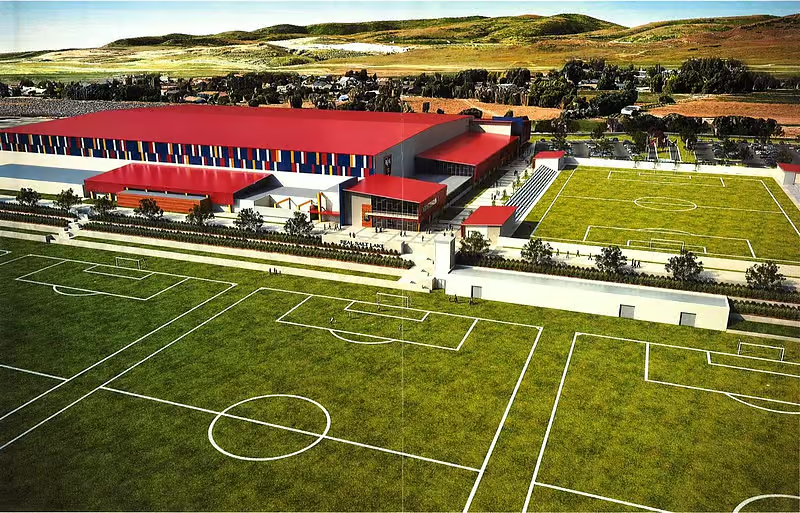
After more than two decades in professional football and sports management, Terry Kidd has witnessed the evolution of stadiums and training centers worldwide. As the current Centre Manager at AllSports Arena Dubai, Kidd brings over 20 years of expertise in community participation, commercial growth, and professional sports development to his perspective on the industry’s future.
Kidd notes that while industry leaders have historically prioritized metrics like revenue, utilization rates, and membership sales, these figures fail to capture why certain venues become essential parts of people’s lives. While these financial indicators remain vital for business health, they do not explain the emotional impact a facility has on its members. When individuals reflect on the places that shaped them, they rarely mention the size of a gym or the number of available courts; instead, they focus on how those environments made them feel.
The shift in modern sports management is moving toward creating destinations that prioritize connection, experience, and a sense of belonging. Today’s customers seek more than just high-quality equipment; they want to feel welcomed and valued from the moment they arrive. According to Kidd, successful venues are those that foster a genuine sense of community, where staff members recognize visitors and the atmosphere encourages people to return repeatedly.
While infrastructure and technology are necessary components of any sports business, they do not inherently create culture. Kidd emphasizes that culture is built by people—through small, meaningful interactions like a friendly greeting at reception, a coach acknowledging a child’s progress, or staff anticipating a member’s needs. These human-centric moments rarely appear on financial reports, yet they are the primary drivers behind member retention and positive word-of-mouth recommendations.
This philosophy suggests that commercial success is best achieved by serving the community better rather than simply pushing for more sales. As the role of sport continues to expand, these venues are becoming hubs where families congregate, professionals decompress, and children develop a lasting passion for physical activity. Because sport possesses a unique ability to bridge gaps between different cultures, ages, and backgrounds, its potential for social impact is immense.
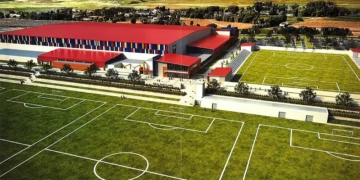
Dubai is uniquely positioned to lead this global shift. Having already established itself as a premier destination for international events and elite athletes, the city is now poised to pair its world-class infrastructure with experiences that leave a lasting impression. At AllSports Arena, the UAE’s largest indoor sports destination, this vision is already in practice. The facility integrates a diverse range of activities—including football, padel, swimming, squash, climbing, and gymnastics—to serve a broad demographic.
The goal at the Arena is to provide more than just space; it is to create an environment that enables people to discover new interests and connect with others. Kidd believes that the true measure of a sports destination is not found in its square footage, but in the friendships forged and the inspiration provided to its members. By focusing on these human connections, the industry can move toward a future that promotes healthier, happier lives.
Ultimately, the legacy of a sports venue is not defined by its revenue or membership numbers, but by the tangible impact it has on the lives of those it serves. As the industry evolves, the most successful destinations will be those that prioritize the human experience, ensuring that every visitor feels like a valued member of a wider community.
Source: Khaleej Times