









































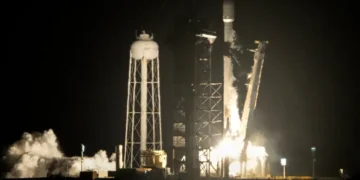


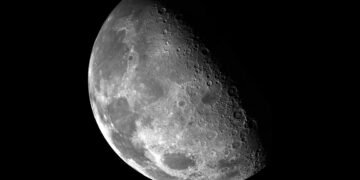
























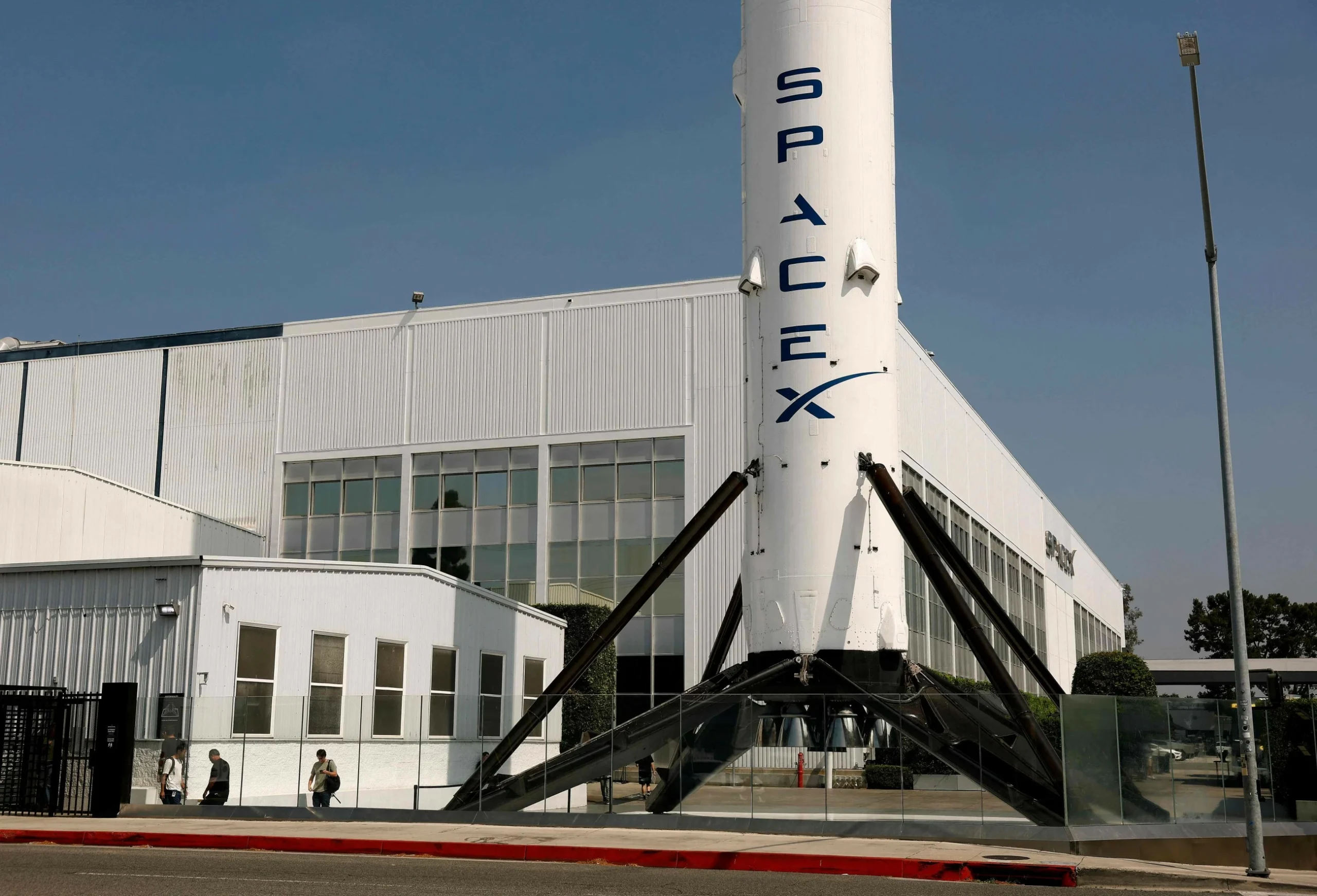
A four-tonne piece of a SpaceX rocket is believed to have unintentionally crashed into the Moon on Wednesday, a collision that posed no danger to Earth but is expected to leave behind a lunar crater. While there is not yet official confirmation that the Falcon 9 upper stage struck the lunar surface, it had been expected to make impact at approximately 0635 GMT.
NASA, along with its Lunar Reconnaissance Orbiter probe and South Korea’s Pathfinder Lunar Orbiter, planned to capture images of the site following the impact, though it may take several days to process and receive that data. Scientists and amateur stargazers alike had been looking forward to observing the sunlit plume of rubble and debris created by the smash.
“It might be possible for folks with a telescope to observe the plume of ejecta created by the impact,” said Benjamin Fernando of Los Alamos National Laboratory in New Mexico, the lead author on a recent paper regarding the anticipated collision. “It is unclear how bright it will be, which is one of the reasons why we are looking to study this event,” the researcher told AFP before the impact occurred.
Assuming all of the propellant is spent, authors of the paper estimate the spacecraft weighs approximately 8,800 pounds (4,000 kilogrammes). It was expected to slam into the Moon’s northern hemisphere near the Einstein Crater at a velocity of some 5,400 miles per hour (8,690 kilometres per hour). NASA spokesperson Jimi Russell stated clearly, “There is no danger to Earth,” adding that the agency would continue to track the booster for training purposes and later observe the site for scientific analysis.
The Falcon 9 rocket, manufactured by Elon Musk’s SpaceX firm, originally took off in January 2025 carrying two lunar landers. While the booster returned to Earth, the upper stage remained in space to propel the landers onward. Julianna Scheiman, director of NASA Science and Dragon Programmes at SpaceX, explained during a Monday news conference that for such high-energy missions, the company performs maneuvers to ensure the second stage remains safe per regulatory requirements.
“We did that,” she continued, but “what has happened is essentially a mixture of solar activity and gravity forces have put it on a path towards the Moon.” Like many in the scientific community, Scheiman expressed that she was “very excited” to see the impact. The research team encouraged both professional and amateur astronomers to attempt to view or record the event, noting it provides a rare opportunity to test pipelines for localizing lunar impacts and investigating dust dynamics.
NASA hopes to establish a sustained human presence on the Moon, making it critical to better understand space debris in lunar orbit. While the Moon routinely weathers impacts from natural meteoroids, artificial collisions are significantly less common. In the 1970s, the US space agency carried out deliberate crashes during its Apollo programme to collect seismic data.
The rocket stage had been just one of many pieces of “space junk” currently orbiting Earth. According to the European Space Agency in late July, there are more than 46,000 pieces of space debris weighing a total of 17,000 tonnes currently in orbit. Some experts have warned that amassing too much space junk around Earth could lead to a dangerous chain reaction of collisions known as the “Kessler syndrome.”
The study of this specific impact is expected to yield valuable data regarding the hazards posed by artificial space debris. By monitoring the resulting crater and plume, scientists hope to refine their understanding of how such objects interact with the lunar surface, providing essential insights for future lunar exploration and safety protocols as human activity in space continues to expand.
Source: Gulf Today