











































































India’s foreign exchange reserves have reached a historic peak of $729.3 billion as of the week ending August 21. This surge, which saw an increase of $12.4 billion in a single week, surpasses the previous record of $728.5 billion established in February.
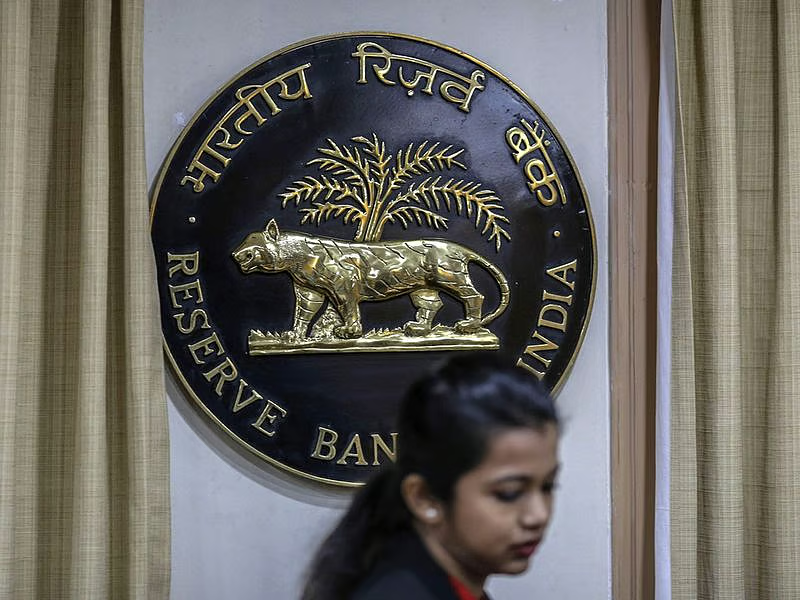
The Reserve Bank of India (RBI) now holds greater capacity to manage volatility in the rupee, which remains under pressure due to the country’s reliance on imported fuel and the impact of elevated global crude oil prices. Despite these challenges, the Indian currency has managed a 1.7 percent recovery from the record lows it hit in May.
This accumulation of reserves is largely attributed to robust capital inflows resulting from central bank initiatives launched in June. These measures, which included a specialized deposit program for non-resident Indians and other overseas customers, have successfully attracted approximately $72.8 billion in capital through August 21. These inflows have bolstered India’s external financial position and mitigated the risk of a third consecutive year of deficits in the nation’s primary capital flow metrics.
The success of these programs led RBI Governor Sanjay Malhotra to unexpectedly advance the closure of the special deposit window earlier this month, citing higher-than-anticipated participation. However, this strategy carries a notable financial burden for the central bank. To encourage banks to offer competitive interest rates to overseas depositors, the RBI has been covering hedging costs.
Financial analysts note that the cost of raising these funds is currently high, particularly because US interest rates remain significantly elevated compared to 2013, the last period when the RBI utilized similar methods to bolster reserves. Because the central bank typically invests these dollar inflows into relatively low-yielding assets, the return on investment often falls short of the borrowing costs.
This discrepancy creates what is known as a “carry cost” for the country. Estimates suggest that the annual expense associated with this arrangement could reach approximately $5.7 billion.
The central bank has also taken steps to adjust its regulatory framework, including tightening rules on bank deposit interest rates and shortening the window for banks to raise Foreign Currency Non-Resident (FCNR) deposits. Additionally, the government has moved forward with other financial initiatives, such as approving an RBI trial for the introduction of polymer currency notes. The report also notes that giving RBI more room to shield the rupee, diaspora deposit push swells reserves. The report also notes that the country’s forex reserves increased by $12.4 billion during the week, surpassing the previous record of $728.5 billion registered in February, according to data released by the RBI on Friday. The report also notes that strong AI chip demand fuels Nvidia’s Q2 results. The report also notes that nRIs in UAE: Should you move US dollars to India.
Source: Gulf News