














































Fifteen years after the uprising that ended Muammar Gaddafi’s four-decade rule, Libya remains divided between two competing administrations. As the nation grapples with the legacy of civil conflict, the United States, alongside regional powers including Qatar, Egypt, and Turkiye, is mounting a fresh push to reconcile these rival factions and establish a unified government.
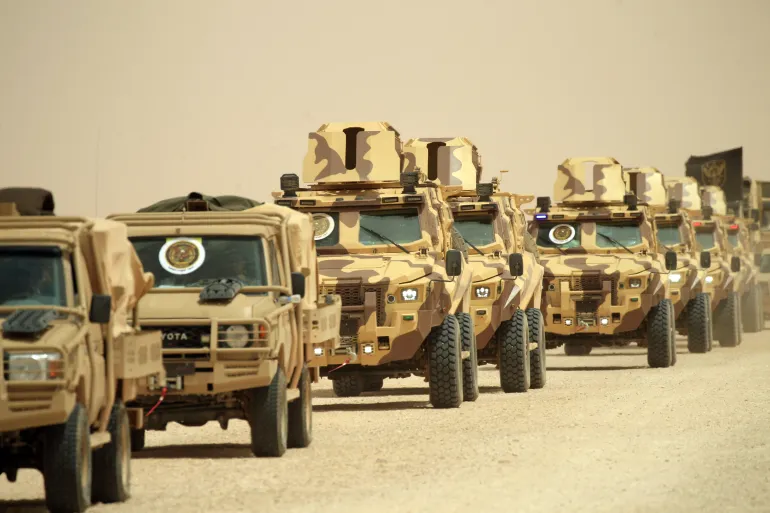
The current political landscape is split between the UN-recognized Government of National Unity (GNU) in Tripoli, led by Prime Minister Abdul Hamid Dheibah, and an eastern administration based in Tobruk. The latter is supported by Khalifa Haftar and his self-styled Libyan National Army (LNA), which controls significant oil-rich territories in the east, reportedly with Russian backing.
The conflict traces back to the 2011 Arab Spring, when protests in Benghazi against Gaddafi’s absolute power escalated into an armed rebellion. A NATO-led international intervention, involving the US, UK, and France, eventually supported the rebels, leading to Gaddafi’s capture and death in October 2011. The power vacuum that followed has left the country struggling to maintain stability ever since.
Washington is now playing a central role in the latest mediation efforts. Under the guidance of Massad Boulous, an advisor to US President Donald Trump, the US is proposing a power-sharing arrangement. This plan suggests that Dheibah remain as Prime Minister while 35-year-old Saddam Haftar, the LNA army chief and son of Khalifa Haftar, assumes the presidency. Reports indicate that Saddam Haftar met with US Secretary of State Marco Rubio in Washington this past July.
The US initiative is reportedly linked to potential American investment in Libya’s vast oil fields, a move intended to provide economic stability. This comes as the Libyan Central Bank faces mounting pressure to finance both administrations amid a dire economic climate. The US has been actively involved in mediation since appointing Ambassador Richard Norlan as Special Envoy to Libya in May 2021.
Regional stakeholders are also heavily involved. Turkiye, which previously deployed troops to support the GNU, has recently engaged in high-level diplomacy. Foreign Minister Hakan Fidan met with Saddam Haftar in Ankara last month and subsequently traveled to both Tripoli and Benghazi to hold talks with Dheibah and Khalifa Haftar. Meanwhile, Egypt continues to coordinate with the Tobruk-based government, with President Abdel Fattah el-Sisi meeting Khalifa Haftar in Cairo recently to discuss unification.
Qatar has maintained a focus on the UN-led roadmap, which includes the UN Support Mission in Libya (UNSMIL) framework for national dialogue and elections. In April, Qatar, Egypt, France, Germany, and other nations issued a joint statement urging all Libyan parties to adhere to the UN process to “advance a Libyan-led political process leading to unified governance and national elections.”
A significant milestone in these efforts was the signing of a unified national budget in April 2026—the first such agreement in over a decade. While experts view this as a positive step toward cooperation, a formal unified government has yet to be established. Critics of the US-led plan argue that it may prioritize the interests of political dynasties over the needs of the Libyan public, though proponents suggest such arrangements could provide the stability necessary for long-term governance.
Beyond political unity, international actors are motivated by the potential for energy investment and the need to curb irregular migration from North Africa to the European Union. Despite these incentives, the path to a single, functional state remains complex as both sides continue to navigate the competing interests of their domestic and international supporters. The report also notes that when thousands of people in the port city of Benghazi took to the streets to protest against Gaddafi’s more than four decades of absolute power, the Libyan uprising erupted during the Arab Spring. The report also notes that the United States, United Kingdom and France – to enforce a no-fly zone and ensure the protection of civilians in Libya, a United Nations Security Council resolution authorised an international military intervention force – led by NATO members. The report also notes that this bombing campaign pushed back Gaddafi’s forces from Benghazi and aided the rebels in seizing territory. The report also notes that gaddafi was eventually captured and killed in October 2011, 42 years after he first seized power in a military coup that overthrew King Idris. The report also notes that and officially has authority in the capital and western Libya, the GNU is recognised by the UN and other countries. The report also notes that the UN began formal mediation efforts in 2020 under the UN Support Mission in Libya (UNSMIL). The report also notes that presidential and parliamentary elections, and hosting national dialogue meetings, this roadmap advocates for a three-track strategy that includes unifying the two rival administrations.
Source: Al Jazeera