






























































On the night of August 4, Prime Minister Narendra Modi’s Bharatiya Janata Party (BJP) faced a significant political setback in the eastern Indian city of Patna. The party lost the Bankipur constituency in Bihar, a seat it had held for three decades, to the emerging Jan Suraaj Party. This defeat occurred roughly 1,000 kilometers (620 miles) from New Delhi and followed a period of intense political pressure on the ruling party.
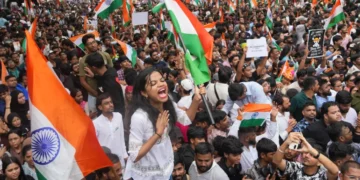
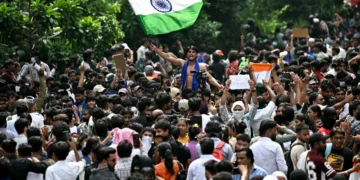
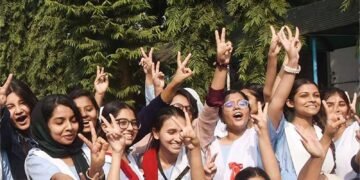
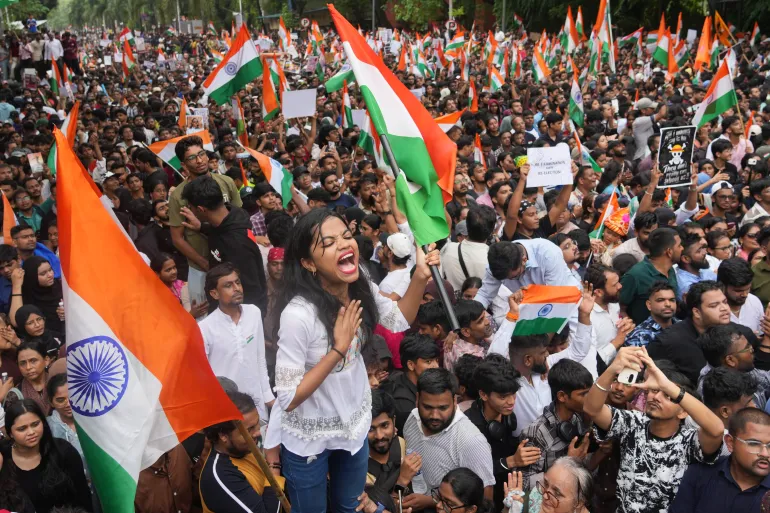
The electoral loss came less than two weeks after Education Minister Dharmendra Pradhan resigned, yielding to seven weeks of student-led demonstrations that had gripped the national capital and spread to other urban centers. These protests were spearheaded by the Cockroach Janta Party (CJP), a satirical group that emerged on Instagram in May. The movement was born after Chief Justice Surya Kant compared unemployed Indian youth to “cockroaches” and “parasites,” a label that the protesters reclaimed as a badge of defiance.
Throughout the Bankipur campaign, the local BJP chief, Nabin, had aggressively attacked the Gen Z protesters, labeling them “a virus and a cockroach gang devoted to breaking the country.” However, the party’s attempt to vilify the movement failed to prevent the loss of their long-held stronghold. Analysts are now debating whether this electoral verdict signals a broader shift in the political landscape.
The BJP’s response to the Gen Z uprising has been characterized by a sense of awkwardness, suggesting the party views the movement as a serious threat rather than a fleeting nuisance. During the protests, Prime Minister Modi reportedly urged his cabinet ministers to engage with young people on Instagram through reels, rather than relying on traditional media briefings, famously remarking that the youth were “just on Instagram.”
In Uttar Pradesh, the country’s most populous state, the party has initiated outreach programs that send civil administrative officers into schools for career counseling. Additionally, the BJP released a video featuring young people trading internet slang with an older trainer to pivot the conversation toward the government’s development record. The party’s sensitivity to its digital image was further highlighted when a parliamentary committee on information technology demanded an apology from Meta CEO Mark Zuckerberg after a video of Modi briefly disappeared from Facebook.
New Delhi-based analyst Asim Ali observes that this scramble for social media relevance exposes a fundamental change in the party’s standing. While the BJP maintains a powerful communications machine through its control of mainstream media, Ali notes that its messaging on platforms like Instagram feels “managed and paid for.” He argues that the party is struggling to generate the organic emotional connection it successfully cultivated between 2011 and 2014.
Gilles Verniers, a researcher at the Center for International Studies (CERI) at Sciences Po in Paris, views the BJP’s current outreach as a “battle for perception” rather than a genuine policy shift. He points out that the appointment of a new education minister—who shares the same background as his predecessor, being an older member of the Rashtriya Swayamsevak Sangh (RSS)—fails to address the core demands of the protesters. The RSS serves as the ideological parent organization of the BJP.
The movement has effectively neutralized the BJP’s traditional playbook for handling dissent, which usually involves branding protesters as anti-national, foreign-funded, or terrorists. Because the movement was pluralistic and mocked itself before the state could intervene, it could not be easily dismissed as the work of a single religion or community. It even drew support from young people within the BJP’s own “upper-caste” Hindu base, effectively puncturing the narrative that Modi holds a natural, undisputed command over the youth.
Verniers suggests that the movement has altered the public perception of the 75-year-old prime minister, stating that for the first time, Modi “appears his age.” He added that the movement has effectively turned the prime minister into a “boomer” in the public imagination, a shift that likely carries significant political weight. Despite reaching out to 18 BJP national spokespeople for comment, Al Jazeera received no responses.
While the BJP lost two of the three by-elections held in early August—in Bankipur, Bihar, and Datia, Madhya Pradesh—it did retain a seat in another contest. Opposition leaders have linked these losses directly to the student protests, though analysts remain cautious. Verniers notes that by-elections involve a small fraction of the electorate and that the BJP’s power structure remains resilient, citing the party’s ability to win elections, engineer defections, and outspend rivals.
Pushpendra Saroj, a 27-year-old Samajwadi Party member of parliament, witnessed the protests at Jantar Mantar in New Delhi swell from a few hundred to thousands following the hospitalization of activist Sonam Wangchuk after a 20-day hunger strike. Saroj credits the growth of the movement to the government’s aggressive reaction and the public’s sympathy for students facing force. He noted that the education minister’s resignation only occurred after the prime minister was directly implicated in the controversy.
Ultimately, analysts like Verniers suggest that the BJP is facing a disconnect between its actual power and its ability to ensure citizen compliance. While the party may not abandon its Hindu majoritarian ideology, the “Cockroach” movement has established a new narrative of challenge that the government must now navigate, proving that even a dominant political force can be forced to recalibrate its approach to a changing, digitally-connected generation. The report also notes that today, he said, much of its messaging “feels more managed and paid for” – a mismatch for a decentralised space that rewards top-down discipline far less than Facebook and WhatsApp once did. The report also notes that “But on social media, especially Instagram, it is unable to generate the kind of organic emotional identification that it could around 2011 to 2014.”. The report also notes that “There haven’t been any proposals that fundamentally change anything,” he said. The report also notes that new Delhi, India – On the night of August 4, in a counting hall in the eastern Indian city of Patna, some 1,000km (620 miles) from the national capital, Prime Minister Narendra Modi’s Bharatiya Janata Party (BJP) suffered one of its most stunning political setbacks in 12 years. The report also notes that during the peak of the protests, Modi released a string of selfie-style videos on Instagram addressing the exam paper leaks that led to the protests. The report also notes that the BJP once produced narratives that its own supporters would circulate unprompted. The report also notes that foreign-funded or terrorists, as they did during demonstrations against the controversial Citizenship Amendment Act (CAA) in 2019-20, verniers argued that what was genuinely broken is the BJP’s usual playbook against dissent: branding protesters antinational. The report also notes that for the first time, introduced a religious test for naturalised citizenship: non-Muslim asylum seekers from India’s neighbouring nations were given a faster track to citizenship, the changed citizenship law.
Source: Aljazeera