










































































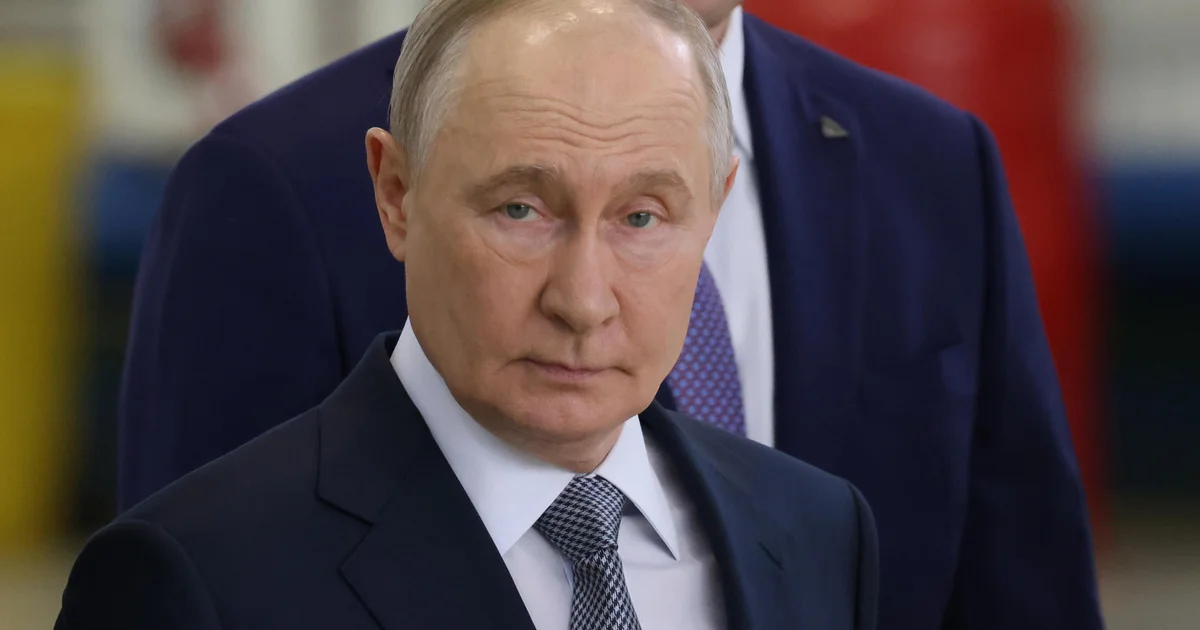
American intelligence assessments suggest that Russian President Vladimir Putin is becoming more willing to authorize provocative actions within NATO territory. Officials briefed on the matter told that these measures could include hybrid operations, cyberattacks, and other deniable tactics that fall short of a conventional military campaign.
According to these officials, the objective is not necessarily to ignite a broader conflict, but rather to gauge NATO’s unity and test the Trump administration’s willingness to defend a member state. This represents a notable shift in Putin’s risk calculus compared to assessments from just a few months ago.
Recent incidents have heightened these concerns, including the discovery of an explosive-laden drone at an airport in Leipzig, Germany, which the U.S. has assessed to be of Russian origin. Officials also pointed to a pattern of activity that includes Russian drone incursions into Romania, a missile crossing into Poland last month, and a general increase in sabotage and cyber operations across Europe.
NATO Secretary General Mark Rutte has frequently warned that Russia is expanding its use of hybrid tactics. In December, Rutte cautioned that the alliance is in harm’s way, suggesting Moscow could be prepared to use military force against NATO within five years.
These intelligence findings emerge as Russia faces significant battlefield losses in Ukraine. CIA Director John Ratcliffe noted last month that intelligence aligns with public estimates showing newly arrived Russian recruits often survive only 20 to 30 minutes due to Ukraine’s use of AI-powered attack drones. Officials report that Russia is losing approximately 30,000 troops per month—or 5,000 to 7,000 weekly—a rate that currently outpaces its recruitment efforts.
Diplomatic efforts to resolve the war in Ukraine have stalled, with no clear path toward new negotiations. While the CIA declined to comment on the intelligence assessment and NATO has not yet responded to inquiries, has reached out to the Russian Embassy in Washington for comment. The Wall Street Journal was the first to report on these findings.
Under Article 5 of the NATO treaty, the 32-member bloc is committed to collective defense, treating an attack on one as an attack on all. This provision has been invoked only once in history, following the September 11, 2001, terrorist attacks on the United States.
President Trump has previously expressed skepticism regarding this arrangement, remarking last year that there are numerous definitions of Article 5 and questioning whether other member states would defend the U.S. if needed. While he has also stated at times that the U.S. would protect allies, he has frequently criticized NATO members for insufficient defense spending and failing to join U.S. operations in Iran. His administration has pushed for European nations to take more responsibility for their own security, including weighing troop withdrawals from Germany, though the president recently canceled plans to remove a deployment from Poland.
Under Article 5 of the treaty that created NATO, members of the 32-country bloc are expected to come to each other’s defense, treating an attack on any member state as an attack on them all.
Source: CBS News