













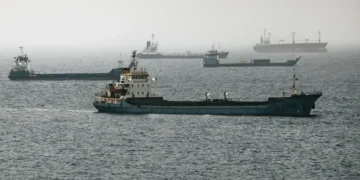


























































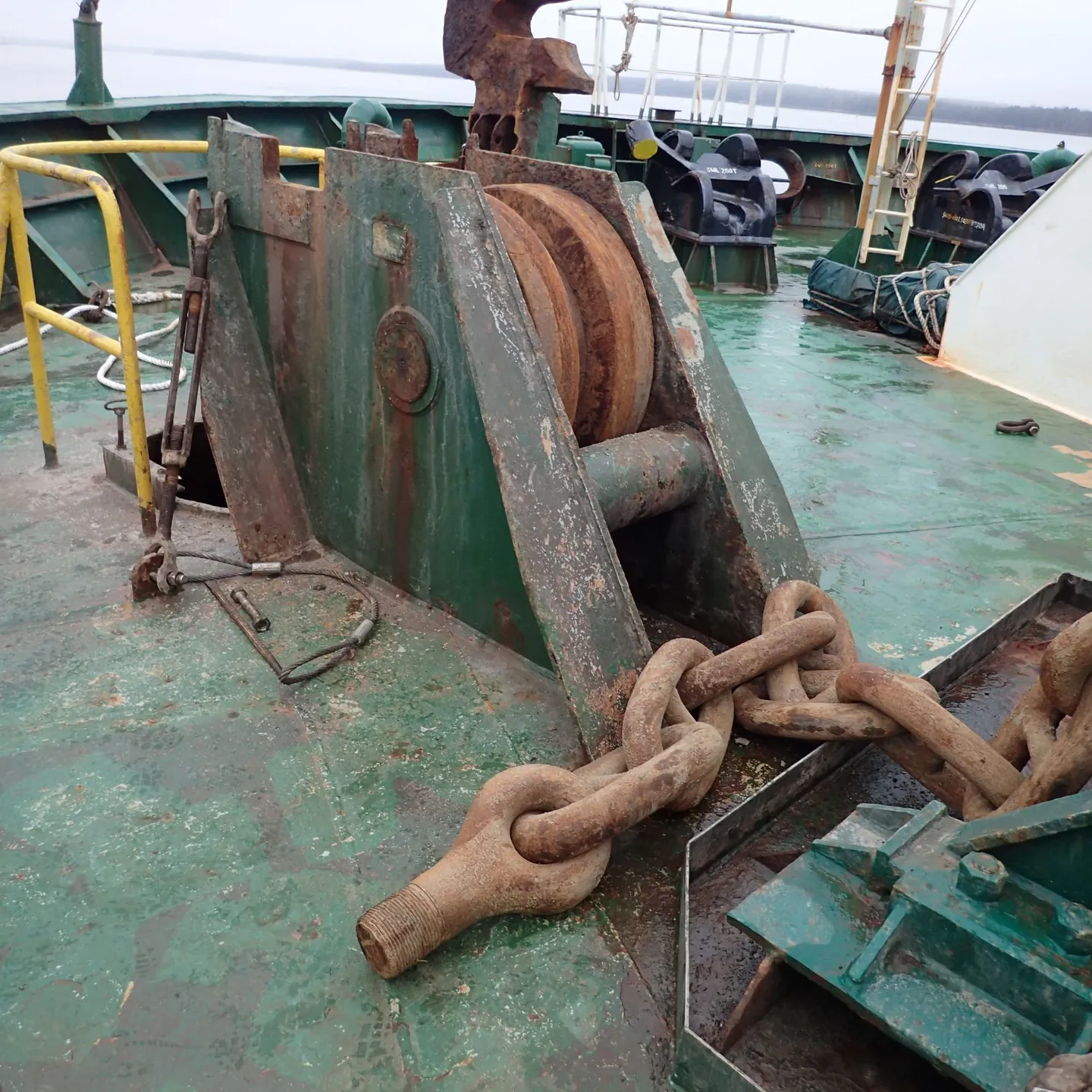
On December 25, 2024, Finnish special forces conducted a high-stakes operation, helicoptering onto the oil tanker Eagle S in the Gulf of Finland. The intervention was ordered directly by Finnish Prime Minister Petteri Orpo, who stepped away from his family Christmas holiday to oversee the response. Over a six-hour period that day, the vessel had dragged its anchor across the Baltic Sea floor for 100 kilometres, resulting in the severance of one powerline and three critical fibre-optic cables. The event drew immediate international attention, with various European officials characterizing the ship as part of Russia’s so-called “shadow fleet,” a collection of vessels allegedly used to bypass sanctions on Russian energy exports. Some politicians went further, accusing Moscow of engaging in “hybrid warfare” by utilizing cargo ships to intentionally target undersea infrastructure.
The captain of the Eagle S maintained that the anchor had come loose accidentally. However, Finnish Coast Guard Commander Mikko Simola later told CBS’s 60 Minutes that it was difficult to believe the crew could remain unaware of such a massive anchor being dragged for such an extended duration. Despite these suspicions, a Finnish court eventually dismissed charges of sabotage against the ship’s owner and the crew, who consisted of Georgian and Indian nationals.
Between late 2023 and early 2025, a series of incidents involving Russia’s “shadow fleet” and Chinese vessels in the Baltic Sea set alarm bells ringing in Brussels and other European capitals, where concerns over the prolonged war in Ukraine were already running high. These incidents have fueled a narrative that undersea infrastructure is a primary target for state-sponsored sabotage, yet industry experts remain skeptical of the malicious intent attributed to these events.
Ships’ anchors damaging cables is a common occurrence. According to the International Cable Protection Committee (ICPC), roughly four cables are damaged globally every week due to human error and accidents. Industry bodies like the ICPC and the European Subsea Cable Association (ESCA) maintain that there is no evidence to suggest these physical networks are being deliberately targeted by state actors.
Julian Rawle, a veteran fibre-optic cable consultant, is blunt in his assessment of the current climate. “I don’t recall any incident where the physical network was [deliberately] attacked,” he says. “It’s more of a hype,” he tells. “I use the word hysteria. People don’t seem to understand that we can switch traffic from one cable to another quickly.”
Since the Russia-Ukraine war began in 2022 and the subsequent sabotage of the Nord Stream gas pipelines, officials have frequently cited recurring cable accidents as evidence of a deteriorating security environment. This has led to increased scrutiny and, according to Rawle, a potential for government overreach. “We, in the submarine cable industry, used to complain that governments weren’t paying enough attention and weren’t setting up regulatory regimes that protected the cables,” he notes. “And now we’re in a position where we’re actually a bit worried that there’s going to be government overreach.”
In November 2025, Tim Stronge, Chief Research Officer at TeleGeography, testified before the US House of Representatives Committee, noting that cable networks experience approximately 200 faults annually. “It is critical to understand that the vast majority of cable damage is accidental, not malicious,” Stronge stated. Similarly, ESCA Vice Chair Peter Jamieson informed the UK Parliament that there is no publicly available evidence to support the claim that Russia or any other nation is deliberately targeting these assets.
The primary threats to subsea cables remain mundane rather than military. Fishermen rely on bottom trawling, called demersal trawling, to scoop shellfish from the seafloor with the type of heavy nets that have metal doors. This practice is the single largest cause of submarine cable faults globally. In a March 2021 report, the ICPC highlighted that fishing activity and dragging anchors from cargo ships represent the vast majority of all recorded cable damage.
The fear of deliberate sabotage reached such a height that the ESCA had to issue a public statement on LinkedIn, reminding stakeholders that the industry operates under rigorous safety and maintenance protocols. While governments are increasingly focused on the security of interconnectors and fibre-optic lines, experts argue that the focus should remain on resilience and redundancy rather than geopolitical conspiracy theories.
Almost all of the world’s internet traffic is carried by these fibre-optic cables, each roughly the size of a garden hose. With the rapid expansion of AI applications and increasing concerns over cyber warfare, there is a heightened fear that a bad actor could cripple global communications. However, Rawle points out that an actual attack would be far more likely to occur at the vulnerable landing points on the seashore rather than in the deep ocean.
In any case, most developed nations ensure that internet access is routed through multiple cables, allowing data traffic to switch seamlessly if one line is severed. Around 98 percent of damaged cables are located within 200 nautical miles of the coast, an area that experiences the highest density of maritime traffic, making accidental interaction with fishing gear or anchors statistically inevitable.
Ultimately, while Russian oil tankers are more likely to be involved in accidents due to the aging nature of the “shadow fleet,” the evidence suggests these incidents are products of poor maintenance and operational negligence rather than a coordinated campaign of hybrid warfare. The industry continues to advocate for better awareness of maritime safety rather than the current trend of politicizing routine infrastructure faults.
But Finnish Coast Guard Commander Mikko Simola told CBS’s primetime show 60 Minutes that it was hard to believe the captain was unaware for such a long time whether the anchor was hoisted or not.
In its March 2021 report, ICPC attributed nearly 41 percent of cable damage to fishermen.
While there are hundreds of subsea oil and gas pipelines and electricity cables known as interconnectors, governments are focused on the security and safety of 596 fibre optic cables that crisscross ocean floors.
This hasn’t stopped security hawks from bringing up the spectre of cables being attacked deliberately in news articles, think tank analysis and parliamentary discussions.
But is it really such a major cause for concern?
The fear of deliberate cable sabotage reached such a height that the ESCA had to issue a statement on LinkedIn, reminding lawmakers that only four anchor-drag accidents were recorded in the Baltic Sea between 2023 and 2025, compared with seven in UK waters between 2007 and 2009.
Whether it’s a post you see on Instagram or the $12 trillion that central banks move each day, all online activity depends on these cables.
The average age of tankers used to transport Russian oil i ncreased from 15.4 years in 2020 to 29.3 years in January 2024.
Since the first transoceanic fibre optic cable, TAT-8, was built between the US, UK and France in 1988, humans have intentionally, or due to negligence, damaged the cables in many different ways.
In the 1990s, Rene van Kessel worked at Van Oord Offshore, a Netherlands-based marine contractor, which built rock installations to protect undersea cables, power lines and oil pipes.
At the time, fishing boat-related accidents were damaging so many cables and pipes that Kessel would joke with his bosses that they could rent a fishing boat, drag it over the cables, sever them and then do rock installation work for a profit.
He and many others like him have watched with concern as the issue of protecting cables from fishing boats has gradually turned into a matter of national security.
Late last year, the Russian research vessel Yantar, tracked by the Royal Navy near UK waters, caused an uproar in London.
British officials, including then defence secretary John Healey, were concerned that Yantar was a spy ship sent to map undersea cables, leaving the country’s internet access vulnerable.
“I think defence organisations and companies see a threat because they want to sell their products,” says Kessel.
But all these defence companies jump in and say they have a solution, which is not the case.
You cannot avoid damage to cables,” he says.
“The military boys like their toys.”
In May 2026, the AUKUS security alliance between the US, UK and Australia announced that it will develop and deploy unmanned submarines for the protection of fibre optic cables.
The UK alone will contribute $201 million for the project.
Sunak was an MP from Richmond, Yorkshire, in 2017, when he authored a report Undersea Cables: Indispensable, Insecure.
The report highlighted the vulnerability of the cables and the threat posed by Russia, which he accused of causing an internet blackout in 2014 when it was annexing Crimea.
“I don’t know what Rishi’s motivation was in the first place, but that to me is where governments started to get aware that these cables actually carry 99 percent of the world’s internet traffic,” says Rawle, the consultant.
“It was really designed to get more budget for the British Navy, and it succeeded in the end.
The British Navy actually now has a couple of vessels stationed around the North and Baltic seas to try to prevent sabotage.”
Over the years, several attempts have been made to cut the cables and extract copper, which fetches good money in the scrap market.
In 2013, Egyptian authorities arrested three scuba divers who tried to steal a section of SEA-ME-WE 4 cable and a few years earlier, fishermen scooped up 80 tonnes of cable off the coast of Vietnam believing everything that lies in the water was up for grabs.
But these innocuous incidents have completely gone off the radar of politicians and military officials.
The US and UK lawmakers have held multiple hearings on this issue and published detailed reports.
That’s not to say the threat doesn’t possibly exist.”
Experts say there’s no denying that the Russian military has used brute force against Ukraine and created a sense of insecurity for Europe’s eastern flank.
Moscow has also been accused of cyberattacks on key installations in Norway and other European states.
However, they warn that too much emphasis on something that has never happened complicates the work of companies, which are building fibre-optic and power cables in the waters.
Source: TRT World