











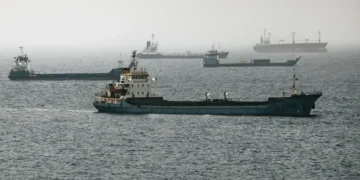
















































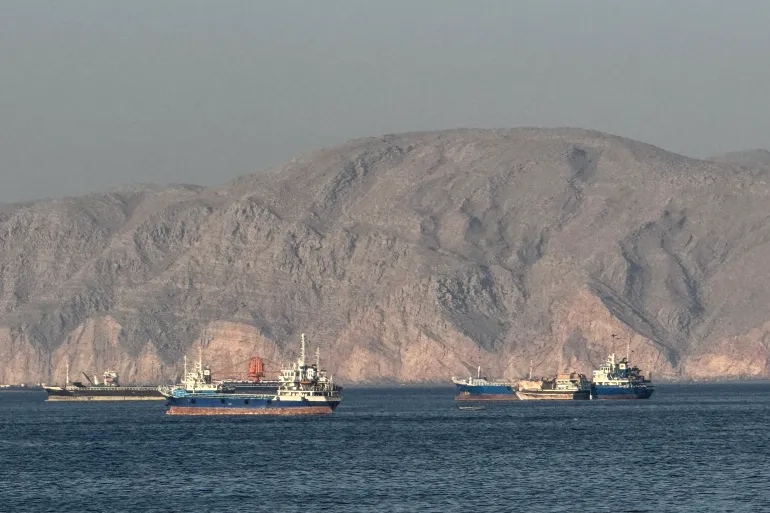
Iran says a deal with Oman to reopen the Strait of Hormuz is “on the verge of being finalised” after both countries confirmed they had agreed on specific coordinates for shipping routes through the critical waterway. The strait links the Persian Gulf to the Gulf of Oman, flowing through the territorial waters of Iran and Oman with some of its outskirts situated in UAE waters. It has become a major flashpoint in the war between Iran and the United States because one-fifth of the world’s oil and liquefied natural gas supplies transit through this narrow passage daily.
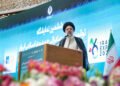
In recent weeks, negotiations have been under way to arrive at an agreement that would restore a ceasefire and reopen the strait. It is unclear when a deal will be announced, but on Wednesday, Iranian Ministry of Foreign Affairs spokesperson Esmaeil Baghaei signalled that Tehran and Muscat were close to finalising an agreement on a new commercial shipping corridor. Baghaei told reporters the negotiations between Iran and Oman were “moving forward” and highlighted that “if certain third parties do not obstruct the process, the two countries are also in the final stage of reviewing and drafting a joint statement covering the technical, legal, security and environmental aspects of the proposed corridor.”
Talks between Iran and Oman began after Washington and Tehran signed a June 17 memorandum of understanding (MoU) that was intended to serve as a framework for a peace agreement. The MoU stipulated that Iran would ensure the strait remained open to shipping for at least 60 days, but the arrangement fell apart last month. Iran closed the strait after the US and Israel began strikes on Iran at the end of February, sending oil prices spiralling and causing havoc in global energy markets. The two countries primarily disagreed on which routes ships should take, and Iran attacked several ships that had taken an Oman-approved route that was backed by the US.
Baghaei has dismissed claims that a bilateral agreement with Oman would automatically lead to the reopening of the Strait of Hormuz. A potential deal with Oman, he stated, “cannot in itself be interpreted as meaning the waterway has become safe for passing vessels”, arguing that the main source of instability remained the US and its naval deployments, maritime blockade of Iranian ports and “hostile measures against the country and its interests.” Once an agreement on the strait is reached, broader peace talks could begin again, though it remains unclear whether an agreement over the waterway can be decoupled from the wider conflict.
Reporting from Tehran, Al Jazeera’s Mahmoud Abdelwahed said a deal on the Strait of Hormuz does not mean an “end to the crisis”. “These discussions are now at the final drafting stage, pending a joint final statement,” he said. “But Iranian officials argue that these discussions are exclusively with Oman, without any foreign or outside interference.” On the other hand, Washington rejects reports suggesting that Iran would have control over traffic in the Strait of Hormuz. The official said Washington remained committed to restoring the previous system in which “no party controls the lanes or the ability to transit through them”.
“So while a final agreement on a temporary route in the Strait of Hormuz is now in the making, the dispute remains unresolved,” Abdelwahed noted. While Tehran has said it has agreed on the coordinates for shipping routes with Oman, Iran also continues to insist it is negotiating only with Oman, not directly with Washington, and maintains that Iran and Oman should jointly manage the waterway. Iran has also stated that it will not reopen the strait until the US naval blockade of its ports is lifted.
On Wednesday, Kazem Gharibabadi, Iran’s deputy foreign minister for legal and international affairs, told Iran’s IRNA state news agency that while existing temporary routes would be closed, the new inbound and outbound shipping routes would be used for two to four months or until a permanent solution is found. Furthermore, Iran has intimated that it plans to introduce some form of fee system for ships. Under international maritime law, tolls for transit are generally prohibited in international straits, adding another layer of complexity to the ongoing negotiations.
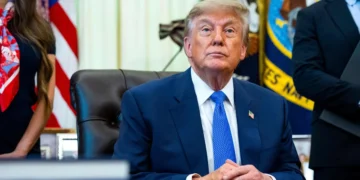
US officials have said President Donald Trump’s administration wants total freedom of commercial navigation through the waterway without Iranian interference. A US official familiar with the negotiations told The Associated Press news agency this week that any temporary arrangement would not be accepted if it granted Iran the power to dictate traffic or restrict access to specific vessels. The administration remains wary of any deal that could be perceived as a concession to Tehran’s strategic leverage in the region.
Sina Azodi, a non-resident fellow at the Atlantic Council, suggested that the Iranian strategy is clear. “The Iranians have learned that by blockading the Strait of Hormuz, they can make the global economy scream,” he said. “This is a strategic asset, and I don’t think they will let go of it easily.” However, he noted that Oman has been a “very helpful, trustworthy mediator” between Iran and the US, helping to move towards the eventual reopening of the waterway. “Oman’s role has always been very positive,” Azodi added.
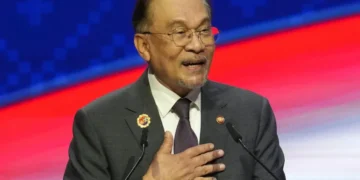
Simon Mabon, a professor of international politics at Lancaster University, said that for the US, the Hormuz deal is very serious because there are concerns about what this could look like for other parts of the world and whether any deal could inadvertently embolden Iranian regional activities. “The US wants to ensure that the global energy market remains stable and that they can project power in the region. But whether they can do that while keeping their strategic goals on Iran in line is tricky,” he told Al Jazeera.
The current diplomatic push reflects a desperate need from both sides to mitigate the economic fallout of the blockade. For Iran, the pressure of the naval blockade and the economic impact of the war have created an incentive to seek a face-saving exit from the current standoff. For the US, the primary objective remains the restoration of the status quo ante, ensuring that the critical energy chokepoint remains under international oversight rather than under the unilateral control of the Iranian military.
As the final drafting stage continues, the international community remains on high alert. The success of the Oman-mediated talks hinges on whether both Washington and Tehran can agree on the fine print of the maritime security protocols. Until a formal, signed agreement is reached and implemented, the Strait of Hormuz will remain a highly volatile zone, with the global economy waiting to see if the proposed shipping corridor can truly restore stability to the region.
In a letter to UN Secretary-General Antonio Guterres and the head of the International Maritime Organization that was sent on Monday and made public on Wednesday, the groups said allowing authorities to charge vessels to
Similarly, this could establish stepping stones for future negotiations between Washington and Tehran,” he said.
Quoting a senior Iranian source involved in the negotiations on Tuesday, the Reuters news agency reported that Tehran has already dropped its original demand for full control over shipping in both directions but is “unli
Speaking to reporters on Monday, Trump rejected any suggestion that Iran should be allowed to charge vessels using the strait.
In a letter to UN Secretary-General Antonio Guterres and the head of the International Maritime Organization that was sent on Monday and made public on Wednesday, the groups said allowing authorities to charge vessels to transit the strait would violate international norms and harm the global economy.
Quoting a senior Iranian source involved in the negotiations on Tuesday, the Reuters news agency reported that Tehran has already dropped its original demand for full control over shipping in both directions but is “unlikely to change its position” further.
But analysts said it is likely the US will have to compromise on this.
If reopening the strait requires acknowledging that Iran possesses some capacity to regulate traffic in waters along its coast, Washington “should not reject an agreement merely because it fails to preserve the appearance of unqualified American dominance”, he said.
David Des Roches, a former director of Arabian Peninsula affairs in the US Department of Defense, said any eventual agreement was, therefore, likely to reflect the reality that Iran cannot simply be excluded from managing a waterway on its coast.
“For the US, it’s about getting things open and getting oil and trade flowing and trying to bring down costs essentially.
Source: Aljazeera