





















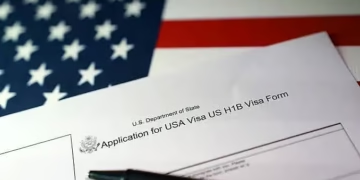











































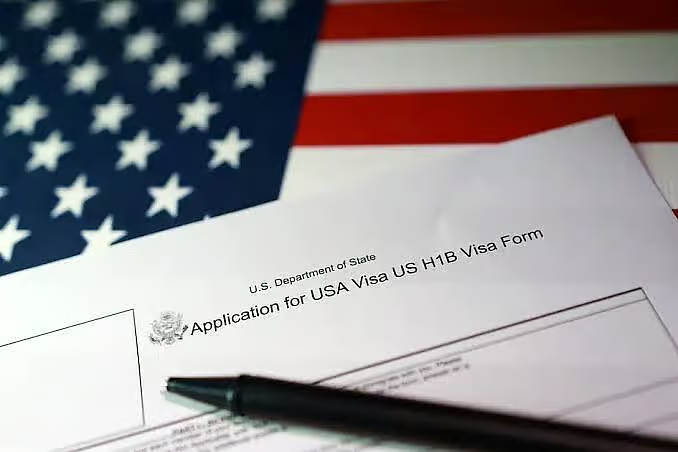
The administration of President Donald Trump has introduced a new regulatory proposal to establish a permanent fee exceeding $100,000 for new H-1B visas. This initiative seeks to formalize a measure originally introduced through a temporary presidential proclamation last year, which has since faced significant pushback in the federal court system.
The proposed rule, which sets the specific fee at $103,265, was published in the Federal Register this week. Officials aim to finalize the regulation by the end of the year. This move follows a 2025 proclamation that is set to expire in September, which had directed the Department of Homeland Security (DHS) to pursue permanent rulemaking for the surcharge.
The H-1B program serves as a critical pathway for US employers to recruit foreign professionals in specialized fields. It typically provides 65,000 visas annually, with an additional 20,000 allocated for individuals holding advanced degrees. Historically, these visas involved fees ranging from $2,000 to $5,000. The new proposal represents a substantial departure from those costs, which critics and supporters alike acknowledge will heavily impact the research, education, and technology sectors.
Legal battles over the fee remain active. A federal judge ruled the surcharge illegal in June, effectively blocking its collection. Currently, a Boston-based appeals court is reviewing that decision, while a separate court in Washington, DC, evaluates whether a previous challenge by a major business group was properly dismissed. As of late February, court records indicated that approximately 70 employers had paid the $100,000 fee for a total of 85 visa applications.
The US Chamber of Commerce, along with various unions, employers, and Democratic-led states, continues to challenge the fee. Plaintiffs argue that the president lacks the authority to override the statutory framework of the H-1B program and that the Department of Homeland Security cannot impose revenue-generating taxes or fees without explicit Congressional authorization. In response, the administration maintains that the fee is not a traditional tax and asserts that the president possesses broad authority to restrict entry into the country to protect national interests.
The broader landscape for foreign workers has shifted significantly under recent immigration policies. Data from US Citizenship and Immigration Services shows that employers registered for roughly 344,000 H-1B visas last year. This figure represents a decline of more than 25 percent from 2024 and is less than half of the 794,000 applications recorded in 2023.
Beyond the $100,000 fee, the administration has implemented additional hurdles for applicants, including enhanced vetting procedures and a proposed selection process designed to prioritize higher-skilled and higher-paid workers. Furthermore, in August, the Department of Homeland Security introduced separate rules adding fees of up to $4,500 for applications involving the extension of stay for current H-1B workers or the transfer of employees from international offices to the United States.
Proponents of the restrictions, including President Trump, argue that the H-1B program has been subject to abuse by companies seeking to replace domestic workers with cheaper foreign labor. Conversely, business organizations contend that the program is essential for addressing labor shortages and maintaining the ability of US firms to compete for global talent. The report also notes that says trying to ‘prevent’ them, iran President admits country facing ‘many problems’. The report also notes that dubai’s Toyota Building: Iconic sign to live on, ‘one last surprise’ planned. The report also notes that israel conducts fresh strike in Syria after US criticism. The report also notes that iran official says Oman foreign minister to visit Tehran to continue Hormuz talks. The report also notes that uS, Oman discuss regional stability as efforts to reopen Strait of Hormuz continue. The report also notes that stay up to date with the latest news. The report also notes that the H-1B program allows US employers to hire foreign workers with training in specialty fields and offers 65,000 visas annually, with another 20,000 for workers with advanced degrees, approved for three to six years.
Source: Khaleej Times