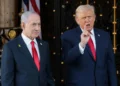









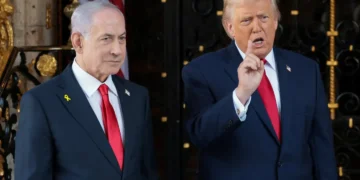
























































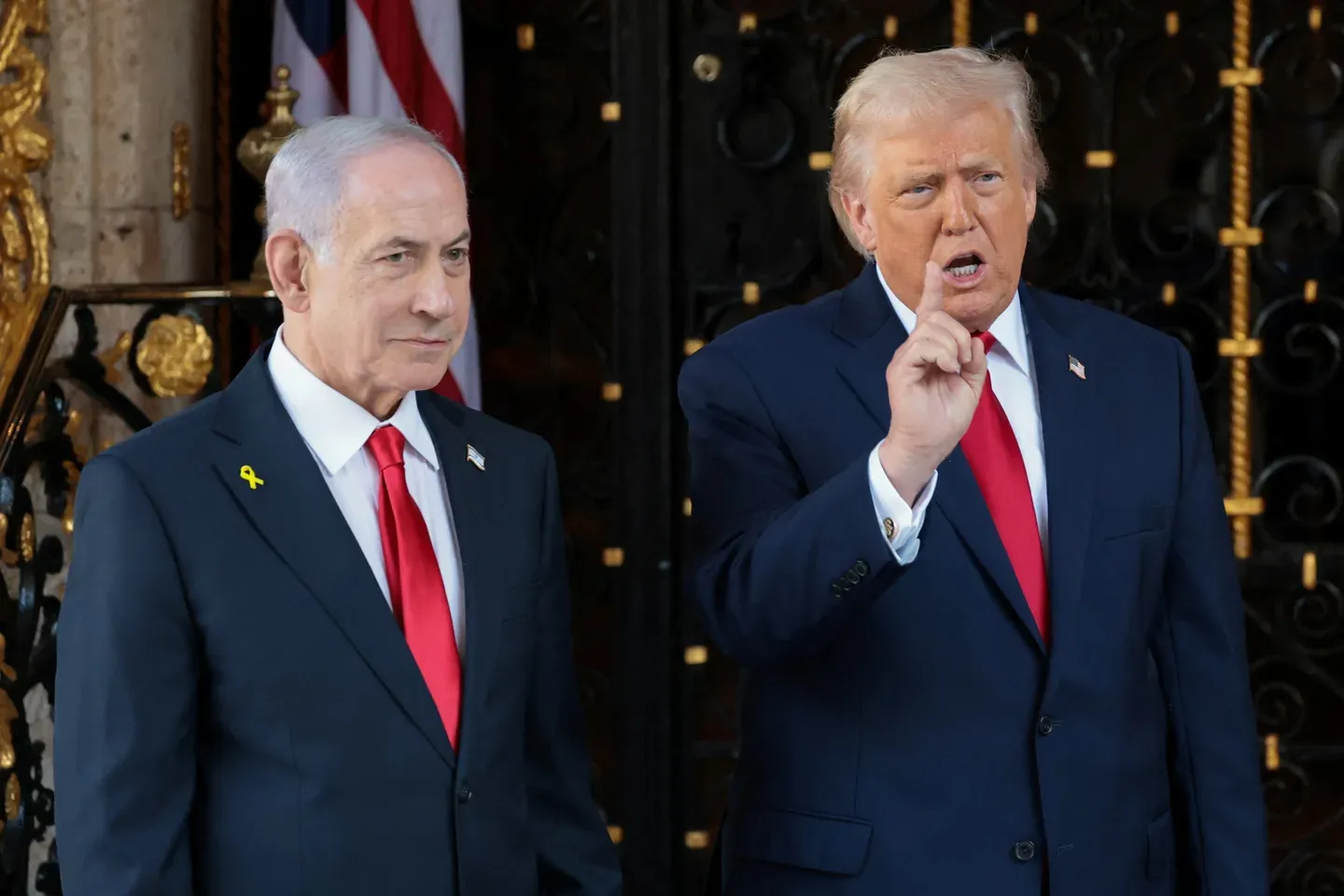
Israeli Prime Minister Benjamin Netanyahu’s outright rejection of a key condition in the US-backed Gaza peace plan has thrown the whole initiative into uncertainty. On Sunday, Netanyahu told his cabinet that Tel Aviv rejects the 15-point document, insisting the Israeli military will not withdraw from Gaza until Hamas is “genuinely disarmed.”
Last month, Hamas dissolved its government in Gaza and formally handed over administration to the National Committee for the Administration of Gaza. This significant political shift was followed by Hamas agreeing to a complete disarmament, provided that Israel commits to a full withdrawal from the territory.
The peace roadmap, part of the second phase of US President Donald Trump’s broader 20-point Gaza plan originally presented in October 2025, links a phased Israeli withdrawal from Gaza to the demilitarisation of Hamas under a Palestinian technocratic administration. Despite a ceasefire agreed in October 2025, Israel has continued to violate the fragile agreement by killing more than 1,250 Palestinians in Gaza.
At the same time, Tel Aviv has kept expanding its control over the besieged territory by moving the demarcation line. In other words, Israel’s unilaterally drawn boundary keeps moving further into the enclave, effectively making Gaza smaller by the month.
Analysts are sceptical about whether Washington will be successful in preventing Netanyahu from sabotaging the peace plan. Mustafa Yetim, a professor of international relations at Eskisehir Osmangazi University, notes that the Trump administration appears to have sought greater alignment with key regional actors and broader public opinion to constrain Israel’s actions.
However, Israel continues to fiercely resist withdrawal, partly due to domestic political pressures, such as the general elections scheduled for October. No Israeli government can afford to back down due to external pressures, especially in the run-up to these elections.
“This position could seriously undermine the peace process, particularly because Hamas’s willingness to proceed with disarmament is closely linked to Israel’s full withdrawal from the territory,” Yetim says. He warns that the unresolved issue of Israeli withdrawal could become a critical point of friction between Washington and Tel Aviv.
According to Yetim, a failure to convince Israel against a renewed military action and occupation is a “more plausible scenario” than the establishment of a stable political order in Gaza. He adds that the underlying Israeli security and political paradigm poses a “persistent challenge to any regional arrangement” aimed at containing expansionist policies.
Zahide Tuba Kor, a scholar of Middle Eastern studies, is highly sceptical that any US pressure on Israel will succeed. She argues that the ceasefire was merely a tactical pause for Israel to continue its military campaign. “Israeli politics and society cannot survive without war,” she asserts.
Kor points out that a powerful lobby supports reoccupation and settlement in Gaza. She recalls a statement Netanyahu made as deputy ambassador in the 1980s: “If the US government were to oppose Israeli policy, I know how to manipulate American public opinion against its own government.”
With US midterm elections in November and evangelical voters in the Republican Party’s base being “more pro-Israel than Israel itself,” Kor argues that no American president can afford to take the risk of cutting military aid. According to the Costs of War Project at Brown University, the US spent $21.7 billion on military aid to Israel from October 2023 to September 2025.
While some suggest that cutting arms sales would leave Israel with “no choice but to submit,” Kor remains doubtful. She notes that Washington could theoretically remove diplomatic protection or cut economic aid, but the current political climate makes such decisive action unlikely, as the administration struggles to balance regional stability with domestic political necessities.
Source: TRT World